



Jun 01, 2026 12:00pm IST
Saurabh Sachdeva on ‘The Peasant’ Actor-Director Dev Patel: ‘There Is No Noise Around His Process, Only Intent’ (EXCLUSIVE)
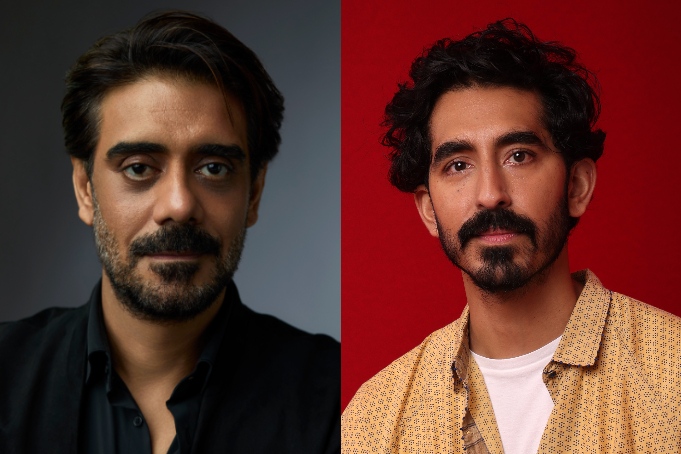
For much of the last decade, Saurabh Sachdeva has occupied a unique position in Indian entertainment. While audiences know him from projects such as “Sacred Games,” “Animal,” “Jaane Jaan” and “Bambai Meri Jaan,” an entire generation of performers knows him as one of the country’s most respected acting coaches through The Actor’s Truth.
Now, Sachdeva finds himself part of one of the most closely watched international productions mounted in India. The actor features in “The Peasant,” a medieval action thriller directed by Dev Patel and backed by A24. The project has attracted significant attention as Patel’s next directorial venture following “Monkey Man” and as one of the most ambitious international productions to shoot in India in recent years. The film also stars Patel alongside Christian Friedel, Sebastian Bull, Anasuya Sengupta, and others.
‘Bigger Than a Film’
For Sachdeva, joining “The Peasant” felt like more than simply landing another role. “It felt like both,” Saurabh Sachdeva says when asked whether joining “The Peasant” felt like entering a film or entering a moment. “On one level, it was a film set, with all the discipline, pressure and creative exchange that comes with it. But on another level, you could sense that something larger was shifting. When a company like A24 chooses to shoot its first film in India, it is not just a production decision; it is a cultural signal. You feel that you are part of a moment where India is being seen differently, and that makes the experience very special.”
Related Stories
The comment reflects a broader shift in how India is increasingly being viewed by international filmmakers. Rather than serving merely as a location, Indian settings, cultures and histories are beginning to occupy the center of global stories. At the center of that experience for Sachdeva is Dev Patel.
The Surprising Thing About Dev…
“What struck me most about Dev was his clarity,” Saurabh Sachdeva says. “When someone is carrying so many responsibilities, there is often a risk of diffusion, but with him there was complete focus. He had a very strong sense of what the scene needed, what the story needed, and what the emotional truth of the moment was.”
According to Sachdeva, Patel’s greatest strength is his ability to remain grounded despite carrying multiple responsibilities. He adds, “What people may not always see is how present and grounded he is in the middle of all that responsibility. There is no noise around his process, only intent.”
The actor believes Patel’s work is part of a larger movement in which Indian stories are increasingly finding global audiences without sacrificing their identity.
India Is No Longer Just a Location
Asked whether India is finally moving beyond being treated as a location and becoming a storytelling force, Sachdeva believes the shift is already underway. “Yes, and it feels overdue,” he says. “For too long India was treated as exotic scenery or a cost-effective location. Now there’s a shift: international producers and audiences are recognising that Indian stories carry their own architecture, rhythms, and emotional logic.”
For Saurabh Sachdeva, the most universal stories are often the most culturally specific. “When storytellers honor language, culture, history and its textures, regional idioms, those stories become global because they reveal truths audiences everywhere recognise. India is moving from backdrop to origin.”
Why Young Actors Are Moving Too Fast
Asked what worries him most about emerging performers, Sachdeva points to impatience rather than talent. He says, “The speed. Definitely the speed. People want results before they have experiences.” For him, acting is built on life experience, not shortcuts.
“But craft is built from digestion. You have to live, fail, embarrass yourself, love badly, lose things, sit in confusion. Otherwise what are you acting from? References?”
He believes many performers today spend too much time studying performances and too little time studying people. “A lot of young actors are consuming performances instead of studying human beings. That creates imitation, not art," he adds.
Sachdeva believes the industry's definition of success has also shifted. “Earlier success meant becoming a great actor. Now success often means becoming impossible to ignore. Those are two different journeys.”
"The Future Is Not an Imitation”
One of the interview’s most striking observations arrives when Sachdeva is asked whether Indian cinema underestimates how hungry international audiences are for culturally rooted stories. “Completely,” he says. “I think we still carry a colonial hangover in storytelling. We think ‘international’ means sanding away our edges.”
In reality, he argues, global audiences are looking for exactly the opposite. “Globally, people are actually exhausted by sameness. They are searching for emotional texture. And India has a terrifyingly rich texture. Our families alone contain more emotional complexity than entire screenplays sometimes.”
That realization has led him to a simple conclusion. “The future is not an imitation. The future is specific. The more honestly we reveal ourselves, the more universal we become.”
As “The Peasant” prepares to bring together an Indian setting, an international studio and one of the industry’s most distinctive creative voices in Dev Patel, Saurabh Sachdeva believes the lesson for Indian cinema is clear. “The future is not an imitation,” he says. “The future is specific.”















Comments are moderated. They may be edited for clarity and reprinting in whole or in part in Variety publications.