



Jul 15, 2026 9:30pm IST
‘The Odyssey’ Review: Christopher Nolan’s Bravest Cinematic Voyage Pays Off Brilliantly
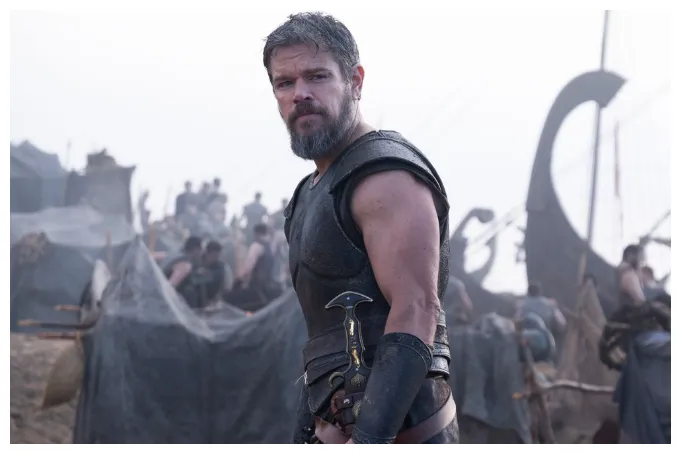
A frame. A colour. A voice. Three simple elements, yet in Christopher Nolan’s "The Odyssey," they become the building blocks of an experience so overwhelming that describing it as a film almost feels insufficient. This is opera disguised as blockbuster cinema, rendered with the precision of an engineer and the soul of a poet.
Perhaps Nolan’s most demanding film, and certainly his bravest, "The Odyssey" stands apart from almost everything mainstream cinema has produced over the last decade. Its scale is staggering, but so is its restraint. Every formal choice, from its monumental IMAX photography to its measured storytelling, serves a singular purpose. Nothing exists merely to impress. Everything exists to endure.
Adapted from Homer’s immortal epic, the film follows Odysseus (Matt Damon), returning to Ithaca after nearly twenty years away. At home, Penelope (Anne Hathaway) continues to outwit the men who believe the throne is theirs for the taking. Every night she weaves a burial shroud, only to secretly unravel it before dawn, postponing the inevitable while suitors circle outside like scavengers waiting for a kingdom to become ownerless.
Their son, Telemachus (Tom Holland), lives in the shadow of absence. Torn between protecting his mother and searching for the father he barely remembers, his journey becomes as emotionally significant as Odysseus’ own.
Cinema, at its rarest, demands surrender rather than attention. It asks us to stop solving and simply feel. To drift into worlds where memory bends, time folds in on itself, and every image seems older than history itself. Nolan has always treated cinema as the battleground between intellect and emotion. Memento fractured memory. "Interstellar" searched for love inside science. "Oppenheimer" wrestled with guilt through history. With "The Odyssey," however, he reaches somewhere even more elusive. This isn’t simply an adaptation of one of literature’s greatest works. It feels like a filmmaker interrogating why humanity keeps returning to the same stories across centuries.
The answer, Nolan suggests, is simple. Every myth is ultimately about home.
Related Stories
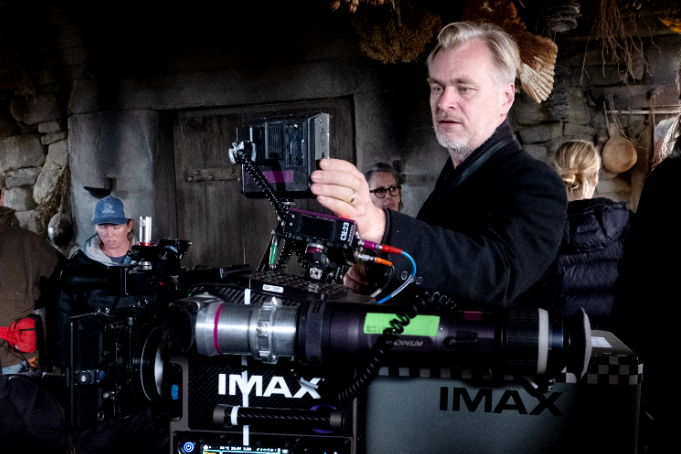
The film also feels deeply personal. Scattered across its three-hour canvas are moments that resemble pages torn from Nolan’s own diary, reflections on grief, devotion, loneliness and redemption. For perhaps the first time in his career, spectacle never overshadows vulnerability. Instead, the two exist in perfect harmony.
The cast is predictably extraordinary. Matt Damon, Anne Hathaway, Tom Holland, Zendaya, Robert Pattinson, Lupita Nyong’o, Mia Goth and Elliot Page are names that arrive carrying their own cultural baggage. Nolan strips that baggage away. These are not movie stars performing greatness; they are characters inhabiting myth.
The online debate surrounding certain casting choices evaporates almost immediately. You stop seeing celebrities. You begin seeing legends. Lupita Nyong’o brings heartbreaking fragility to Helen. Elliot Page’s Sinon carries quiet tragedy beneath every line. Hathaway, meanwhile, gives Penelope a steeliness that gradually reveals devastating emotional exhaustion beneath its surface. It is one of the finest performances of her career.
What distinguishes "The Odyssey" from so many contemporary epics is that its emotional scale consistently matches its physical one. This isn’t merely a film of impossible budgets and astonishing visual effects. It is a film consumed by longing, by death, separation, loyalty, memory and the unbearable weight of waiting.
Several sequences could exist as remarkable short films in their own right.
Ludwig Göransson’s score refuses to remain accompaniment. It becomes another protagonist altogether. Percussion crashes through scenes like fate itself, while quieter passages allow silence to carry equal power. Music here doesn’t underline emotion; it creates it.
Remarkably, despite the enormity of its canvas, Nolan never loses narrative control. His direction remains laser-focused on one deceptively simple idea: a husband trying to return to his wife, and a father trying to find his son.
Among the film’s greatest achievements are two horror sequences that rival anything the genre has produced in recent years. One centers on the Cyclops. The other on Circe. Both are staged with unbearable tension, proving once again that fear has always existed comfortably inside myth. Nolan directs them with startling confidence, allowing dread to accumulate frame by frame rather than relying on spectacle alone.
"The Odyssey" is not an easy film. Nor should it be.
It gives generously, but it asks for something in return. Your attention. Your patience. Your emotional vulnerability. Somewhere during its journey, it quietly resurrects memories you thought had disappeared forever. Forgotten faces. Old grief. Long-abandoned hopes.
Few blockbusters today are willing to trust audiences with emotions this complicated. Some films entertain. Some impress. A rare few alter the way you look at cinema itself. The Odyssey belongs in that final category.







Comments are moderated. They may be edited for clarity and reprinting in whole or in part in Variety publications.