



May 30, 2026 8:00pm IST
Rekha Bhardwaj on ‘Kachaudi Gali’ and Viral Music Culture: ‘It’s Very Easy to Succumb to Mediocrity’ (EXCLUSIVE)
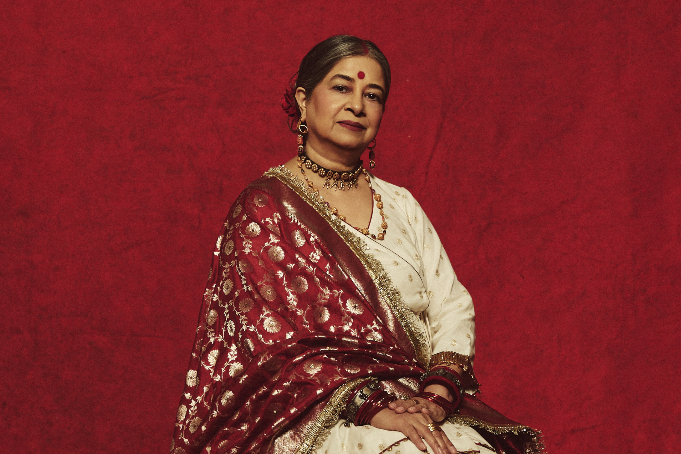
Rekha Bhardwaj is back in the spotlight with “Kachaudi Gali” from Coke Studio Bharat, performed alongside Utpal Udit, with music, arrangements and production by Khwaab. Rooted in Bhojpuri folk traditions and themes of longing, separation and memory, the track has sparked conversations online around folk music, language and forgotten cultural histories. But Bhardwaj believes the larger crisis in music is not with audiences. It is with the systems that package and sell music.
In an exclusive conversation with Variety India, the National Award-winning singer says, “A lot of music is built around instant recall and virality, and I worry that silence, poetry and emotional depth are becoming harder to sell. This has always been the case. Even earlier, it was the same kind of struggle if you wanted to do something soulful or something more poetic. It was still difficult to sell that to the companies and producers. So it’s not about people, it’s about the companies that sell music.”
The singer, however, insists she has never allowed trends to dictate her artistic choices. She says, “It’s very easy to succumb to mediocrity or something more trendy. But I feel we are fortunate to understand the craft we want to work on and create our kind of music. I feel fortunate to reach a stage in my life and career where I am able to do this.”
Related Stories
For Rekha Bhardwaj, the response to “Kachaudi Gali” has only reaffirmed her belief that audiences still crave depth. “In billions of audience, everyone would not be going for just virality or instant recall. There are many who are looking for that silence, for that poetry and for that emotional depth,” she adds.
Produced as part of Coke Studio Bharat’s expanding push into regional and folk-rooted storytelling, “Kachaudi Gali” draws from Bhojpuri folk traditions historically sung by women when their husbands went away to war. Bhardwaj says the emotional pull of the composition affected her before she even fully understood its historical context.
“When I got the song, I just got the melody. My manager, Vishwas Dubey, who’s from Varanasi, explained the gist of the song. First, it was the feel, the emotion and the melody of the folk song. I have always associated a lot with folk music. It is the mother of all genres of music. Any music, even classical, has come from folk music only. So it was the emotion first. Later, I started understanding the story behind it.”
That emotional layering, Rekha Bhardwaj says, is precisely what gives folk music its permanence across generations. “Music always preserves emotions and memories better than history. Folk music, especially, because it was never recorded. It was an oral tradition. People from different eras and generations added their own touch, adding their own lives to it. That’s the beauty of it.”
The singer also spoke at length about how Bhojpuri music often loses its dignity when reduced to caricature. “There is a dignity to folk music which sometimes gets lost in translation. We sometimes play to the gallery. That’s how Bhojpuri music became more caricaturish or not so dignified at times. But with ‘Kachaudi Gali,’ people are talking about the story behind the song also,” the “Namak” singer adds.
According to Bhardwaj, the song has unexpectedly opened conversations around language, identity and regional traditions. She says, “Somebody would say this is Kajri (a style of singing) from Banaras and not from another place because they all have different forms. Bhojpuri spoken in Varanasi and Bihar also changes. So this song has started a discussion around language and around human emotions, which is beautiful.”
At a time when social media increasingly conditions music consumption, Bhardwaj rejects the idea that younger listeners no longer have patience for layered music. “When there is an emotion that strikes you at the core of your being, it is bound to make you sit. I meet Gen Z and Gen Alpha, who talk about songs on their playlists that are not just hook lines. Those are songs that bring joy into their lives.”
For Bhardwaj, the future of music still belongs to emotion rather than metrics. Rekha Bhardwaj concludes, “However much the idea of what makes a song successful changes, it’s always emotions that win, and that will never change.”















Comments are moderated. They may be edited for clarity and reprinting in whole or in part in Variety publications.