



Jun 27, 2026 8:52pm IST
‘Notes From The Last Row’ Review: Choi Min-sik and Choi Hyun-wook Deliver Masterclass In Manic Melancholy, Making This Series The Newest ‘Obsession’
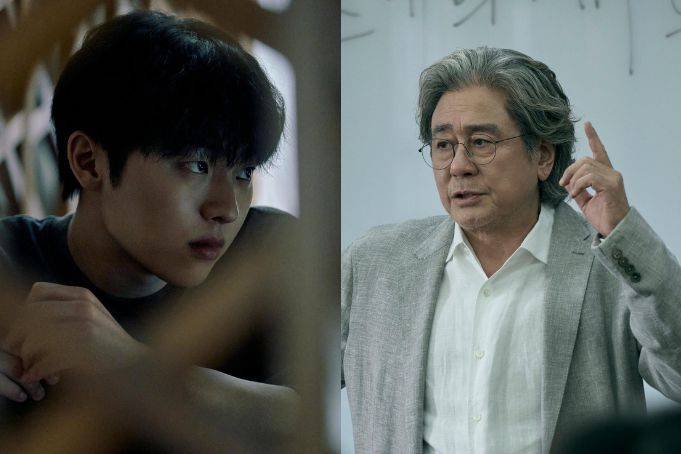
Your latest “obsession” could very well come from Korea via Spain. Noted dramatist Juan Mayorga’s “El chico de la última fila” gets an Asian retelling, courtesy writer Jang Myung-woo and director Kim Gyu-tae’s “Notes From The Last Row” and it is an experience in itself. A psychological drama that plays out across six hour-long episodes, it explores the depths of obsession, which blurs the lines between fiction and reality. The palpable tension between the main characters becomes almost uncomfortable to watch after a certain point, finding momentum a little before the third episode.
Related Stories

Heo Mun O (Choi Min-sik), an English professor at a prestigious South Korean university grapples with the despair of being an unsuccessful author. His joyless state annoys his class as he dismisses their writing assignments as frivolous and lacking a distinct voice. One day, he reads a piece written by Lee Kang (Choi Hyun-wook), an engineering student and is amazed by his creativity and thought. Mun O decides to mentor Lee Kang, giving him lessons at the former’s residence. As the teacher-student relationship begins, viewers get drawn to a world of gaslighting, manipulation and paranoia.
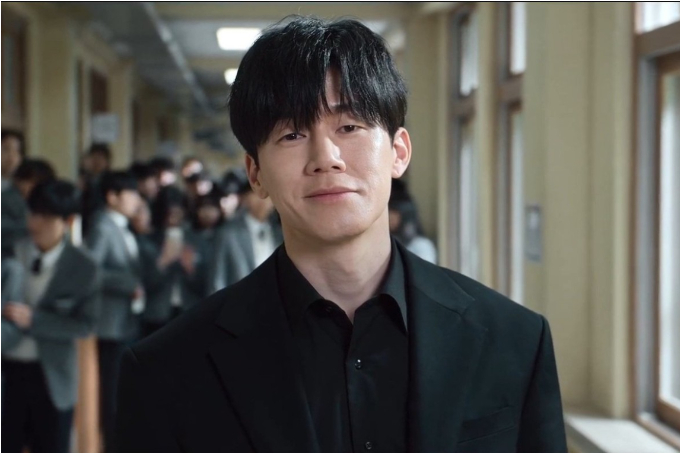
Joining Heo Mun O and Lee Kang in this haunting tale is Kim Su-Hun (Huh Joon-ho). His existence is the cause of Mun O’s suppressed yet self-destructive sense of frustration, resentment, agony and despair. As the series progresses, viewers are treated to constant mind games between Mun O and Lee Kang. Who has the upper hand and power to destroy the other? Are the two battling imaginary demons or is there a past that has left deep wounds? Viewers have to watch the series to know more.
As Professor Heo Mun O, Choi Min-sik delivers a masterclass in acting. Some of his scenes will stay with viewers for a really long time. The actor uses every facial muscle to highlight the gnawing jealousy that has robbed his life of happiness. Choi Hyun-wook is a total surprise. The actor sheds his boy-next-door image for a character that creeps you out every five minutes. Hyun-wook’s relatively spontaneous acting runs parallel to Min-sik’s clinical precision and makes for a wonderful duet on screen. It looks like both the actors injected their unhinged characters into their veins. Huh Joon-Ho is also rock-solid as Kim Su-Hun, while Jin Kyung as Cho Hyeon-Suk, the wife of Mun O, aces all the layers of her short but complex character.
Popular on Variety
Those who have seen director Kim Kyu-tae’s 2024 series, “The Trunk” will find similarities between “Notes From the Last Row,” and his previous work. From dark atmospherics to melancholic leading men and use of music in tense scenes, the narration keeps viewers engrossed even as the pacing dips in places. Mun O spends most of his time in a dimly lit study filled with books. The conversations between the two lead characters happen in these claustrophobic spaces with hundreds of books around them. “Notes From the Last Row,” is also an allegory about the deep obsession with fiction whether it is literary or visual. In one of the scenes, Mun O slams Lee Kang’s methods of observation as voyeuristic. It seems like a jibe at present times where people’s interest in reality around them has touched the skies. Fans of Choi Hyun-wook are already discussing a couple of scenes on social media, which shows the character’s deviant behaviour.
This Korean show reinforces how demons in our minds can be stronger, resilient and more tenacious than we can ever imagine.















Comments are moderated. They may be edited for clarity and reprinting in whole or in part in Variety publications.