



Jun 24, 2026 12:08pm IST
‘Gram Chikitsalay’ Season 2 Review: Amol Parashar’s Rural Healthcare Drama Finally Finds Its Own Voice
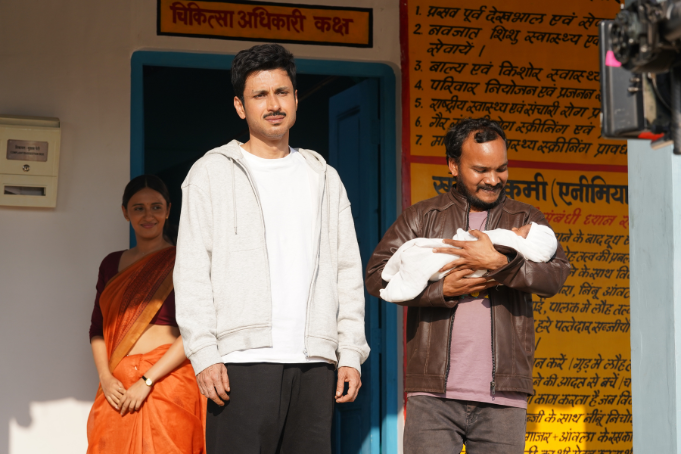
When the first season of “Gram Chikitsalay” debuted, it found itself under the towering shadow of its streaming sibling, “Panchayat.” Coming from the same creative stable at The Viral Fever (TVF), comparisons were inevitable, and the initial outing occasionally struggled to assert a unique identity. However, Season 2 arrives with a refreshing wave of self-assurance. Instead of copying established formulas, the new five-episode season carves out its own path. It moves past focusing on just one person to show how the entire village comes together to fight for basic dignity.
The story returns us to the dusty roads of Bhatkandi, Jharkhand, where Dr. Prabhat Sinha (Amol Parashar), the idealistic son of a wealthy Delhi physician, continues his self-imposed exile to run the local Primary Health Centre (PHC). While Season 1 focused on Prabhat gaining the villagers’ trust, Season 2 shifts to a far more formidable adversary: the systemic stagnation of institutional healthcare. Confronted with chronically empty medicine shelves and a severe lack of resources, Prabhat’s boyish idealism evolves into strategic determination. Upon learning from neighboring medical officer Dr. Gargi Singh (Akansha Ranjan Kapoor) about the “Adarsh PHC” competition—a government initiative that rewards the highest-rated clinic with priority funding and supplies — Prabhat sets a clear mission to win the title and secure his clinic's survival.
What makes this season soar is its stellar ensemble, led by a remarkably sincere performance from Amol Parashar. Parashar anchors the show with an infectious, vulnerable decency that makes you root for him through every bureaucratic hurdle. He is beautifully complemented by Akansha Ranjan Kapoor’s Dr. Gargi, who transitions from a peripheral character into an equal partner. Gargi leads a vital narrative arc focused on institutional deliveries and maternal health, directly challenging deeply entrenched rural stigmas regarding male physicians treating pregnant women.
The primary friction of the season comes from Vinay Pathak’s brilliant performance as Chetak Kumar, the village’s trusted, Google-searching quack doctor. Pathak elevates what could have been a cartoonish villain into a deeply human, layered antagonist. Backed by his loyal assistant Arvind (Vikram Pratap Singh), Chetak treats everything from kidney stones with local toddy to complex ailments with internet remedies. This season reveals his poignant backstory as a failed medical student, driving his desperate, Coyote-style schemes to sabotage Prabhat’s "Adarsh PHC" bid. Colluding with Kishori Bhaiya (Shakti Kumar) — a wig-wearing former sarpanch surrounded by ego-inflating henchmen — Chetak’s actions stem from a very human fear of losing his relevance.
Yet it is Anandeshwar Dwivedi, as the compounder Phutani, who routinely steals the spotlight. Dwivedi’s impeccable comic timing and effortless command of the local dialect provide excellent comedic relief, alongside a chaotic subplot involving the pakadwa vivaah (forced marriage) crisis of ward boy Govind (Akash Makhija).
The creators also lean into their shared universe with clever, organic cameos. Fans will delight in brief appearances by “Panchayat” favorites Binod (Ashok Pathak) and Bhushan alias Banrakas (Durgesh Kumar), complete with a brilliantly repurposed "Dekh Raha Hai Binod" meta-joke. Additionally, Bhojpuri superstar Dinesh Lal Yadav (Nirahua) delivers an energetic mid-season boost as the Chief Medical Officer, Babu Sahab.
While “Gram Chikitsalay” undeniably shares TVF’s signature warm aesthetic, grounded dialogue and gentle pacing with “Panchayat,” the two shows diverge significantly in their core subject matter. Where “Panchayat” uses the local panchayat office to examine grassroots politics, administrative gridlock, and village bureaucracy, “Gram Chikitsalay” focuses entirely on the fragile medical ecosystem.
The series handles heavy themes with a remarkably light touch. It bravely addresses systemic medical corruption, the dangers of superstition prioritizing ritual over logic, and the devastating social impact of health conditions — such as how a sudden seizure can threaten a young bride's marriage. It balances these heavy realities with genuine, slice-of-life humor, never letting the narrative slide into bleak melodrama.
Ultimately, “Gram Chikitsalay Season 2” leaves its audience with a quiet but profound takeaway. It doesn't offer magical solutions to monumental issues, nor does it promise that a broken system can be repaired overnight. Instead, it honors the incremental victories of ordinary individuals. By showing Dr. Prabhat and his team refusing to give up on Bhatkandi, the series delivers a heartwarming reminder that trying to do the right thing from inside a flawed system is a deeply noble pursuit. It is a warm, funny and thoroughly engaging watch that will leave you smiling long after the credits roll.








Comments are moderated. They may be edited for clarity and reprinting in whole or in part in Variety publications.