



Oct 31, 2026 5:18pm IST
From Curry Barker to Priyadarshan, Filmmakers who Tickled with Comedy Before They Spooked with Horror

Horror is the genre du jour across Indian and international cinema this year. Small-budget films made by young filmmakers, such as Curry Barker’s “Obsession” and Kane Parsons’s “Backrooms,” saw unprecedented success at the box office. This has led to a burgeoning interest in funding similar projects. But one trend that hasn’t gone unnoticed is that both Barker and Parsons had their humble beginnings in sketch comedy. Evidently, the famous comedy-to-horror pipeline has once again churned out promising results.
The comedy-to-horror director pipeline
For years now, actors and filmmakers adept at comedy have found themselves drawn to horror and excelling at it, too. Director Mudassar Aziz, who has made his fair share of comedy capers like “Pati Patni Aur Woh Do” and “Khel Khel Mein,” says, “I think there’s this particular set of hormones that get activated inside a human being when it comes to key emotions. Now, laughter is a key emotion, just like fear. And I feel like when you get used to tapping into people’s emotions repeatedly in any one particular genre, it slightly facilitates you moving into another. So, I’m assuming that if we do enough research, we will realize a few horror filmmakers have also become good at comedy.”
Screenwriter and filmmaker Anees Bazmee echoes the sentiment. “When you’re making a straightforward horror film, that’s one approach. But if you aim to blend horror with comedy, as I did with ‘Bhool Bhulaiyaa 2’ and ‘Bhool Bhulaiyaa 3’, then the two genres actually complement each other. Horror and comedy are very close because both rely on timing and audience reaction. I enjoy that combination. Pure horror has its own appeal, but when you’re making a commercial entertainer, the mix of horror and comedy can be incredibly effective. In the end, I believe any sensible and skilled storyteller can make this kind of film work.”
Parsons and Barker’s skill at horror isn’t a rare instance. A subset of the comedy-to-horror pipeline includes YouTube sketch comedians who made their feature-film debuts in horror. Similar to Barker and Parsons, Australian filmmaker brothers Danny and Michael Philippou began by uploading horror-comedy-action sketches (one featured a psychopathic, evil Ronald McDonald) on their YouTube channel RackaRacka before their feature film debut with “Talk to Me” (2022), followed by “Bring Her Back” (2025). American YouTuber Markiplier did several comedy sketches and a podcast before debuting with the sci-fi horror “Iron Lung” (2026).
Related Stories
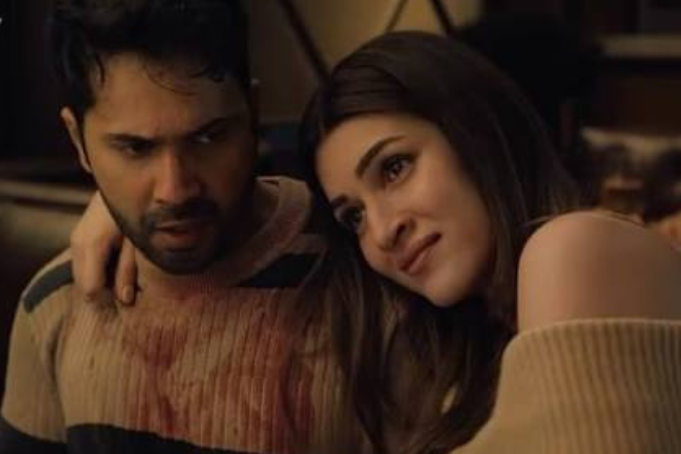
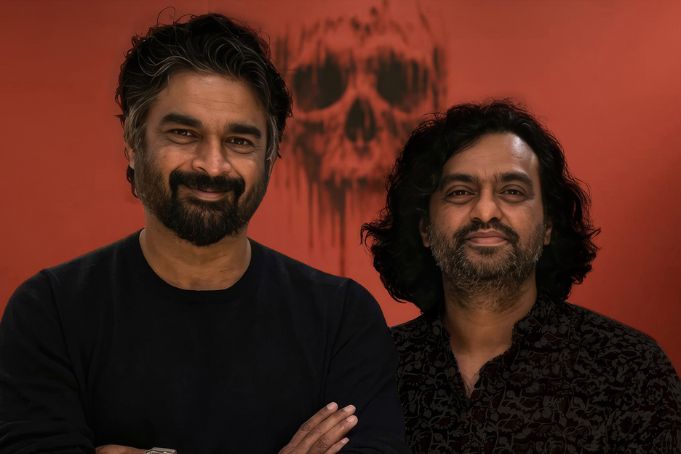
Comedy filmmakers and actors defining the horror genre
One of the biggest examples of the genre swap is Jordan Peele, who began his career in improv and sketch comedy, starring in the Emmy and Peabody Award-winning series “Key and Peele” alongside frequent collaborator Keegan-Michael Key. Peele’s “Get Out,” “Nope” and “Us” are considered some of the best psychological horror films in the last decade. David Gordon Green, director of the “Halloween” slasher franchise and “The Exorcist: Believer” (2023), began with films like “Pineapple Express” and “Prince Avalanche”. His frequent collaborator, Danny McBride (“Tropic Thunder”, “Eastbound & Down”), co-wrote the “Halloween” films.
Two actors — one from the American and one from the British version of “The Office” — John Krasinski and Matthew Holness —chose horror for their directorial debuts—“A Quiet Place” and “Possum.” Osgood Perkins, director of “Longlegs,” “The Monkey,” and producer of “Backrooms,” starred in “Legally Blonde” and “Not Another Teen Movie.” “Weapons” filmmaker Zach Cregger starred in sitcoms like "Wrecked," “Friends with Benefits” and “Guys With Kids” and was part of the sketch comedy troupe “The Whitest Kids U’ Know.”
Closer to home, filmmakers Priyadarshan (“Bhool Bhulaiyaa,” “Bhooth Bangla”), Amar Kaushik (“Stree,” “Stree 2,” “Bhediya”) and Raghava Lawrence (“Kanchana,” “Laxmii”) have established their talents as horror-comedy makers who began their careers directing outright comedies. Vikram Bhatt, who made the genre-defining cult classic “Raaz” (a remake of Robert Zemeckis’ “What Lies Beneath”), also made comedy riots like “Awara Pagal Deewana” and “Deewane Hue Pagal.” Even Anvita Dutt, whose directorial debut was the acclaimed period horror “Bulbbul”, wrote for beloved comedies like “Housefull”, “Dostana” and “Bachna Ae Haseeno.”
When it comes to actors, heroes like Akshay Kumar, Ajay Devgn, R. Madhavan and Kartik Aaryan and supporting actors like Rajpal Yadav, Paresh Rawal, Yogi Babu and Vadivelu have made smooth transitions from the realm of comedy to horror-comedy.
Why comedy filmmakers get horror right
Alfred Hitchcock, when asked during a 1969 BBC interview why he hadn’t made a comedy, famously said, “But every film I make is a comedy.” In fact, while promoting “Psycho” (1960), the legend who became synonymous with horror had said that the film was a joke: “The content was, I felt, rather amusing, and it was a big joke. I was horrified to find some people took it seriously.”
Popular on Variety
“Mard Ko Dard Nahi Hota” director Vasan Bala offered an interesting perspective on why comedy filmmakers get horror right. “Maybe they’re laughing because they’re scared, like a defense mechanism? The horror or what scares you reveals your true personality, and that’s why they’re so good at it.”
There’s something about horror, often a perversion of an idea that shocks us, which stems from the same place as comedy. To crack a joke, one must look at something normal, usual or banal with a twisted perspective (an “ooltah chashma”, if you will), and wonder, “What if?” The same imagination is employed when creating a horror scenario.
“Munjya” and "Shakti Shalini" director Aditya Sarpotdar explains it best by drawing parallels between the two genres. “Both horror and comedy, in the sense of how a director grafts and perceives drama, are very similar. For a comedy, too, you set up a joke and deliver it for the audience to laugh. Same with horror. You set up fear, and you deliver fear.”
He adds, “When you’re doing horror and comedy as two separate genres, you need to understand that you laugh at something familiar and, again, you are scared of something familiar. That’s why jokers and kids are the biggest and best elements of horror. What is the most endearing sometimes, or the most fun, is also the most horrifying. That’s when I feel horror and comedy go hand in hand.”
Take Kane Parsons’ “Backrooms,” for example, whose origins can be traced back to a simple image of an empty furniture store painted in a sickly yellow color that went viral on the web. Someone saw the image and let their imagination run wild, picturing it as a place where one could “no-clip” into, with different levels, each with unique abstract monsters.
A Love for Horror Is Still Essential
So does that mean all comedy actors and directors would be excellent at horror? Sarpotdar lays down a caveat. “If a director can do horror-comedy really well, they can also pull off horror, if horror is something they’re interested in. That’s the catch. Because I know a lot of people around me who don’t watch horror films because they really scare the hell out of them, and it’s a very upsetting thing for them to go to the theatre and watch a horror film. So, I understand there is a certain audience who doesn’t believe in consuming horror films because they think it’s not the emotion they want to associate with, which is fine. But if you’re one of those, then you will not be able to make a horror film. You will definitely end up only making a comedy. And you should. Imagine a David Dhawan making a horror film. Oh my God!”





Comments are moderated. They may be edited for clarity and reprinting in whole or in part in Variety publications.