



Oct 24, 2026 12:37pm IST
The Border Never Closed: Keeping Partition Alive
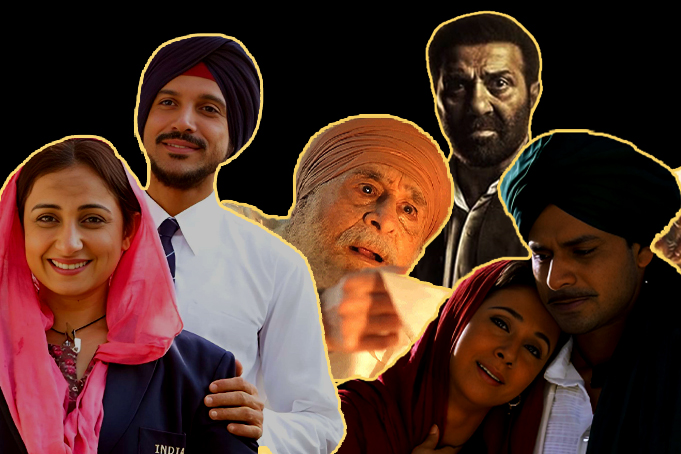
Some events leave history books. Others refuse to leave people. Nearly eight decades after the Radcliffe Line carved the subcontinent into two nations, Partition continues to cast a long shadow over Indian cinema. It survives not merely as a political event, but as an emotional inheritance passed down through stories, silences, family memories and unresolved longing. Every generation seems to find its own way back to 1947. Some through grief, some through nostalgia, some through love.
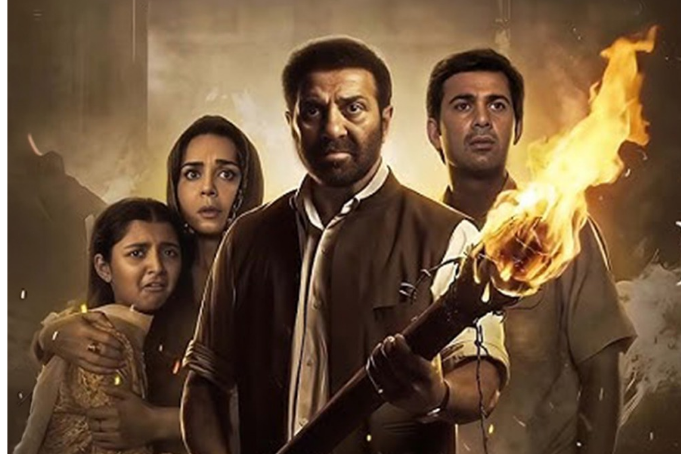
Now, with Imtiaz Ali’s “Main Vaapas Aaunga” and Rajkumar Santoshi’s “Batwara 1947” bringing Partition back into focus, the question emerges again: Why does Hindi cinema keep returning to this wound?
The answer may lie in the fact that Partition was never just about borders. It was about homes left behind, identities fractured, relationships interrupted and lives permanently altered. History may record nations, but cinema remembers people.
Trauma that never became the past
The scale of Partition remains almost unimaginable. Historians estimate that nearly 14 million people were displaced during the largest mass migration in modern history, while up to a million lives were lost. Yet despite its magnitude, filmmakers argue that Indian cinema has barely scratched the surface. “Freedom at Midnight” writer Abhinandan Gupta believes the event remains underexplored. Gupta tells Variety India, “Partition is not an event that happened in 1947. It is a process and it is still continuing to happen and it continues to live with us. If you draw a parallel with the number of Holocaust films made in the West, much fewer Indian filmmakers have touched upon Partition.”
Gupta points out that human suffering remains unparalleled. “One million people dead, 14 million displaced and 90,000 women raped. Those are astonishing figures of a human rights catastrophe,” he sighss.
For filmmaker Nandita Das, whose “Manto” explored Saadat Hasan Manto’s response to Partition, the event continues to resonate because its wounds were deeply personal. She introspects, “It was not just a historical or political event and a redrawing of borders. It changed the lives of millions of ordinary people overnight. They lost homes, places of work, family and friends, identity and a sense of belonging. The wounds and memories of that have been passed on through stories, inherited fears, prejudice and unresolved grief.”
Related Stories
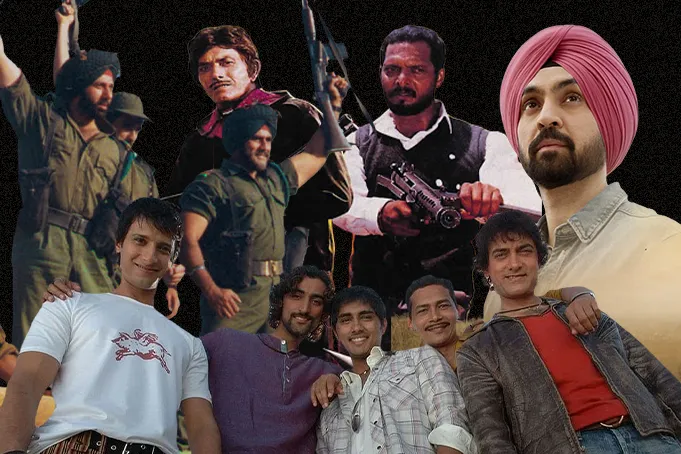
Cinema remembers people, not politics
Interestingly, the films that have endured are rarely the ones most concerned with political negotiations or constitutional decisions. Instead, they focus on ordinary lives caught in extraordinary circumstances.
M.S. Sathyu’s “Garam Hawa” explored the emotional uncertainty faced by Indian Muslims in the aftermath of Partition. Govind Nihalani’s landmark television epic “Tamas” examined how ordinary people become trapped within communal violence. Chandraprakash Dwivedi’s “Pinjar” explored displacement through the story of a woman caught between communities. Deepa Mehta’s “Earth” examined Partition through the eyes of a child in Lahore. Pamela Rooks’ “Train to Pakistan” adapted Khushwant Singh’s classic novel into a deeply human tragedy.
Film historian Nasreen Munni Kabir believes this is precisely why these stories continue to resonate. She opines, “I think there are basically two schools of films on the subject. One that remembers and perhaps highlights the violence, enmity and destruction. The others are human stories, stories of love and stories of friendship.”
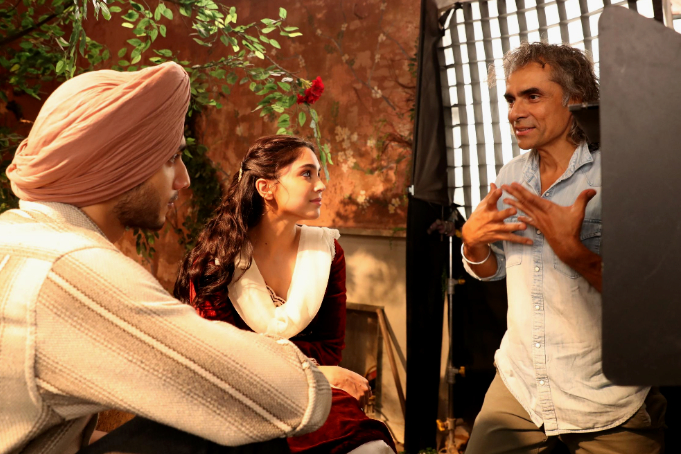
For Imtiaz Ali, whose “Main Vaapas Aaunga” is in theatres right now, the focus was never the violence itself. “’Main Vaapas Aaunga’ is more about love and longing than the horrors of Partition,” Ali tells Variety India. He adds, “It’s the personal story of a man and his lost love. The love story is in focus and the events of Partition are out of focus, though they do happen.”
That distinction is crucial. Ali spent years speaking to survivors while developing the film and discovered something unexpected. He shares, “Even 78 years after Partition, all they remembered were incidents of love and tender moments. They did not speak about hatred. This generation has not only survived Partition but also conquered hatred with love.”
Why love outlives hatred
No filmmaker articulated this idea more passionately than Rakeysh Omprakash Mehra, whose “Bhaag Milkha Bhaag” remains one of the most commercially successful films shaped by Partition’s aftermath. Mehra grew up in a Delhi refugee colony surrounded by people who had crossed the border in 1947. “I have heard all kind of stories,” he says. “There was horror, there was violence. But everybody also talks about love and good times.”
For Mehra, the distinction lies between a nation and a homeland. “Country ka passport hota hai. Watan ka passport nahi hota. (A country needs a passport, your homeland doesn’t)” . He adds, “Watan (homeland) is where your soul resides.” He argues that hatred may generate immediate reactions, but love leaves a deeper imprint. “Hatred is a very easy currency. It gives immediate results. But love creates an echo that stays with you.”
This philosophy explains why “Bhaag Milkha Bhaag” remains fundamentally a story about emotional scars rather than political blame. Mehra states, “When I was making it, I was only wanting to tell a story about Milkha Singh. In his story, I found a story in the backdrop of Partition. Even today when I watch the film, it is about an emotional wound that shapes a man.”
Winning over the box-office
The emotional power of Partition narratives has often translated into commercial success. “Gadar: Ek Prem Katha” became one of the biggest Hindi blockbusters ever upon release in 2001 before “Gadar 2” shattered records in 2023 with collections exceeding ₹500 crore net in India. “Bhaag Milkha Bhaag” crossed ₹100 crore globally and became a landmark sports biopic. “Raazi” emerged as one of the defining hits of 2018, earning over ₹120 crore worldwide while drawing heavily from the geopolitical realities created by Partition.
Yet, their success reveals an important pattern. Audiences respond most strongly when filmmakers focus on individual lives rather than ideological positions. As Srijit Mukherjee, director of “Begum Jaan,” explains, “Most successful Partition films deal with micro stories. The politics can make for a great documentary. But if you want to understand the actual body of the tragedy, you have to get into stories of how Partition affected common people.” Mukherjee endorses Gupta’s views on how India has barely explored the subject compared to how Western cinema has examined the Holocaust.
He elaborates, “If you look at how the West has dealt with the Holocaust, I mean just the sheer range, the genres, the mind-boggling variety of subjects pertaining to the Holocaust which has been dealt with in countless films and documentaries. I don’t think we’ve done 10% of that. You can’t compare tragedies, but Partition is no less in terms of being a human tragedy. It’s the biggest human migration in the history of mankind and the brutality unleashed, the loss of life, loss of honour, loss of property. It’s unimaginable, the scope. So, I don’t think in popular culture, we’ve really done enough for Partition and the relevant themes.”
The stories still untold
Even after decades of films, those who study Partition believe entire perspectives remain missing. Gupta points to neglected narratives from Kashmir, Jammu, Sindh, Assam, Bengal and tribal communities. He further highlights, “We can look at Partition through class, caste and gender. What was the Dalit experience? What was the transgender experience? There has been a tendency to hyper-focus on Punjab.” Nandita Das agrees. “Our cinema has only scratched the surface. Countless stories are still waiting to be told. Not just of violence and loss, but also resilience, compassion and the everyday ways people rebuilt their lives.”
Yet not everyone believes Indian cinema’s repeated return to longing and nostalgia is enough. Screenwriter Kamlesh Pandey, known for “Rang De Basanti,” argues that Partition remains one of the least objectively examined chapters in popular culture. “There are three different perspectives to look at Partition because there are three main players — Britain, India and Pakistan,” he says. “Unfortunately, all three have chosen the perspective that suits their agenda.” Pandey believes cinema has often gravitated towards emotional memory at the expense of historical interrogation. “Unless there is an objective, fair, incisive and ruthlessly honest vision to understand Partition, films will continue to depend on loss, longing and nostalgia,” he asserts.
Empathy rules over 70mm
For all the bloodshed and displacement associated with 1947, the filmmakers we spoke to repeatedly returned to one word: empathy. Mukherjee sees Partition stories as lessons in “love and fraternity.” Gupta feels stories of kindness need to be at the forefront, saying “For every story of horror, there are stories of people providing refuge, safety and protection. The human spirit prevails.”
Imtiaz Ali echoes that sentiment through “Main Vaapas Aaunga,” while Mehra takes it even further, imagining an alternate history where Partition never happened at all. “I think the one thing that hasn’t been explored, which I often daydream about, is an alternate history. I want to tell a story where there was no Partition. It’s something quite prevalent in literature; alternate history. Where you imagine and reimagine scenarios that could have been. And I truly believe that Partition could have been avoided. Totally avoided. That’s the story I want to tell one day,” Mehra concludes.
Perhaps that is why the border remains one of cinema’s most enduring subjects. Not because filmmakers are trapped by history, but because they continue searching for the humanity that survived it. The maps changed in 1947. The emotions never did. And that is why Hindi cinema keeps returning to Partition: not to remember where the border was drawn, but to understand everything it could never divide.
With inputs from Bharati K Dubey














Comments are moderated. They may be edited for clarity and reprinting in whole or in part in Variety publications.