



Aug 15, 2026 11:30am IST
From ‘Border’ To ‘Batwara 1947’: Filmmakers Reflect On What Patriotism Means On Screen Today
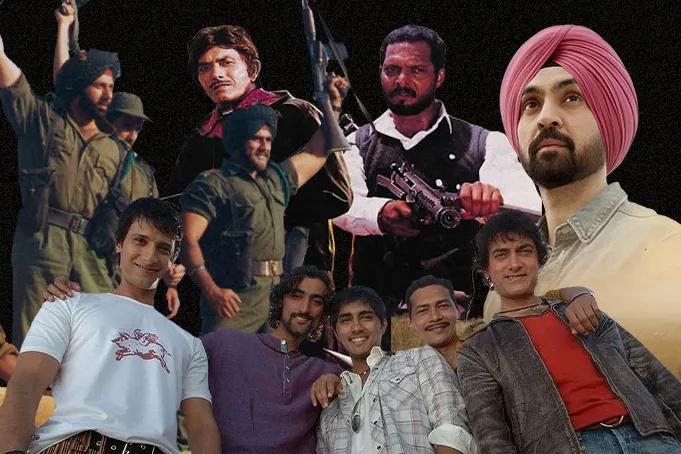
Patriotism is one of the most powerful emotions cinema can put on screen. It can make a theatre erupt, reduce an audience to silence or turn a song into a memory shared across generations. But patriotism is also one of the easiest emotions to manufacture. A flag, a uniform, a swelling score and an enemy can create the appearance of national pride. The harder task is making audiences feel that pride because they have first felt something human.
So what does it really take to make a patriotic film in India today? The answers from nine filmmakers and producers across generations are strikingly different. For some, patriotism begins with sacrifice. For others, it is belonging, culture, memory or the courage to question the country one loves. Some believe patriotic cinema must be loud and passionate. Others warn that the moment it becomes jingoistic, it loses its emotional truth.
But beneath those differences is a common belief: the country cannot be the only character in a patriotic film. The people have to be.
It Begins With Emotion
J.P. Dutta knows this territory better than most. The director of “Border,” “LOC Kargil” and “Paltan” has spent decades putting soldiers and their sacrifices on the big screen. “I think ‘Border’ understood that patriotism is an emotion,” Dutta says, emphasizing that for him, “patriotism was never aggression. It was pride, sacrifice and duty.”
That distinction is central to his entire body of work. “I have never celebrated war. I have celebrated the soldier. There is a difference. What is there to celebrate about war? Somebody’s son doesn’t come home. Somebody’s husband doesn’t come home. Children lose their fathers. And that happens on both sides of the border,” he avers. For him, acknowledging the enemy’s humanity does not dilute national pride. “I can salute the courage of a soldier and still wish that the battle never had to be fought,” he elaborates.
That emotional inheritance has passed directly to the next generation through Niddhi Dutta, producer of “Border 2” and “Paltan.” “Pretty much everything that I’ve ever learned about patriotic cinema comes from dad,” she says. Yet when reflecting on the legacy of “Border”, she refuses to measure success through pure scale or numbers, insisting that “you can’t beat emotion.” Even cutting-edge modern technology, in her view, must strictly serve that feeling. “My philosophy was simple - we use the technology that we have only to show reality. We cannot go overboard, especially when it’s warfare, because what you’re doing is trying to mimic real life,” she says.
Related Stories
Patriotism Is Not Only About War
Raja Krishna Menon, director of “Airlift” and “Pippa,” approaches patriotic cinema through a much wider lens. “I think we need to ask the question, what is patriotism? It is not about decimating another. It’s not about the other. It’s about you,” he shares.
His perspective moves away from the conventional belief that patriotism requires combat or a battlefield. “I think acts of patriotism are as much as someone taking care of building a road or making someone’s life easier or saving water or planting trees. All of this is also patriotism. It’s all trying to make life better. A patriotic film is one that, in the end, makes me feel that I belong,” he observes.
The Country and Its Culture
Mehul Kumar, director of films like “Tirangaa”, “Krantiveer” and “Kohram,” feels a filmmaker’s first responsibility is to ensure the nation on screen feels authentic to its people. “We look for stories in which our culture, our society, our festivals, our emotional attachment to our family, all these things should be there in our culture,” he says.
While his films carried firm, high-stakes declarations against terrorism—reiterating that “terrorists cannot finish us, we will finish them” he strongly cautions against letting spectacle override narrative core. “What has happened now is that people pay more attention to the effect, not to the emotions. Now, there is patriotism, but the attention is on action or special effects, because that has become easy. You forget the sentiment and the main idea of your story. It should not be like that.” For him, true patriotism is anchored in social harmony. “For me, this is patriotism: the country where we were born, where we live, we should live in harmony with everyone. We should do something that even after we die, people remember us.”
The Jingoism Question
The delicate balance between genuine pride and commercial excess is where Rajkumar Santoshi draws a definitive line. The director of “The Legend of Bhagat Singh,” “Pukar” and “Batwara 1947” rejects treating patriotic subjects as a formula. “I have never made a patriotic film. Because many people do business with patriotic films. They think you can make easy money. I get inspired by characters,” Santoshi states.
Whether exploring revolutionary ideals or historical trauma, Santoshi roots his films in human drama rather than political posturing. Speaking of “Batwara 1947”, he highlights that “it is a very human drama... It is against hatred. It talks about love. It talks about understanding. It talks about sharing.” He views guarding against exaggeration as a cinematic obligation: “When you deal with a patriotic subject, where do you draw a line so that you don’t get converted to jingoism? It is very important. It should be sensitive. The moment you do jingoism, it loses its value. It loses its impact.”
Director Anil Sharma, whose blockbusters include “Gadar”, “Gadar 2” and “Ab Tumhare Hawale Watan Saathiyo,” views that emotional register from a contrasting angle. “Actually, patriotism is deep and loud,” Sharma counters. “If it is not loud, then there is no patriotism. How can there be patriotism without passion?”
Love Is a More Difficult Emotion
Rakeysh Omprakash Mehra, whose “Rang De Basanti” redefined how a generation of young Indians viewed their relationship with the nation, cautions against relying on aggressive shortcuts. “Hatred is a very easy currency,” Mehra points out. “Bada aasaan hai na, aap nafrat bech sakte hain aur usse immediate results mil jaate hain (It’s very easy, isn’t it? You can sell hatred, and you get immediate results from it).”
He believes that anger is short-lived. “It explodes, there is a little noise, and then it is gone. But love is something else. It is an echo that goes beyond your senses. It stays with you. It will always be there.” For Mehra, patriotism reaches far beyond defending geographical boundaries and into daily societal duty. “Patriotism is about being proud of yourself. It is about your culture, your tradition, your art, your happiness, how you treat your elders, how you treat your young ones, how you treat your brothers, how you bridge the gap between the rich and the poor.”
History Does Not Have to Inherit Hatred
Imtiaz Ali’s “Main Vaapas Aaunga” approaches patriotic memory through the trauma of Partition. While researching the film, Ali interviewed eyewitnesses of the era, expecting bitterness but finding something far more profound. “What was common was that, even so many years after the Partition, all they remembered were incidents of love and tender moments. They did not speak about hatred,” Ali shares. “This generation has not only survived the Partition but also conquered hatred with love.”
This realization convinced him that cinema can confront painful history without perpetuating old animosities. “I do think the history of our country should be a part of our cinema,” Ali maintains, “but in a manner that does not evoke hatred, but instead encourages camaraderie and love.”
The Courage to Look Inward
For Pathikrit Basu, director of “Keu Bole Biplabi Keu Bole Dakat”, patriotic cinema must evolve alongside contemporary reality. “A genuinely relevant patriotic film must stop treating India’s national identity as a finished product or an unblemished monolith. We have had plenty of stories telling us that India is great; what audiences haven’t heard enough of is that patriotism is an evolving, uncomfortable conversation, not a fixed monument,” he asserts.
He believes true love for a nation requires the maturity to confront its complexities. “Real love for the nation involves holding up a mirror to its contradictions, acknowledging the forgotten heroes, the disillusioned idealists, and the grey areas of our history,” Basu explains. His distinction between shallow theatricality and authentic devotion is clear: “Jingoism relies on creating an external enemy to manufacture unity; genuine patriotism focuses on internal truth, humanity, and justice.”
What Makes the Emotion Earned?
Each filmmaker views patriotism through a different lens. J.P. Dutta locates patriotism in the soldier’s solemn duty, while Niddhi Dutta anchors it in emotional authenticity over digital spectacle. Raja Krishna Menon finds it in everyday civic belonging, Mehul Kumar ties it to cultural unity, and Rajkumar Santoshi builds it strictly around rich human characterization. Anil Sharma demands unapologetic passion, Rakeysh Omprakash Mehra champions love over easy animosity, Imtiaz Ali reframes historical trauma through empathy and Pathikrit Basu calls for the courage to interrogate national contradictions.
Their styles and artistic philosophies vary widely, but their collective insight points to a singular truth: national pride is easy to display on screen, but far harder to evoke in an audience’s heart. Spectacle, anthems and flags can fill a frame, but the feeling endures only when viewers see an authentic reflection of their own humanity within the narrative.
With inputs from Bharati K Dubey









Comments are moderated. They may be edited for clarity and reprinting in whole or in part in Variety publications.