



Nov 14, 2026 12:02pm IST
Children’s films: A forgotten genre
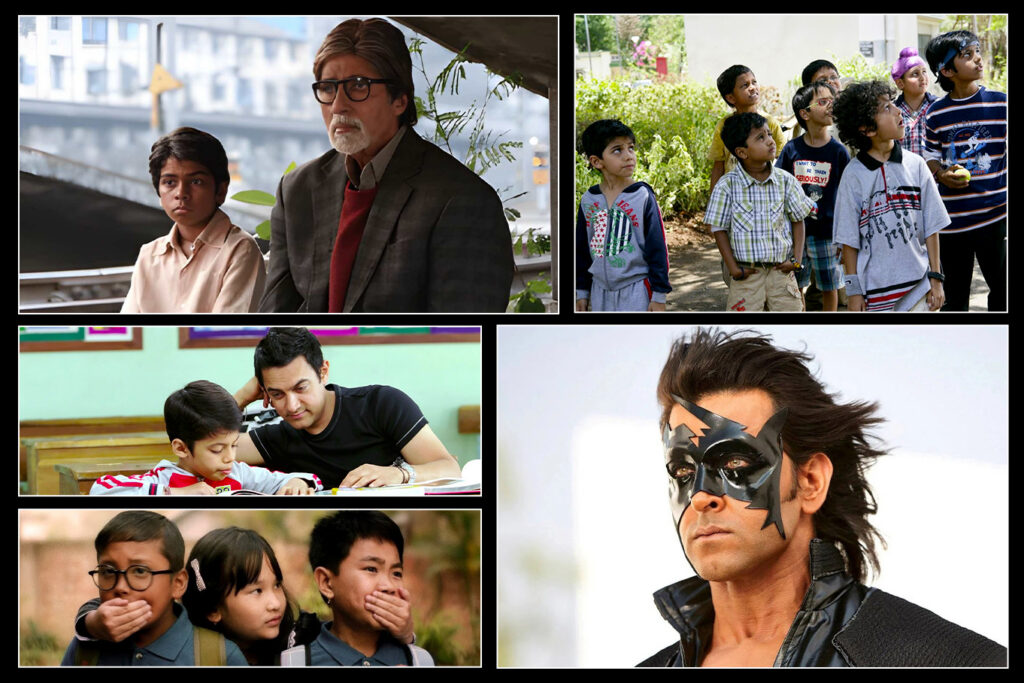
They treated them as complete human beings with fears, intelligence, desires and inner worlds of their own. In a country where nearly one-third of the population is under 18, a striking absence remains. There are films about children, and occasionally films featuring children, but dedicated cinema made from their perspective has become increasingly rare.
The question therefore is not merely whether Indian cinema has stopped making children’s films. The more uncomfortable question may be whether it has stopped recognising children as an audience worthy of serious artistic and commercial investment.
That was then
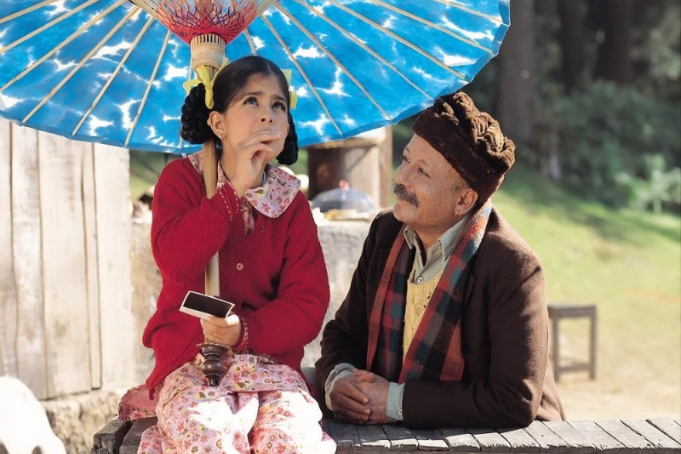
Sai Paranjpye’s “Halo” (1996), Vishal Bhardwaj’s “Makdee” (2002), “The Blue Umbrella” (2005), Aamir Khan’s “Taare Zameen Par” (2007), Vikas Bahl and Nitesh Tiwari’s “Chillar Party” (2011) all demonstrated that stories centred around children could find both critical acclaim and emotional resonance with audiences.
Unlike Hollywood, where studios like Disney and Pixar built global empires around family and children’s storytelling, Indian cinema never developed a consistent ecosystem for the genre. The reasons were many: uncertain theatrical returns, distribution challenges and the belief that children’s films occupied a smaller commercial space.
Related Stories
The National Film Awards recognised the importance of the genre by instituting an award for children’s cinema in the 1950s. The Children’s Film Society India (CFSI), established in 1955 under the Ministry of Information and Broadcasting, was also created to promote meaningful cinema for younger audiences. However, despite producing and supporting several films, the organisation struggled to build a sustained mainstream theatrical culture for children’s cinema before it was merged with the National Film Development Corporation (NFDC) in 2022.
The economics of filmmaking also changed. As the theatrical market became increasingly dependent on star power, opening weekends and high returns on investment, films made for younger audiences gradually occupied less space in mainstream production.
Seeing the world through a child’s eyes
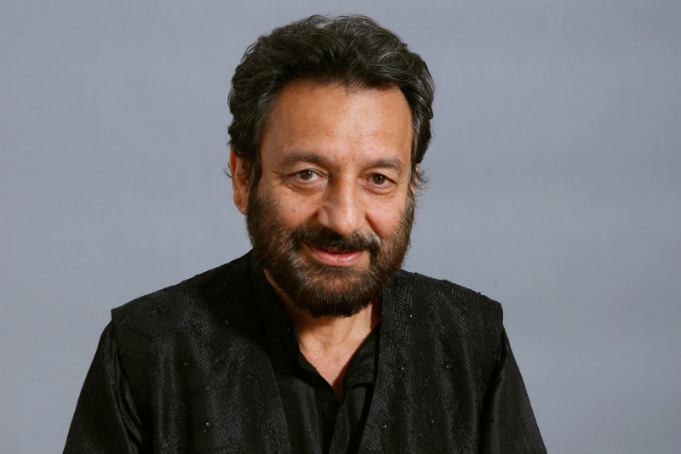
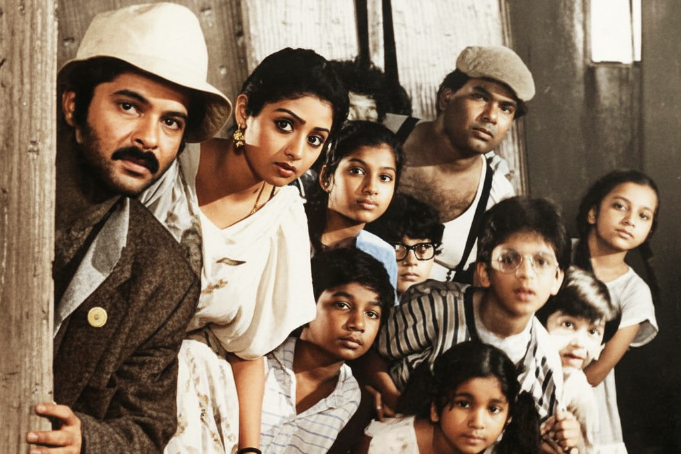
For Shekhar Kapur, whose “Masoom” and “Mr. India” remain two of Indian cinema’s most enduring films involving children, the problem begins with the adult tendency to decide what children should watch. Kapur explains his approach while directing “Mr. India.” “I had a 11-year-old version of me next to me all the time. I was constantly challenged by an 11-year-old Shekhar Kapur.” His argument finds an interesting parallel in the views of Lakshmipriya Devi, director of the Manipuri-language film “Boong,” which won the BAFTA award for Best Children’s and Family Film. For her, children’s cinema cannot be approached as a calculated market category.
She opines, “I think the genre is defined by a story you want to tell. You can’t decide the genre first and say, ‘Now I’m going to make a children’s story.’ That would be really dishonest. It has to be based on what you want to tell. It can’t be just treated as children’s content. I think the word ‘content’ is problematic. ” Devi believes children’s cinema cannot be manufactured by chasing a demographic.
Dearth leads to decline
The decline of children’s cinema is also a reflection of changing priorities. As theatrical economics became increasingly driven by stars, franchises and larger spectacles, films rooted in childhood, innocence and everyday emotions slowly began to disappear from the mainstream.
Actor Jackie Shroff, who has regularly featured in children’s films and lately starred in “The Great Grand Superhero,” asserts, “A good children’s film is never only for children, it brings families together. We need more stories rooted in warmth, wonder and values without preaching. If we trust good storytelling and support such films with the same belief as any mainstream film, this space will grow beautifully.”
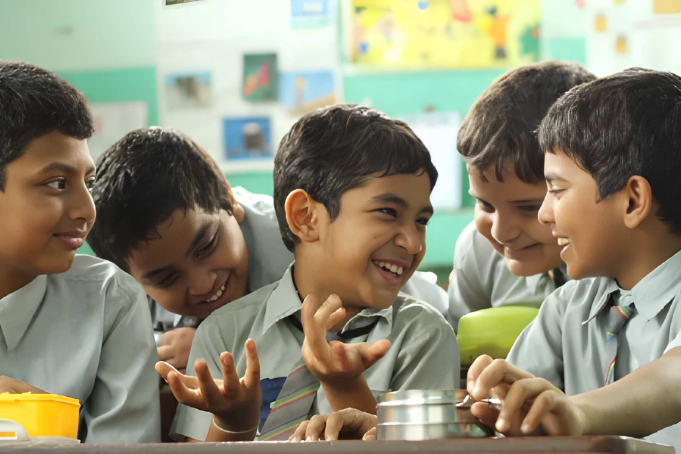
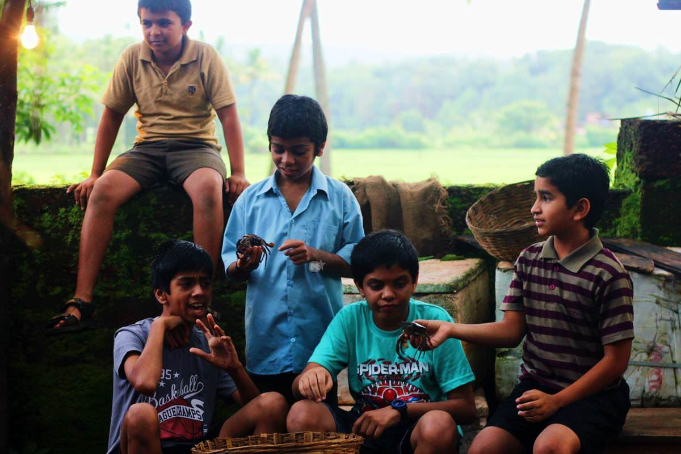
Not everyone has completely abandoned younger audiences. Filmmaker Amole Gupte, whose work includes writing “Taare Zameen Par” and directing films like “Stanley Ka Dabba” (2011), argues that the crisis is more specific to mainstream Hindi cinema. “We are getting great inputs from Marathi with films like “Fandry” and “Killa” and from some other languages. A Hindi film setup is too commercially structured for regular children’s films!”
The argument also extends beyond the question of quantity. The issue, according to many, is that very few films genuinely attempt to understand children’s perception of the world. Shujaat Saudagar, co-producer of “Boong,” believes the shift in mainstream cinema has created a visible absence of stories seen through a child’s eyes. He states, “I think because there is a certain shift in mainstream cinema, ‘Taare Zameen Par’ did deal with children in that sense. But on a majoritarian level, there are not many films which are telling stories of children the way they see and view the world. There is a lack there, but hopefully films like ‘Boong’ give the impetus to filmmakers to tell such stories.”
The recent recognition of “Boong” on the international stage also offers a reminder that stories centred around childhood can travel beyond geographical and cultural boundaries when told with authenticity.
Writer-director Rohan Mapuskar agrees that a children’s movie can be made only by filmmakers who are passionate about filmmaking.
 “Marathi movies, filmmakers definitely dare to work with commitment and not overthink about the commercials! So, my to-the-point answer is that there are a lot of subjects but no guts! Interestingly, my “April May 99” has remained among the top three or four Marathi films till date on Prime, where it released in August 2025 after a successful theatrical run. My conclusion: The audience is there! ”
At the heart of the debate is a contradiction. India has one of the world’s youngest populations and a vast audience of children consuming stories every day through various platforms. The question is whether the Indian film industry has stopped creating theatrical spaces for them.
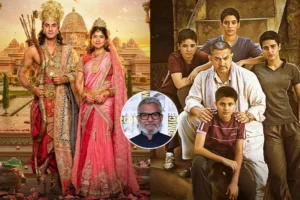
Nitesh Tiwari, who co-directed “Chillar Party,” directed “Bhoothnath Returns” (2014) and is currently working on “Ramayana,” believes the challenge is less about the audience and more about the industry’s perception of commercial viability. He asserts, “I strongly believe that there is a good market for children’s films, provided we have a proper release strategy. I think the expected box-office potential or ROI is demotivating producers.” For Tiwari, one successful children’s film can once again alter the industry’s confidence. The bigger challenge is whether filmmakers and producers are willing to take the first step.
Market mechanics
The question of children’s cinema in India is deeply tied to economics. Producers and studios often hesitate to back such films because of a long-standing belief that they do not have a reliable theatrical market.
Rajkumar Hirani, whose filmography has repeatedly demonstrated the power of emotional, universally accessible storytelling, believes the hesitation stems from a perception of the market rather than an absence of audience. “The studios hesitate to make a film because they feel that there’s not a market for such films.” I always feel there’s one. It’s just what story you choose to tell. For example, in ‘Koi Mil Gaya’ and ‘Krrish’, Hrithik and Rakesh Roshan went ahead and made beautiful films for children. Even for ‘Chillar Party’, director Nitesh Tiwari made a beautiful film. But at that time they were struggling to sell it. It’s a choice individual filmmakers and studios have to make to put it out there.”
 ‘Chillar Party went on to win the National Film Award for Best Children’s Film. But its journey to the screen was far from straightforward. Tiwari points out. “No one was willing to invest in a story of 10 kids and a dog!” Tiwari, however, remains optimistic that it will take just one major success to alter industry perception and inspire more filmmakers to return to stories centred around children.
Filmmaker Nila Madhab Panda, whose films such as “I Am Kalam” (2010) and “Kadvi Hawa” (2017) have consistently engaged with social realities, finds the lack of investment in children’s cinema particularly puzzling given India’s demographic reality. He rues, “I don’t know why we are lagging behind. In the next few years, we are set to become the youngest nation in the world!”
Panda’s concern points to another major shift. Today’s children are no longer limited by geography or language. A child in India can move from Japanese anime to Hollywood animation, Korean dramas, or international fantasy franchises with a single click. This has dramatically raised expectations around storytelling, craft and visual ambition.
However, creating such cinema is only half the battle. Reaching audiences remains an equally difficult challenge. Panda reflects, “I had a long two-year campaign to sell ‘I Am Kalam,’ so my question is: To get where we want, do we concentrate on making the film, or on its marketing? If we don’t create a space or an ecosystem, we will lose out. Children’s cinema isn’t a small genre, and it has a ready audience!”
This belief that audiences can be educated rather than simply followed is also echoed by Vikesh Bhutani, co-producer of “Boong,” who points to the evolution of industries such as Malayalam cinema and South Korean cinema.
He tells us, “Malayalam and Korean film industry kept giving thought-provoking cinema to the audience. Today, the audience has evolved so much that they are able to take any cinema. They don’t care about the genre. They have stopped labelling cinema. We also have to do our duty by keeping on giving good cinema. If we don’t take that step forward, we will again be questioning our existence. We are not perturbed by the commercial sense of it. We have to stop slotting cinema in a certain way.”
History suggests that when filmmakers trust children with honest, emotionally rich stories, the audience often responds.
 Stuck in the middle
The debate around children’s cinema is not simply about the absence of films. It is also about a larger industry perception that places such stories in a narrow category. In reality, some of the most enduring films made for younger audiences have also resonated deeply with adults. Filmmaker and writer Tarun Jain, who is currently writing a children’s film, admits that the lack of such stories in mainstream cinema remains difficult to explain. He says, “Maybe writers and directors are not interested because of market pressures. But such movies are never as risky as others.” His argument touches upon an interesting contradiction. While family audiences routinely embrace stories that feature children or are rooted in childhood, the industry often hesitates to actively market films as children’s cinema.
Manish Saini has consistently believed in the space. Saini’s Gujarati films “Dhh” (2017) and “Gandhi & Co.” (2023) both received the National Film Award for Best Children’s Film, proving that regional industries continue to nurture the genre even when mainstream Hindi cinema struggles to.
Saini believes the biggest obstacle is a lack of confidence, not a lack of stories. He explains, “We have preconceived notions that certain formats like horror comedies, rom-coms and action alone work, so we are unwilling to explore other areas. We are underestimating this genre. And nobody has any reliable data that such films don’t work.”
While Saini feels that a government agency must support this genre so that it does not die. Panda doesn’t agree, “Films are a private business. If the government finances a few films, what will really change? We cannot blame the government for this.” The difference of opinion reveals the complexity of the issue. For some, institutional support is essential to create an ecosystem for children’s films. For others, the responsibility lies with filmmakers, producers and the market itself to recognise a neglected audience.
Officially speaking…
Prakash Magdum, Managing Director of NFDC, states that the institution remains committed to developing children’s cinema. Beyond individual productions, Magdum points out that NFDC’s role extends to developing projects and creating opportunities for emerging filmmakers.
He states, “It is the NFDC’s mandate to work on children’s cinema. NFDC has a Film Bazaar and a lab named Work in Progress. In the former, we support all kinds of cinema, including children’s films, right from scripting stage to editing and beyond. With Work in Progress, we recently helped ‘Boong’, when they needed mentorship.”
NFDC is also looking at rebuilding the larger ecosystem around children’s cinema. It is reviving Hyderabad’s International Children’s Film Festival that was discontinued after 2018, and there are plans to sponsor deserving filmmakers to visit foreign festivals both for exposure and marketing. The larger question, however, remains whether institutional support alone can solve a problem that is equally tied to audience habits, distribution networks and the economics of theatrical exhibition.
For decades, children’s cinema has survived in pockets, through indie filmmakers, regional industries and government-backed initiatives. The time is now right for it to find a meaningful place within mainstream Indian cinema.
Quality: Need of the hour
The biggest challenge for Indian children’s cinema today is that the competition is no longer just with the film releasing in the neighbouring theatre. It is with the entire world. Magdum also believes that Indian cinema must recognize the changed viewing habits of younger audiences and rise to global standards.
Panda cites examples of European nations that create ecosystems for children’s films to thrive.
“We have to create an ecosystem. Basic community viewing like we see in European countries like Germany, the Netherlands and Sweden, must be started. Schools must be involved as happens there with massive children’s film festivals that last for two to three days. In a big park, these are great attractions. We lack spaces that protect childhood and entertain childhood. So the right distribution network is only needed. Remember that our children’s population outnumbers the total inhabitants of several countries.”
Solutions at play
Can animation become a possible answer to India’s children’s cinema problem? Mapuskar cautions against viewing animation as a universal solution. “Animation, or for that matter VFX or AI, must be used only if it is required. They cannot get in the emotions that will resonate. It is we who have to put in the feelings! Animation will work only if the story demands that format,” he stresses.
Tiwari believes that children today have no shortage of spectacle, but what they lack is a diversity of stories created specifically for them. He elaborates, “Kids will go and watch superhero films. But I would still say they are not really craving for it, but are merely getting their fill! The truth is that there is not enough content. They are not getting a healthy dose of proper cinema, but now, the benchmarks have been set and what we make with meagre budgets may not pass muster!”
The central irony of the debate around children’s cinema in India is that the audience never disappeared. Children are still watching stories every day, only now they are travelling across countries and cultures to find them. The real question is whether Indian cinema is willing to once again look at the world through a child’s eyes. The most memorable films made for children never treated them as future audiences. They treated them as audiences of today.











Comments are moderated. They may be edited for clarity and reprinting in whole or in part in Variety publications.