



Nov 12, 2026 1:50pm IST
Are Screenwriters Getting a Raw Deal in the Film Industry?
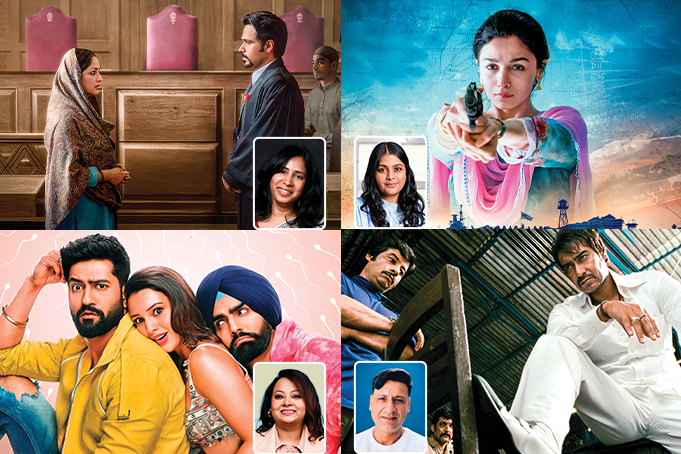
A survey by Tulsea and Ormax Media of writers across TV, streaming, films, advertising and documentaries has revealed discouraging statistics pointing to widespread dissatisfaction among Indian screenwriters. So, is there something truly rotten in the state of screenwriting, or should the malaise unearthed be seen merely as a pointer rather than a decisive verdict on writers’ state of affairs? Like any research, the small sample size — in this case, 254 respondents — suggests the truth may lie only in fragments. Still, it is important to separate perception from evidence.
Variety India spoke to some reputable writers from the industry whose contribution to the industry has not only been immense but they also represent some of the best creative minds in this space.
But first, a detour to the research findings: 74% of the respondents were of the view that they were not being paid fairly and 52% said that these payments were not being made in time. In the first edition of this research, carried out in 2023, only 63% complained about being paid unfairly and only 40% spoke about delayed payments as opposed to 52% in this survey. 78% spoke about having to follow up on payments due to them.
Not being given fair credit for the work they do was something 54% of those surveyed mentioned. And 64% felt that there was no defined industry standard for credits that producers and platforms follow. In the star-versus-script equation, only a mere 6% felt that producers value scripts over stars in theatrical productions. And in OTT, a whopping 83% said that the perceived value of scripts has declined. In 2023, 76% had felt scripts were prioritized over stars, in OTT, but that figure has come down to 62% now. Only 19% said they have access to good mentors, a drop of 11% from 2023, and 76% feel that the industry does not provide adequate infrastructure for writers to develop their craft and only 38% feel they have access to effective grievance redressal. Now, for the AI-shaped elephant that looms large in the creative space—41% said they use AI at least sometimes, but 47% do not see the emergence of AI as a threat. However, a sizable 68% said that AI reduces the value of human creativity in producers’ eyes and 50% were of the view that because producers assume the usage of AI, they expect faster deliveries and turnaround times.
Related Stories


Variety India spoke to Reshu Nath, Bhavani Iyer, Rajat Arora and Ishita Moitra to get their take on these findings and to assess if things were really going downhill for screenwriters. Listen in…
Reshu Nath
Prominent Projects: Haq, Unpaused, Stupid Cupid, Karrle Tu Bhi Mohabbat
Things haven’t deteriorated. They’ve actually improved over the years. We now have contracts, signing amounts, payment schedules, tranches, all very professional now. But then comes a wily clause, like ‘payment upon approval.’
Approval is a moving target. You can rewrite a project into the afterlife while someone decides whether it is ‘approved’ enough for them to pay you. Sometimes the project is already dead, but the rewrites carry on, till you finally say, ‘okay, I give up, don’t pay me, but release me from this Sisyphean labor.’ Are writers undermined? Not exactly. We’re foundational but much like the plumbing. We are absolutely essential, mostly invisible.
But there are some studios and production houses that actually are very fair to their writers. I am grateful to have worked with them.
Are stars prioritized over scripts? How often does a poster say, ‘from the writer of…’ and audiences rush to the theater? Before we blame producers or OTT platforms, we should acknowledge the ecosystem. Even the end-consumer values stars over scripts.
Also, a good script means different things to different stakeholders. For writers, it’s instinct, voice, craft. For platforms and producers, it’s the other spectrum. Viability, data, completion rates, retention graphs. They measure success through algorithms. Writers measure it through intuition. Naturally, one sounds delusional to the other.
Is it a perception issue? Maybe. But it’s also structural. This is a business. We live in the age of reels, cringe-watch, hate-watch, viral spikes and opening-weekend numbers. Visibility often trumps depth.
So yes, writers are getting a raw deal. But it’s not always malice. It’s the market speaking. If storytelling is art, and industry is arithmetic, arithmetic will always win. Sad, but true.
Bhavani Iyer
Prominent Projects: Black, Raazi, Guzaarish, Meri Awaaz Hi Pehchaan Hai
I think screenwriters have always been either exalted to the skies or extremely undermined. Success is the only altar of worship and a writer who has successful film(s) is considered better; craft or experience or brilliance have nothing to do with how they are regarded, unfortunately. The star system is not a new one, the Hindi film industry has always been star-driven and that’s rarely changed at any point in history. I believe that today many writers are self-aware, cognizant of their space in the scheme of things, refuse to fit themselves in the ‘poor me’ mold. They aren’t afraid to ask for their dues; be it credit or remuneration or a place at the table. Whether they get all that they rightly deserve is unfortunately a game of chance and depends upon the ethics and morals of the people in charge of said projects.
As far as my understanding goes, AI is not something to be feared, because it is very unlikely to replace artists; because it needs to be fed information to create, it cannot put words on a blank sheet of paper or type into a new document without several prompts. And even then, a good mind can always identify AI-generated text and material. No filmmaker worth his or her talent would replace a good writer with AI; it’s not interchangeable! And anyone who does that is probably not someone any writer would or should engage with. AI can be a great asset, and can help with research that would otherwise take much longer and greater digging. If used well, it can be an ally and aid but will never be a threat to a good writer with a vision and a unique voice, because that’s exactly what it doesn’t have.
I find it quite tiresome when people expect writers to constantly play the victim card and bemoan about being given a raw deal. I don’t see myself or my fellow writers as weak or powerless. And all these percentages and statistics can be daunting but at the end of the day, movie-making is not just about these, it is respectful collaboration, storytelling and artistry. And above all, we choose our dignity and what we are willing to put up with. Sometimes the going gets tough, but artists have lived through all kinds of challenges and prevailed.
Popular on Variety
Rajat Arora
Prominent Projects: Once Upon a Time in Mumbaai, The Dirty Picture
First off, everything is interconnected. The issue of being paid unfairly and not getting the credit that is due to writers is not a new one. I have been hearing this refrain for the last 30 years. While not discrediting these concerns, I think there are certain facts we must take into account too. Writers, today, pick up a lot of work. They say yes to everything. Where is the exclusivity? The Salim-Javed duo did not take up more than 15-16 films in that many years. I am sure producers would have been falling backward to sign them on and everyone would have wanted the two onboard. But did they take everything that came their way? No. But in their case, their writing is what gave birth to India’s biggest superstar and some of the most iconic characters in Bollywood. So, the point I am trying to make is if you give good content, good material, why will a producer not give you what you deserve? If you turn in content that has the potential to become a good bankable film that can be mounted on a big scale, everything will follow. Money, recognition, more work. Let’s disabuse ourselves of the notion that producers are out there to only fleece us. I may have faced this issue a few times of not being paid fairly or not getting the credit due to me, but those instances have been few and far between. Let’s remember that the producer is trying to make a good film and it all comes down to the budget of the film. And everyone knows that stars sit on top of the hierarchy and take the lion’s share of this budget. But let’s help a film get a turnover of ₹1000 crore, ₹800 crore, ₹500 crore, ₹200 crore, and you will get what you deserve since you helped the film reach this stage. This is a simple equation of demand and supply.
Also, let’s not forget that the industry is currently going through a rough patch. When the going gets rough and tough, we all need to get together to tide over these adverse circumstances. We are all part of the same ecosystem, and this blaming game will only discourage and deter up and coming writers who are looking at a career in the entertainment space. There is a fear among some writers that their ideas will get stolen during narration. I think this fear is totally unfounded. We need to create an environment of positivity and encouragement, not fear and negativity.
I feel writers have a tendency to feel discriminated against, and this feeling, somehow, is unique to writers. I don’t see other HODs feeling that way. Not cinematographers, DOPs or others. My submission to all writers is let’s consistently deliver good work and create an enviable body of work. Then we will not have to fight for anything. Everything we deserve and more will come our way. The picture we paint should not be gloomy; it should be upbeat so that writers can and are encouraged to thrive. We need to write better films. Show our strength. No one can, then, take away what is due to us.
Ishita Moitra
Prominent Projects: Rocky Aur Rani Kii Prem Kahani, Always Kabhi Kabhi, Bad Newz, Kambakkht Ishq
The contracts are drafted in such a way that a screenwriter usually only gets 10% signing amount of the total consideration and then proceeds to write the entire first draft of screenplay after fleshing out the story. A lot of times this is done with dialogue as well. This is the foundation of the film and it’s really a lot of hard work. It could easily take between six months and a year. And after this the writer is paid 20 percent for the first draft, only if it is approved. Earlier it used to be on submission of the material and in some production houses it is still on submission, (and in some the amount is divided into 10-10 percent each - upon submission and approval). So, if you are a young writer, working on one project, say on a ₹25 lakh contract, then your entire income for a whole year, if you are lucky, will be ₹7.5 lakh, or, if you are unlucky and your draft is never approved after it was submitted, and your contract is such, then it will be only ₹2.5 lakh! How can any young person in such a situation aspire to be a writer?








Comments are moderated. They may be edited for clarity and reprinting in whole or in part in Variety publications.