



Aug 22, 2026 2:00pm IST
‘Zubeen Garg – The Voice That Bridged Worlds’ Book Review: A Factual Account That Lacks Soul
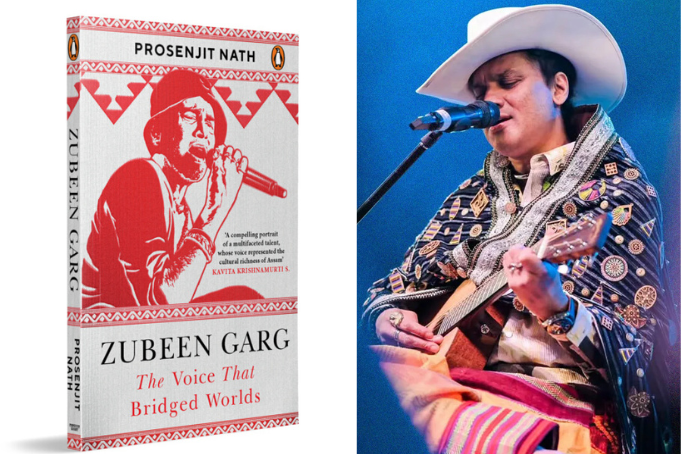
Writing a biography involves a delicate balance between chronicling factual information and capturing the living essence of a subject. In an era where a quick internet search yields endless timelines, a published book must offer something more substantial. In “Zubeen Garg - The Voice That Bridged Worlds,” author Prosenjit Nath presents a structured recount of the iconic singer who became a defining cultural figure in Northeast India. While the book effectively documents his rise, it often struggles to transcend the surface level of a detailed encyclopedia entry.
The book is likely to divide its readership into two distinct groups, both of whom may feel somewhat unsatisfied. Unfamiliar readers looking for a deep dive into Garg’s personality will find a noticeable absence of personal accounts. The narrative lacks accounts or anecdotes from his family, close friends, music collaborators or industry peers. While the introductory section contains advance praise for the book, the core text misses the authentic voices that usually bring a biographical subject to life. Furthermore, the absence of photographs is a lost opportunity for a figure whose dynamic career extends far beyond recording studios into film, mentorship and social activism.
For diehard fans who already know his discography by heart, the book poses a different issue. These readers naturally look for unseen anecdotes or fresh perspectives. Because the book sticks closely to well-documented milestones, it offers little new material for those who could easily recount his journey from memory.
Related Stories

Despite these limitations, the book covers significant ground regarding Garg’s cultural roots and artistic evolution. The early chapters focus heavily on his childhood in Assam, portraying the region as a rich cultural melting pot. Nath highlights his parents’ artistic background and Garg’s early exposure to literature and music, framing this environment as an informal education that shaped him far more than traditional schooling.
Readers trace his trajectory from winning a gold medal in 1992 to finding his footing as a regional sensation. Nath successfully captures Garg’s role as an artist who gave Assam a contemporary voice without severing its traditional roots. By blending modern sounds with folk traditions like Bihu, Tokari Geet and Goalparia melodies, he showed aspiring regional artists that success did not require abandoning their native identity. His ability to move seamlessly between languages is also well documented, particularly his deep connection to Bengali music. Raised in a household where Bengali was spoken and formally studied, Garg embraced the genre naturally, earning an immense following in West Bengal and Bangladesh.
The biography also touches on his eventual move to Mumbai in 1995, detailing his initial struggles with failed auditions before finding nationwide fame with “Ya Ali” from “Gangster” (2006). That one unforgettable song changed everything for him, propelling a regional icon into a household name across India. Yet the book beautifully captures how he remained deeply connected to his roots. Beyond music, the text sheds light on the man behind the microphone through his extensive humanitarian work and his tireless relief efforts during crises like the COVID pandemic.
He was an outspoken political voice and a gentle mentor to many artists. The narrative then builds to a poignant close as it details his sudden tragic passing in 2025. Nath writes with heartbreaking clarity about Garg's death and his final journey. Cremated with full state honors and a 21-gun salute at Kamarkuchi village in Sonapur, his funeral drew a massive gathering. It was an unprecedented, historic outpouring of grief, a moment where an entire state stood still to say a tearful goodbye to a beloved legend, marking a profoundly emotional event that the people of Assam will never forget.
Ultimately, Prosenjit Nath provides a clean, well-ordered chronicle of a monumental musical career. The narrative stays entirely factual and respectful throughout. However, by relying almost exclusively on surface-level information rather than intimate anecdotes, personal testimonies or visual archives, the book remains a useful introductory guide rather than the definitive, soulful biography Zubeen Garg’s complex legacy deserves.













Comments are moderated. They may be edited for clarity and reprinting in whole or in part in Variety publications.