



Sep 23, 2026 1:10pm IST
‘Sophie, Standing There’ Book Review: Meg Mason Writes an Empathetic, Funny Ode to the Complex Women and Fangirls
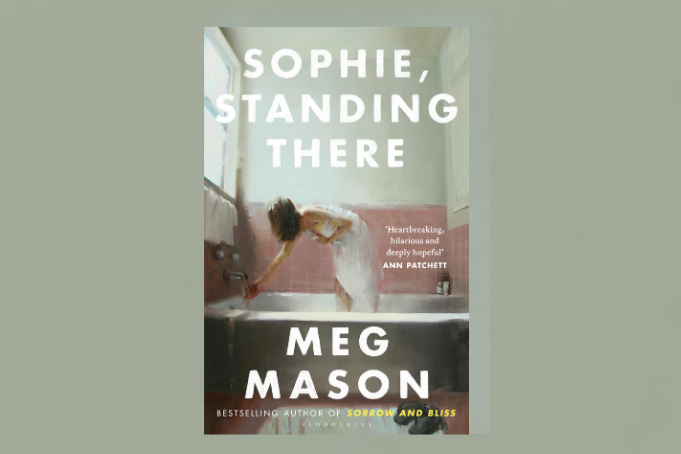
When you pick up “Sophie, Standing There,” author Meg Mason’s latest after the award-winning “Sorrow and Bliss,” the cover instantly piques your interest. A woman clad in white, drawing up a bath, her face hidden but inviting you to explore further. The novel, too, is exactly that—an invitation to read the protagonist’s thoughts, which Mason lets flow, uncensored, and discover the grief behind her unassuming existence.
Unlike her last novel, dubbed “sad girl fiction” by some, the protagonist of Mason’s “Sophie, Standing There” doesn’t appear sad or depressed, at least not on the surface. In fact, Sophie Pattison isn’t anything. She barely lets her emotions take up space. Recovering from a marriage that ended abruptly—but one she let go of without questioning—Sophie is a freelance backstage technician working the literary festival circuit. A recent reader, she consumes books and loves discussing them with her brother, Laurie, who lives a few towns over with his wife, Jo (yes, the “Little Women” nod has been addressed). Sophie has exactly one best friend, Emma, who she has been feeling distant with, and the guilt of unanswered texts, missed plans and awkward conversations is her frequent companion. Sophie carries all of this silently, living in a small apartment owned by her ex-husband, Paul, who lets her stay on minimal rent while he builds a life with another woman and her child.
Related Stories


As measured as Sophie is in her interactions with the world, Mason writes her inner thoughts with absolutely no filter. From the very first sentence, her stream of consciousness runs free. And Sophie’s thoughts are jumpy: From how she doesn’t mind if "the Talent" at literary festivals don’t spare her a look as she mics them up and what she thinks of her colleagues or the stage decor (she wants Kentia Palms), to Sophie's first thoughts of Lilac Dunne, the author she pitches as a future guest at the literary festival and who she ends up developing an unhealthy parasocial relationship with.
It is in these thoughts that Mason's sentence syntax tests a reader’s patience, at a stage when they are trying to establish their connection with Sophie and understand her world. But once you get used to the laborious sentence construction, you can sift out the insightful details that attest to Mason's mastery over writing complex women. Sophie’s desire for the new Ikea armchairs, her microwaved meals, the color of the lapel mic wire, the scene at the salon where a haircut means so much more than just a beauty treatment… they all speak volumes about Sophie’s suppressed emotions and invoke a piercing sense of relatability.
Similarly, Lilac Dunne makes for a fascinating character study in how fame and adoration can make a person cruel or detached in their interactions with the world. Lilac has the singular power that several charismatic people employ—they can make you think you’re the most important person in the room, and the next instant, they're cold and indifferent. Mason is able to charge the scenes between Lilac and Sophie with tension and a palpable sensuous chemistry. Their interactions frustrate you as much as delight you, making you just as fearfully nervous and euphorically excited to meet your heroes as Sophie was throughout the book.
Popular on Variety
“Sophie, Standing There” is a moving, often hilarious, and rather empathetic look at a woman who contains multitudes. Sophie is a “sad girl”: Unimposing, lonely, touch-starved, grieving and programmed by her past to repeat behaviors. But she is also beautiful, intuitive, well-read, kind, funny, the hardest worker and a fangirl who constructs elaborate fantasies about meeting her favorite author. She doesn’t need pity, and you cannot “fix” her. This is a journey she must undertake alone (with some therapy, of course), egged on by the people and stories that enrich her inner world. Mason etches out Sophie so convincingly that she is instantly real to anyone who has sought comfort, escapism and strength to overcome and carry on from their parasocial relationships with celebrities and various media like films, shows, video games and books.
In an exclusive chat with Variety India, Meg Mason offers a great insight into why the novel is called “Sophie, Standing There.” “It’s trying to give some attention to this very unassuming woman who would never put herself forward. I also realised that whenever Sophie feels uncomfortable, unwelcome or unseen, she's always standing up. But then when something good happens to her, she's usually sitting down.”
The novel feels timely for a world that has become spectatorial and increasingly lonelier, where access to any person’s life through social media has deluded people into thinking they truly know them. Often, parasocial relationships can empower you to transform your life, get out of a bad phase or a rut, chase a new profession or overcome grief. But for the vulnerable, they’re also a hot petri dish for obsessions to turn toxic and keep you from living a real life. The book traces Sophie’s journey from the darkness to the light; from surviving to truly living; from her inner, imaginary world that feels safe to the real one, full of people who care about her, but which might require effort that is absolutely worth it. Ultimately, the book leaves you with hope that only real human connection can inspire.
“Sophie, Standing There” is published by Bloomsbury.














Comments are moderated. They may be edited for clarity and reprinting in whole or in part in Variety publications.