



Nov 05, 2026 11:00am IST
‘Ramayana’ Review: Ranbir Kapoor Carries the Emotion, Yash Owns the Menace, Sai Pallavi Gives Sita Strength in a Spectacle of Uneven Depth
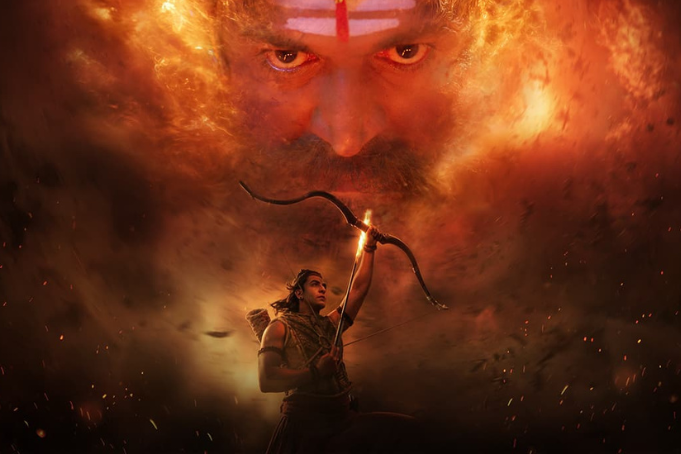
There is perhaps no greater challenge in Indian cinema than retelling the Ramayana. It is a story that audiences do not need to be introduced to. Its characters have lived in the homes, conversations and the collective imagination of Indians for generations. The real test, then, is not how spectacularly a filmmaker can recreate its world, but whether there is something new to experience.
Nitesh Tiwari’s “Ramayana” understands this challenge. Its most interesting moments come when it moves beyond the familiar interpretations of its characters and allows them to surprise the viewer. It does not always get the storytelling right, but there is a genuine attempt to look at this epic through a slightly different lens.
Based on Valmiki's epic, Tiwari's directorial features a screenplay co-written with Shridhar Raghavan and dialogues co-authored with Shreyas Jain.
The writing attempts to find an edge in a familiar story that is usually narrated in a linear manner. Rather than moving from one recognised episode to another, it looks for motivations, relationships, and emotional shades that can make these characters feel more relatable. This ambition is most evident in the way the film approaches Ravana, Sita and Lakshman.
The film makes a bold choice by establishing Ravana first. His war with the Gods and his rise to becoming the Swami of the three loks (realm) establish the scale of the antagonist before Lord Ram's journey fully takes shape. Yash brings a striking combination of rage, authority and ambition to Ravana, making a powerful impact, without even using words.
Related Stories

The screenplay explores Ravana's desire to bring equality within the rakshasa (demon) community, where his subjects should enjoy the same worldly and material privileges as their ruler. It is an interesting ideological layer to add to a character so often defined by his arrogance and hunger for power. The film does not absolve him of his actions; it attempts to show his worldview. It also makes his eventual confrontation with Rama feel like a battle against a formidable force.
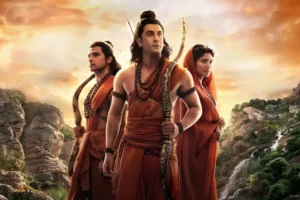
Ramayana’s most refreshing interpretation belongs to Sita. She is not defined only by her relationship with Rama or her place in Lakshman's life. She has opinions, convictions and a strong sense of self. In Panchavati, she fights demons alongside Rama and Lakshman. She is not simply someone who needs to be protected. She is a warrior who can hold her own, and someone who refuses to bow down to Ravana. Sai Pallavi is divine in the role. She embodies Sita's grace and dignity without allowing either to become her defining quality. There is strength in her gentleness, and conviction in the way she carries herself. The film gives Sita a completeness that is one its bigger achievements.
Ravie Dubey brings a welcome freshness to Lakshman. The character is playful and occasionally angry. His resentment towards Kaikeyi for putting his brother through exile gives him a recognisably human quality. There is a younger brother's impatience in his interactions with Lord Ram, and the latter knows exactly how to rein him in. Their relationship has warmth and humour without losing its underlying devotion. It is a lovely departure from the solemn way Lakshman is usually portrayed on screen.
As Lord Ram, Ranbir Kapoor takes a little time to settle into the film. The familiar Ranbir the audiences love, peeks through in flashes, however his command over emotional scenes is winning. When the journey towards vanvas (exile) begins, the film finally finds its emotional core. The weight of exile, the relationships being tested and the personal cost of duty give Kapoor the space to do what he does best. He becomes particularly effective each time the screenplay allows emotional quotient of the story to take over. Which is something the film struggles to establish in its opening stretch.
The first thirty minutes are visually stunning, but the narrative moves ahead in an episodic, jump-cut manner. Familiar incidents arrive in quick succession, often without allowing the viewer to connect with the story and characters. The Surpanakha track is particularly poorly assembled. Her entry, her encounter with Lord Ram and her attempts to convince him to marry her do not flow naturally. Rakul Preet Singh also struggles to blend into the character.
The shift towards vanvas changes the experience considerably. Hans Zimmer and A.R. Rahman's score lends the film a sweeping sonic identity, particularly in the sequences where the emotional stakes finally come into play. Their collaboration is one of the film's biggest assets, even though the music occasionally falls short of the crescendo that certain moments seem to demand.
“Ramayana” scores in the action department. Action directors Terry Notary and Guy Norris bring scale and precision to the combat. The war involving Shurpanakha's army and the confrontation between Jatayu and Ravana are particularly well executed, with a clear sense of movement and physical stakes. Cinematographers Pankaj Kumar and Mahesh Limaye capture the vastness of the world, while production designers Ramsey Avery, Ravi Bansal, Subrata Chakraborty and Amit Ray give it a suitably monumental visual identity. The costumes by Rimple Narula, Harpreet Narula, Ajay Kumar and Saniya Sardhariya blend the characters into their world. Huzefa Lokhandwala's sharp editing, often hinders the emotional beats from landing. Dan Glass supervises the visual effects, which contribute to the scale of the spectacle.
“Ramayana” is not without its shortcomings. When the audience already knows the broad strokes of a story, the screenplay has to work harder to make its emotional journey feel fresh. The film does not always manage that.
Its uneven handling of characters prevent it from achieving the emotional consistency it needs. On the plus side, the writers deserve credit because the film’s strongest choices are also its most impactful. A Sita who fights, a Lakshman who is allowed to be human and a Ravana with an ideology beyond his hunger for power and obsession with Sita . Sai Pallavi and Yash leave a lasting impression, while Ranbir Kapoor finds his stride when the film finally gets beneath the spectacle.
It doesnt always find the right rhythm, but when it does, “Ramayana” offers a compelling reminder that even familiar stories that have been told multiple times, can still have something new to say.









Comments are moderated. They may be edited for clarity and reprinting in whole or in part in Variety publications.