



Aug 24, 2026 8:30pm IST
Zebisco aka Yusuf Khan’s Daughter Fadhya AbouSher on Writing His Biography: ‘My Dad Was the Real Hero of ‘Amar Akbar Anthony’’ (EXCLUSIVE)
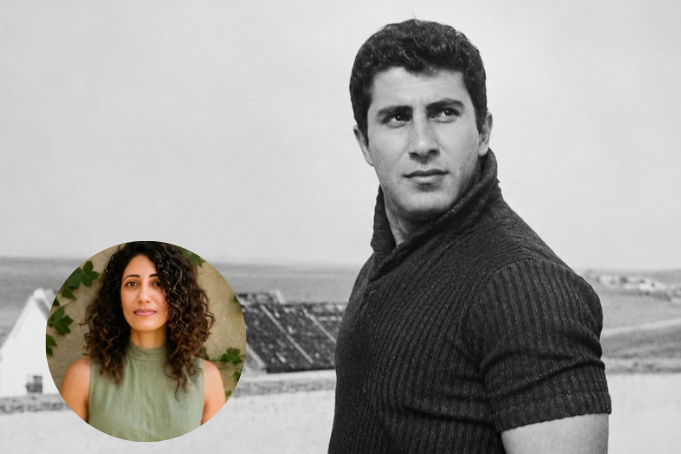
To generations of Hindi cinema audiences, Yusuf Khan is simply remembered as Zebisco; the sharply dressed, imposing bodyguard in Manmohan Desai’s “Amar Akbar Anthony.” The 1977 blockbuster, led by Amitabh Bachchan, Vinod Khanna and Rishi Kapoor. Desai gave Khan a character that eventually become inseparable from his name. Even decades later, his daughter Fadhya AbouSher says that when people mention the film, they bring up her father.
“For me, ‘Amar Akbar Anthony’ is Zebisco,” AbouSher tells Variety India exclusive conversation. “My dad was the hero of the film to me.” Khan played Zebisco, Jenny's (Parveen Babi) bodyguard and one of the film’s prominent characters in the film. He later played another character with the same name in “Naseeb.” Khan’s filmography also included films such as “Muqaddar Ka Sikandar,” “Don,” “Khud-Daar” and “Disco Dancer.” He died in 1985, leaving behind a career that, according to AbouSher, deserves to be looked at beyond the villainous and intimidating roles for which he became known.
That is the purpose behind her forthcoming book, “My Daddy Zebisco,” which seeks to put the man behind the screen persona back into focus. “Zebisco to you and Daddy to me is a paradox,” she says. “I want people to see Daddy through my eyes, my memories. So we merge, blend and bring to life Yusuf Khan, through this book.”
Related Stories

For AbouSher, the book is not simply a daughter’s memoir. She wants to correct what she sees as an incomplete understanding of her father’s life and career. “If you look at social media, Google him, and his Wikipedia page, you will realize that I’m making a historical correction here,” she says.
Growing up, she was accustomed to people telling her that Yusuf Khan was a legend but did not fully comprehend the scale of his work. That realisation made her look differently at the career he left behind. Khan was a striking and recognizable screen presence, often cast in villainous or intimidating parts, but AbouSher believes his physical appearance may actually have worked against him when it came to leading roles. “He was extremely good-looking,” she says. “He looked like a Greek God.”
She argues that his looks, physique and personality could have been both his greatest assets and a limitation in an industry built around carefully controlled star images. “People want to see realistic characters.” AbouSher believes filmmakers may have been reluctant to give Khan that opportunity because of the impact of his appearance. “Maybe they were insecure to give him the lead role,” she says. “Because it would've become all about him.”
She also points to his physique as a major part of his screen identity. “He had the most well-built, original, authentic body that he created from scratch,” she states. “He had the personality and the aura, that was too good to be true.” AbouSher, however, does not describe her father as someone who was simply failed by the industry.
“I’m not saying I regret anything or that Dad failed. Never,” she says. “If he had, then we wouldn’t be sitting here and talking about him. What he did was wonderful.” But she believes it is time to acknowledge his contribution to cinema.
“I think now it’s time to give him his due,” she says. “Which is why this book is coming out. I respect his work and I’m going to give him the credit, even after so many years, he deserves his dues.”
Ultimately, “My Daddy Zebisco” is AbouSher’s attempt to separate the man from the myth without separating him from the character audiences loved. “Dad was such a beautiful soul that his soul deserves to be alive even till date,” she smiles.
After spending her childhood seeing Yusuf Khan simply as her father, writing his story has changed how she sees his legacy. “He was my hero before writing the book,” AbouSher says. “But after writing the book, I want to look into his eyes and say, ‘You are my supernatural superhero.’”




Comments are moderated. They may be edited for clarity and reprinting in whole or in part in Variety publications.