



Jun 26, 2026 7:00pm IST
Richard Gadd And Jamie Bell On ‘Half Man’: ‘We Didn’t Want To Tell Audiences What A ‘Man’ Should Be’ (EXCLUSIVE)
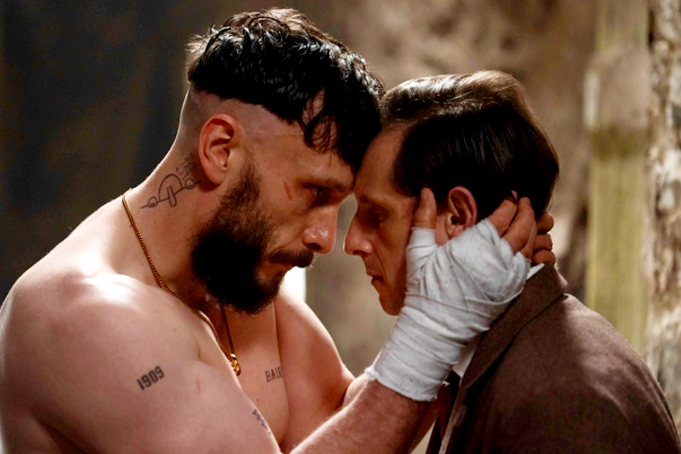
After transforming his personal trauma into one of television's defining series with “Baby Reindeer,” Richard Gadd could easily have continued mining autobiographical territory. Instead, his latest drama, “Half Man,” widens the lens. Spanning decades, the six-part series follows Niall and Ruben, two men whose lives remain deeply intertwined from childhood into adulthood, using their relationship to examine masculinity, identity and the invisible forces that shape both.
But if audiences expect "Half Man" to offer a definitive statement on what modern masculinity should look like, Gadd has no interest in providing one. "I wouldn't want my work to present the idea that men should be a certain way or are a certain way. I didn't want to tell the audience what a 'man' should be." Richard Gadd tells Variety India. "Because then I'm adding to a bigger problem."
For the Scottish writer, director and actor, the series is deliberately designed to resist easy judgments. Instead, it asks viewers to sit with contradiction.
Related Stories

The Boy Before The Man
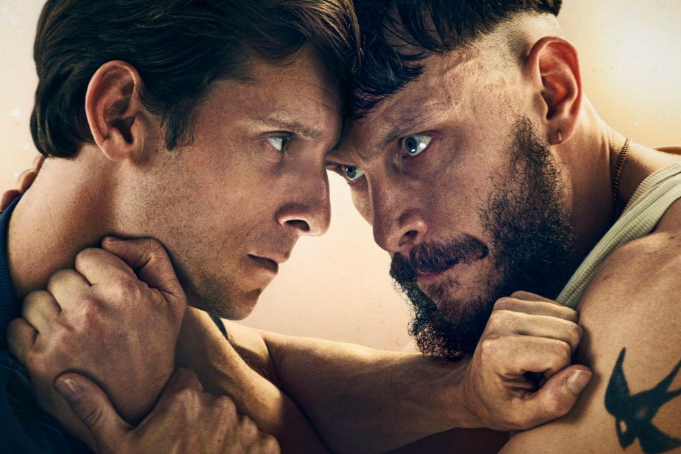
The decision to tell "Half Man" across multiple decades wasn't simply about creating an expansive narrative. It was central to Gadd's understanding of the story he wanted to tell. "It felt that in order to have a conversation around masculinity and how we got to where we are now, we needed to go back to their adolescence," he says.
That meant beginning Niall and Ruben's journey in the 1980s. "I thought the 1980s was an interesting time to set it as it is often the decade which is cited as being one of the most problematic in our history due to certain ignorances or subtle prejudices. It felt like a good way to start the characters' journeys and explore what they learn and inhabit from our less than accepting times."
For Gadd, understanding adulthood means first understanding childhood. “I also think seeing the characters in their youth establishes their relationship early on. The connections we make when we are young can be hugely formative and emboldening and I wanted to give meaning to their shared camaraderie and connection.”
He adds, "The friends we make growing up are sometimes the most powerful relationship we have, and I needed to show the good and the bad all at once and show how intertwined our early relationships can become."
Rather than presenting masculinity as something that suddenly appears in adulthood, "Half Man" traces its roots back to the relationships, expectations and social conditioning boys inherit long before they become men.
Rejecting Easy Answers
That philosophy extends to how Gadd approaches his characters. "I never want to beat audiences over the head with moral trajectories either," Gadd says. "There are two men struggling to live and coexist in a way. In seeing Niall and Ruben over an extended period, you never really know which of them is bad and which of them is good either."
It's this refusal to provide certainty that lies at the heart of the series. "I wouldn't want my work to present the idea that men should be a certain way or are a certain way, because then I'm adding to a bigger problem and so I hope that within 'Half Man,' there's a very human explanation of what it is to be a man, which is knotty and complicated, and hopefully the conversation around the show will feel like that too."
Popular on Variety
Jamie Bell On Playing A Man Trapped By Expectations
That complexity also shaped Jamie Bell's approach to Niall. "Niall is an incredibly complicated person. He's a product of a certain place and time – he was born in the seventies and is becoming a man in the 80s – and he has big identity struggles."
According to Bell, Niall's greatest conflict isn't external but internal. "He's not comfortable in his own skin and he's certainly not comfortable with looking inwards in any meaningful way." The tragedy, Bell suggests, is that Niall begins with compassion before gradually allowing social expectations to reshape him. "When we first meet Niall, he's genuinely someone who has a good heart, but systemically with everything going on around him, he becomes flattened into someone he thinks the world wants him to be."
That inability to confront his own identity eventually defines his relationship with Ruben. "A lot of Niall's social discomfort stems from an unwillingness to be honest and truthful to who he is and this leads to a lot of the problems he experiences within his life, such as this toxic relationship with Ruben who isn't his brother by blood, but is his brother in many other complicated ways."
Jamie Bell believes Niall is drawn to Ruben because Ruben possesses something he himself cannot. "Niall has identified Ruben as this aspirational person and I believe that's because Ruben is unapologetically who he is and although Ruben's problematic, at least he's honest."
Meanwhile, Niall remains trapped by self-denial. “Meanwhile, Niall is always fraught with this sense that he can't be honest about who he really is and that's the essence of their whole relationship.”
A Conversation Rather Than A Conclusion
If "Baby Reindeer" examined the scars left by trauma, "Half Man" broadens that inquiry into something even more universal: how boys become men, how relationships shape identity and why human beings are rarely as simple as heroes and villains.
Gadd says, "I hope that within 'Half Man,' there's a very human explanation of what it is to be a man, which is knotty and complicated, and hopefully the conversation around the show will feel like that too."
"Half Man" is set to premiere in India on Lionsgate Play in July.







Comments are moderated. They may be edited for clarity and reprinting in whole or in part in Variety publications.