



Jun 08, 2026 10:30am IST
The Big Screen Is Back: How Gen Z Is Reviving the Theatrical Experience in India
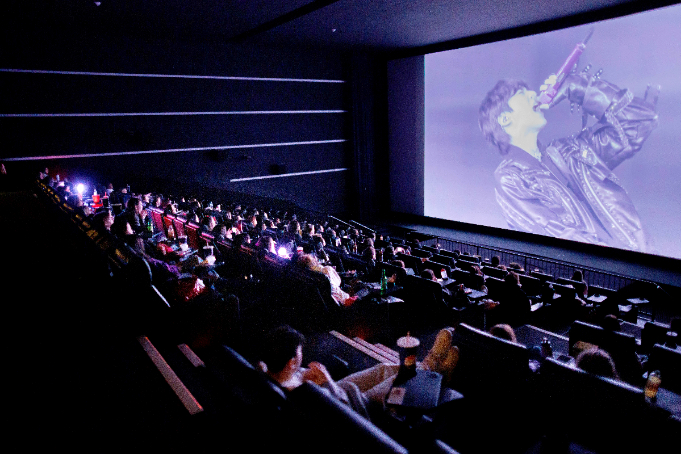
The narrative surrounding movie theaters has been remarkably consistent over the past decade. Streaming platforms expanded. Attention spans shrank. Social media became the dominant form of entertainment. Conventional wisdom suggested that younger audiences were slowly moving away from the big screen. But the numbers tell a different story. India’s youth are swapping phones for front-row seats.
According to Ormax Media's TOBAR 2026 report, audiences under 30 account for 57% of Hindi box-office revenue and 70% of opening-day collections. At a time when theatrical exhibition continues to battle perceptions of decline, India's youngest moviegoers have emerged as the industry's most influential audience segment.
The generation raised on streaming is now pushing back against being "chronically online." And looking for experiences where they disconnect from phone notifications and doomscrolling for a dedicated two hours. Unlike previous generations, they have not abandoned theaters. They have simply become more selective. The zoomers will occupy the big screen, when they are given the content they enjoy. Their presence is reshaping what succeeds, how films are marketed and increasingly, who gets the opportunity to tell stories. The question is no longer whether Gen-Z goes to theaters. It is what convinces them to buy a ticket.
Events, Not Just Movies
For years, industry conversations framed Gen-Z as an audience drifting toward streaming platforms and short-form content. What exhibitors are seeing on the ground paints a far more nuanced picture. "The conversation around Gen-Z and cinemas is often framed as a question of whether younger audiences are moving away from theatres," says Ashish Saksena, COO - Cinemas at BookMyShow. "What we're seeing instead is a generation that is becoming far more intentional about how it spends its time, attention and money. Their relationship with cinema hasn't diminished; it has become more discerning."
Related Stories

Unlike previous generations, Gen Z has immediate access to global entertainment. International television, Korean dramas, anime, YouTube creators and Hollywood blockbusters all compete for the same attention. The result is an audience that evaluates every theatrical outing as a choice rather than a habit. For many young viewers, cinema-going has become less about consumption and more about participation.
"The theatrical experience increasingly needs to feel like an event rather than just another viewing option," Saksena says. That helps explain why films as varied as "Saiyaara," "Kantara," "Mahavatar Narsimha" and titles from the Maddock Horror Universe have found strong theatrical support among younger audiences. Different genres, different scales and different markets. What unites them is their ability to generate conversation and cultural momentum.
The Problem Was Never the Audience
Film exhibitor Akkshay Rathie believes the industry's diagnosis has often been wrong. "The younger audience hasn't moved away from theatres, but the kind of content that we are making in India is largely disconnected from that audience," says the Ashirwad Theatres director.
Rathie points to films such as "Saiyaara" and the breakout international title "Obsession" as evidence that young audiences continue to turn up when they feel represented. "Every time movies that cater to their palette have come along, people have always turned up in big numbers," he says. "We just have lost our connect with that audience as an industry."
His argument reflects a growing sentiment among exhibitors. The challenge is not bringing Gen-Z back to theaters. It is creating stories that feel relevant to them. "There are multiple movies made by YouTubers that are doing insanely well in cinemas," Rathie says. "That is testimony to the fact that we need to rely on younger people who have the acumen to tell stories well and leverage them to bring the new young audience into the theatres."
The success of creator-led content has become one of the clearest signals of changing audience behavior. Younger viewers increasingly respond to authenticity and cultural familiarity over traditional industry hierarchies.
Gen Z Didn't Reject Theaters. It Rejected Mediocrity
Few filmmakers understand shifting audience behavior better than "Tumbbad" director Rahi Anil Barve. "I don't think Gen Z abandoned theatres. I think they abandoned boring films," he says. The observation cuts to the heart of the current theatrical landscape. Today's young audience can access some of the world's best storytelling with a few taps on a smartphone. That abundance has fundamentally altered expectations.
"If a film feels average, they'll watch something else," Barve says. "But if it feels like an event, an experience, something worth discussing with friends, they'll still come. The need for a shared experience hasn't disappeared."
That distinction may explain why original ideas and distinctive voices are increasingly outperforming formula-driven filmmaking. According to Saksena, audiences are becoming active participants in determining success.
"What’s emerging is a more democratic content ecosystem, where a film's ability to spark conversation, build advocacy and create a sense of discovery often matters as much as traditional marketing levers," he says.
Horror's Unexpected Young Audience
One genre has particularly benefited from these changing dynamics. Across Indian languages, horror has become one of the most reliable theatrical performers of the post-pandemic era. From supernatural thrillers and folklore-inspired dramas to horror-comedies, the category has repeatedly attracted younger audiences seeking communal viewing experiences.
“Virupaksha” director Karthik Dandu believes Gen-Z is at the center of the trend. "I guess the audience driving regional horror in India is primarily Gen Z and millennials, especially in smaller cities and towns, with strong support from family groups when films tap into folklore," he says.
The appeal lies partly in the theatrical experience itself. Horror remains one of the few genres that becomes more effective when watched with a crowd. Gujarati star Hitu Kanodia sees similar patterns emerging across markets. "Content is king and the youth audience is a testimony of that truth," he says. "They want new stories presented in a novel manner. Horror, horror-comedies and horror-thrillers are genres that kids seem to love." The popularity of such films suggests that younger audiences are not necessarily gravitating toward any one genre. They are gravitating toward originality.
Popular on Variety
The Future May Not Look Like the Past
Gen–Z's influence extends beyond content. It is also reshaping how stars and filmmakers are created. "The star system itself has changed," says Barve. "Earlier, audiences had fewer choices. Today every young actor is visible all the time across multiple platforms. Mystery was easier to maintain in the past."
Rather than disappearing, stardom is becoming more community-driven. "I think a new generation of stars is emerging," Barve says. "They may not look like the stars of the past. Their popularity may be more fragmented, digital and community-driven. In the future, being deeply loved by a specific audience may be more valuable than being known by everybody."
The same evolution is happening behind the camera. Saksena points to filmmakers such as Amar Kaushik, Aditya Dhar and Rishab Shetty as examples of how fresh voices are increasingly earning larger opportunities as the industry searches for storytellers who understand contemporary audiences.
The Audience Is Here. The Industry Must Catch Up.
The story of Gen-Z and movie theaters is not one of rescue. It is one of reinvention. The generation raised on algorithms, streaming platforms and social media has not rejected the theatrical experience. If anything, it has reaffirmed its value. What has changed are the expectations. Young audiences want originality. They want conversation. They want films that feel culturally relevant and emotionally engaging. Most importantly, they want a reason to leave home.
Theaters are discovering that Gen-Z is willing to show up. The real challenge now is whether the industry can keep earning its attention.















Comments are moderated. They may be edited for clarity and reprinting in whole or in part in Variety publications.