



Jun 02, 2026 11:00am IST
Will Ram Charan’s ‘Peddi’ Revive Lost Interest In The Sports Genre?
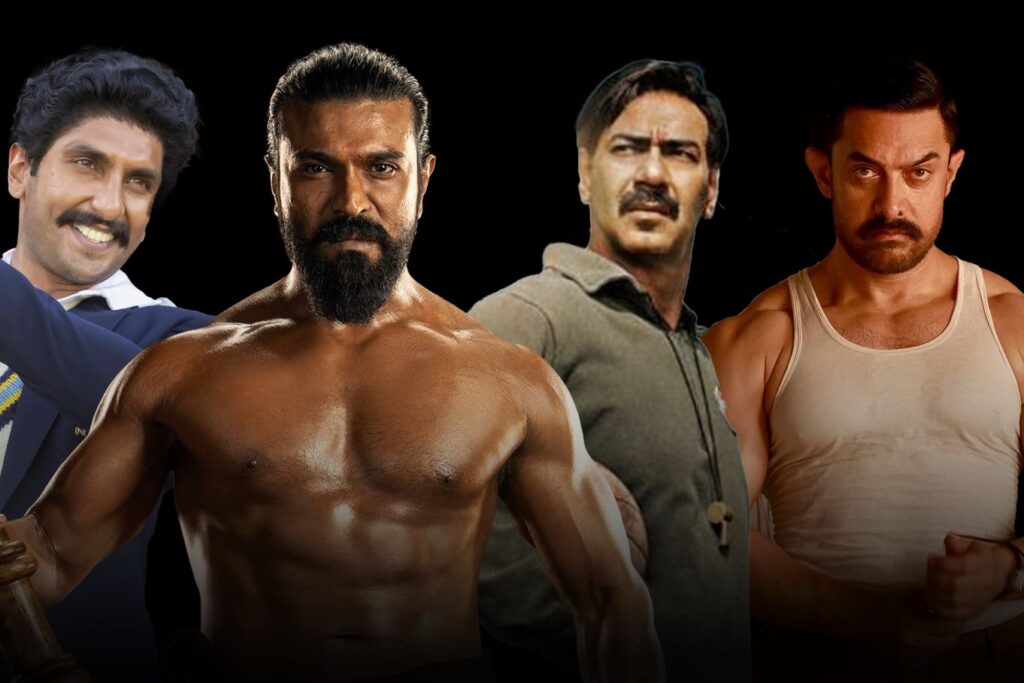
When the trailer for Ram Charan’s upcoming Telugu film “Peddi” dropped last month, the conversation quickly extended beyond the film itself. Directed by Buchi Babu Sana, the large-scale sports action drama positions Ram Charan as a rugged athlete across multiple sporting disciplines while blending rural identity, spectacle, action and emotional storytelling.
The messaging of the film is that “Peddi” is “more than just a sports movie.” Sports dramas once produced some of Indian cinema’s most celebrated successes. Films such as “Iqbal,” “Chak De! India,” “Bhaag Milkha Bhaag,” “Kai Po Che!,” “M.S. Dhoni: The Untold Story,” “Sultan” and “Dangal” managed to combine critical acclaim with strong audience support. Yet in recent years, films including ''83'' 'Chandu Champion,' “Jersey,” “Shabaash Mithu,” “Ghoomer” and “Maidaan” struggled to translate praise into theatrical footfalls.
As “Peddi” heads into theatres, it raises a larger question hanging over the industry: Have audiences stopped showing up for sports films, or have filmmakers simply not found a new way to tell them?
In Variety India's conversations with the writers, directors and actors behind some of Indian cinema’s most notable sports dramas suggest the answer is far more complicated than genre fatigue. Their arguments range from changing audience habits and information overload to cricket saturation, live sports broadcasts and the growing belief that sport alone is no longer enough to sell a movie.
Related Stories
Already Know The Story
One of the biggest challenges facing sports dramas today may be that audiences no longer discover sporting stories through cinema. Filmmaker Srijit Mukherji, who directed “Shabaash Mithu,” believes sports narratives have lost some of the intrigue they once carried because viewers are already consuming them constantly through digital platforms.
“I think a lot of it is due to the fact that now the audience has a lot of access to these stories. These stories do not pull that amount of intrigue anymore because of social media - Facebook, Insta Reels and stories. Not only in the written format, even in the audiovisual space, people experience these stories a lot more. So their exposure to these stories is a lot more. Hence, the charm or the interest in discovering these stories has come down to a large extent.”
Writer Sumit Arora, who co-wrote Kabir Khan’s “83,” sees a similar problem from a different angle. “The difficulty with a sports film is how do you surprise the audience? Because a lot of data and information is already available on the internet. In this day and age, where everybody has access to high-speed internet, they can watch YouTube videos and get a lot of material very easily.”
For Arora, the challenge is no longer telling the story. It is finding what audiences do not already know. “You have to really bring in things which are completely unknown, hidden and not out there in the public domain. And it's a difficult task to crack in a sports film,” he says.
Together, their observations point toward a fundamental shift. Earlier sports dramas often introduced viewers to unfamiliar journeys. Today’s audiences frequently enter theatres already knowing the athlete, the tournament and the outcome.
Live Sport Becomes Cinema
If audiences are already immersed in sports content, filmmakers face another challenge: modern sports broadcasts themselves. Tamizh Prabha, writer of Pa. Ranjith’s acclaimed boxing drama “Sarpatta Parambarai,” believes live sport has become increasingly cinematic.
“Nowadays, many sports live streams are presenting the game in a very cinematic way. There are a lot of angles they are using. There are very micro moments they are capturing. Even the sports channels are presenting it in a dramatic way.”
That evolution forces filmmakers to confront a difficult question. “What is the high point we are offering that audiences are not already getting from live sport?”
He argues that the answer cannot simply be bigger matches or more victories. “How you are flavoring your sports and human drama in the right way, that’s how it works. Mostly, it’s not about the sport. It’s about the screenwriting.”
His point becomes particularly relevant in an era where viewers can watch every major tournament live, consume endless highlights and access athlete documentaries across streaming platforms.
The Predictability Debate
Almost every filmmaker interviewed for this story acknowledged a criticism frequently directed at sports dramas: audiences often know exactly where they are headed. The underdog struggles. The athlete falls. The comeback arrives. The final victory follows.
Writer Vasan Bala, who also co-wrote Ranveer Singh led “83,” says, “The structure of almost every film is the same and the climax everyone knows. It has to be a happy ending and it always is the story of the underdog.” Yet Bala believes the issue is not the formula itself. After all, action films, romances and family dramas also rely on recurring structures.
“The genre worked because of those elements and those became too rigid a framework for it to be made too often. The moment the audience smells any familiarity, they lose interest in the journey and everything seems predictable.” The real challenge, according to Bala, is reinvention. “To stick to the tropes and yet keep it surprising is an extremely difficult task. It very rarely falls in place.”
And when it does work, he argues, it comes from a place deeper than sporting spectacle. “When a filmmaker wants to tell the story rather than exploit a sporting event, that's when the film touches the audience.”
Not Every Athlete Needs A Biopic
Saiyami Kher, who starred in R. Balki’s “Ghoomer,” believes the genre may have expanded too aggressively during the biopic boom. “I feel somewhere we started believing that every athlete's story deserves a biopic. But that's not necessarily true.”
For Kher, sporting achievement alone is no longer enough to sustain audience interest. “A great sports film is not always about medals and records. It’s about the emotional journey and whether it actually connects with people or not.” She believes audiences have become far more discerning because they are consuming more sports content than ever before.
“The audiences now are just consuming so much content, so much real sport, documentaries and live sport. So, authenticity has become even more important.” That authenticity extends to performances as well. “People can instantly smell it if there's any kind of fakeness. Which is why performances like Farhan’s in ‘Bhaag Milkha Bhaag’ and Sushant’s in ‘M.S. Dhoni: The Untold Story’ were so believable.”
The Theatre Problem
Saiyami Kher also points toward a larger issue that extends beyond sports cinema. “I feel the market has changed so much. The whole theatrical landscape today is far from what it was 10 or 15 years ago. Audiences are super selective when they step out.”
The actor cites the release of “Ghoomer” itself as an example. “When ‘Ghoomer’ released, it had a very small marketing budget. It released in around 230 screens. Many people didn't even know it had a theatrical release until it came out on OTT.”
That argument is echoed by “Maidaan” writer Saiwyn Quadras, who believes audience behavior has fundamentally changed. “Reimagination and reinvention in telling inspirational sports stories is needed for sure, but the bigger challenge is how to counter the much-changed audience consumption patterns and behavior to get them to come to the theatres.”
Quadras points out that even outside the cinema, Indian audiences often struggle to sustain attention on athletes from sports other than cricket. “The percentage of sports-aware people, apart from say cricket, is very low. Even in real life, when our tennis, badminton, chess, Olympians or even hockey players perform well, there is hardly any sustained adulation and that also reflects in low box-office footfalls.”
His own career reflects both sides of that reality. “Mary Kom” emerged as a commercial success, while “Maidaan” found stronger appreciation on streaming after underperforming theatrically.
The Cricket Saturation Question
Another factor repeatedly surfaced during conversations for this story - Cricket dominates Indian sports cinema. From “Iqbal” and “Kai Po Che!” to “83,” “Jersey,” “Mr. & Mrs. Mahi” and “Shabaash Mithu,” filmmakers continue returning to the same sporting world. That creates a unique challenge.
Unlike boxing in “Sarpatta Parambarai,” hockey in “Soorma,” athletics in “Bhaag Milkha Bhaag” or wrestling in “Dangal,” cricket already occupies an enormous amount of public attention. Fans consume it year-round through international tours, the IPL, documentaries, podcasts, social media and streaming content.
Which raises an uncomfortable question. When audiences are already spending hundreds of hours watching real cricket every year, what can a fictional cricket film offer that feels genuinely new? Ironically, some of the most beloved cricket films succeeded precisely because cricket was never the entire story.
Nagesh Kukunoor’s “Iqbal,” produced by Subhash Ghai and starring Shreyas Talpade, was ultimately about aspiration, disability and self-belief. Abhishek Kapoor’s “Kai Po Che!” used cricket as an entry point into friendship, ambition and political unrest. The matches mattered. But they were never the whole movie.
The Films That Broke The Formula
Perhaps the strongest argument against the idea that sports dramas no longer work is the genre’s own history. Many of the most successful sports films were never really about sport. “Dangal” functioned as a father-daughter drama. “Lagaan” was a story about colonial resistance. “Mukkabaaz” explored caste and power structures. “Jhund” examined exclusion and dignity, while “Sarpatta Parambarai” used boxing to explore identity, politics and class.
Srijit Mukherji points to this very idea when discussing films that endured. “There have to be additional layers, which can make a sports story work. ‘Lagaan,’ if you look at it, it's a very unconventional set-up. ‘Dangal,’ again, it's more of a father-daughter story, which brought in family audiences and the emotional pull of the story was there apart from being a sports drama.”
The Future May Not Look Like A Sports Film
Director Sharan Sharma, whose “Mr. & Mrs. Mahi” blended romance and cricket, believes the industry often misunderstands sports dramas by treating them as a standalone genre. “I don't necessarily see sports films as a genre in isolation. To me, sport is ultimately the backdrop against which a story is being told.”
He points to films as varied as “Jo Jeeta Wohi Sikandar,” “Rocky,” “Moneyball,” “King Richard” and “Challengers” as examples where the emotional journey mattered more than the sport itself. “If the emotional arc is compelling enough, if the characters and their journeys connect with the audience, then the sport simply becomes a powerful cinematic backdrop.”
Tamizh Prabha believes the next step may involve moving beyond the sports audiences already know. “Instead of presenting the mainstream sports, we can give priority to local sports dramas. So that audiences also get curious to know that particular game.”
That idea may partly explain why industry observers are watching “Peddi” closely. The film’s marketing has emphasized community, identity, physical transformation, emotion and spectacle alongside sport rather than selling itself purely as a traditional underdog drama.
If it succeeds, it could offer a roadmap for where the genre goes next. Because the filmmakers interviewed for this story largely agree on one thing. Audiences have not stopped loving sports. They have not stopped celebrating athletes. They have not stopped watching the competition. But they may no longer show up for sports alone. The future of sports cinema may depend on remembering that the game was never the whole story.













Comments are moderated. They may be edited for clarity and reprinting in whole or in part in Variety publications.