



Jun 04, 2026 1:31pm IST
From ‘Devara’ to ‘Peddi’: Why Are South Directors Hyper-Sexualizing Janhvi Kapoor, Ask Audiences

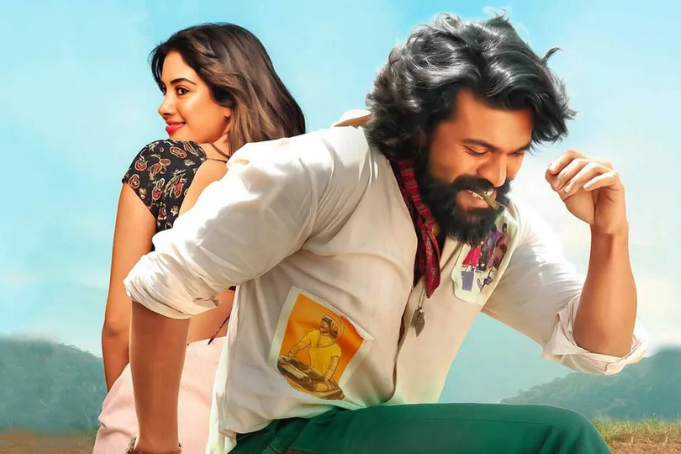
Ram Charan’s sports drama “Peddi” is out in theaters today (June 4, 2026) and much of the online conversation surrounding the film is centered not on its cricket and wrestling-driven narrative or box-office prospects, but on the portrayal of Janhvi Kapoor in the film.
Across social media platforms, viewers and film commentators have criticized what they describe as the film’s hyper-sexualization of Janhvi Kapoor through camera-framing, character dynamics and scenes that reduce her role to a visual object rather than a fully realized character. The criticism has quickly become one of the dominant talking points around the film’s release, reigniting a broader debate about the representation of women in mainstream Indian commercial cinema. Most pertinently, raising questions on why the actress allowed this to happen.
Among the most widely shared reactions came from film critic and online content creator Anmol Jamvwal, popularly known as Jammy Pants. Jamvwal criticized both the romantic dynamic between the lead pair and the way Kapoor is presented on screen.
“The romantic dynamic between Janhvi Kapoor and Ram Charan in #Peddi is one of the most disgusting and dated portrayals I have seen. Shameless shots of her navel and chest. No care for consent. Moral stance of a saviour while constantly ogling and letching at her!” he wrote.
The romantic dynamic between Janhvi Kapoor and Ram Charan in #Peddi is one of the most disgusting and dated portrayals I have seen.
— ANMOL JAMWAL (@jammypants4) June 4, 2026
Shameless shots of her naval and chest. No care for consent. Moral stance of a saviour while constantly ogling and letching at her!
Similar criticism emerged from review account KBP Reviews, which singled out Kapoor’s portrayal as one of the film’s most troubling aspects.
Related Stories

“The Most Disgusting, Shameless thing. How did makers approved the close up scenes of Navel and Chest, it’s Absurd. How did Jhanvi Kapoor Allowed these shots in first stance. PATHETIC!!! Where was censor board this time?? Shameless,” the account posted during its review of the film.
#Peddi Interval Review : It’s a CRAP !!!!!
— KBP Reviews (@KshitizCritic) June 4, 2026
The Movie is too over the top, Over the top acting, music and what not but the most awful thing is Portrayal of Jhanvi Kapoor.
The Most Disgusting, Shameless thing. How did makers approved the close up scenes of Naval and Chest, it’s…
The backlash has not been limited to visual presentation alone. Several viewers pointed to specific scenes they felt crossed the line into humiliation and exploitation, arguing that such moments were framed as entertainment rather than examined critically within the narrative.
For some viewers, the issue extends beyond individual scenes and speaks to a recurring concern about how female characters are written in large-scale star vehicles. “Not surprised that Janhvi Kapoor is a mere eyecandy in this also,” wrote one user. “But I wonder how the makers might narrate these scripts and roles to her all the time and what exciting Janhvi might be seeing in all these films.”
Saw some reviews of Peddi. Not surprised that they are BAD. Not surprised that Janhvi Kapoor is a mere eyecandy in this also. But I wonder how the makers might narrate these scripts and roles to her all the time and what exciting Janhvi might be seeing in all these films.#Peddi
— Baba Yaga (@yagabaaba) June 4, 2026
Another viewer argued that the film reflected familiar trends within commercial Telugu cinema, posting: “Typical Tollywood film from Telugu industry which has used Janhvi Kapoor as the main source of box office collection with the over objectification of her.”
Peddi movie reviews are flowing in one and only direction and it is the expected one tbh. Typical Tollywood film from Telugu industry which has used Janhvi Kapoor as the main source of box office collection with the over objectification of her lol
— ` (@bdrijalab) June 4, 2026
Even some viewers who were otherwise positive about aspects of the film expressed discomfort with Kapoor’s portrayal. One user wrote that while “Peddi” was “a decent sports movie” and praised Ram Charan’s performance, scenes involving Kapoor’s character left them uneasy. “Janhvi Kapoor being SA’ed and sexually spoken about by Ram Charan in the first half was uncomfortable and shouldn’t be normalised,” the viewer wrote.
#peddi a decent sports movie, better than game changer but still average
— @TS (@Pppj41869366) June 3, 2026
Ran charan carried the movie 🔥
Janhvi Kapoor being SA’ed and sexually spoken about by ram charan in the first half was uncomfortable and shouldn’t be normalised
The debate surrounding “Peddi” arrives at a moment when audience expectations around female representation appear to be evolving rapidly. Over the last decade, Indian cinema has seen growing demand for female characters with greater agency, complexity and narrative importance. At the same time, many mainstream commercial films continue to rely on storytelling conventions that critics argue are rooted in an earlier era of filmmaking.
The reaction to “Peddi” suggests that viewers are increasingly scrutinizing those conventions. While commercial entertainers have historically embraced exaggerated heroism, romance and spectacle, audiences today appear more willing to question how women are positioned within those narratives and whether certain portrayals still feel acceptable in contemporary cinema.
Whether the controversy ultimately affects the film’s long-term reception remains to be seen. But if the early online discourse is any indication, “Peddi” is facing scrutiny not just as a sports drama, but as a flashpoint in the ongoing conversation about gender representation, consent and the portrayal of women in Indian mainstream cinema.
The discussion around "Peddi" also echoes some of the criticism that followed Kapoor's Telugu debut in "Devara: Part 1." While the actor's pairing with Jr NTR. generated considerable pre-release attention, sections of viewers and critics argued that her character was largely confined to romantic and glamor-driven moments, with limited influence on the film's central narrative. At the time, the conversation focused primarily on screen time and character development. With "Peddi," however, the criticism appears to have evolved into a broader debate about the portrayal of women themselves, with viewers questioning not only the depth of Kapoor's performance but also the way the film frames and presents her on screen.













Comments are moderated. They may be edited for clarity and reprinting in whole or in part in Variety publications.