



Jun 04, 2026 10:09am IST
‘Peddi’ Review: Ram Charan’s Charisma Carries This Unsteady Sports Drama
It’s curiosity that takes Boman Irani’s well-meaning though largely clueless IOA (Indian Olympic Association) official down ‘The Road Less Taken,’ as it were and you, the viewer on a rather cumbersome journey to discover the origins of an oft-mentioned name in sports.
When the movie opens in 2016, the IOA is getting a dressing-down for India’s two-medal haul despite being one of the most populated countries in the world. It sets Irani’s character into scout-or-out mode as he finds himself in Vizianagaram and starts hearing one name that he’s never heard before stand out in conversations: Peddi. Keen to seek out the legend of the athlete, he embarks on a trek to meet the man with a person from his village.
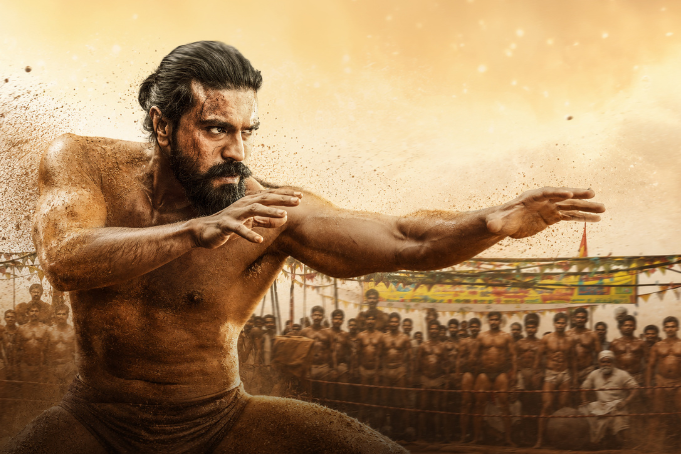
Kicking into ‘mass’ mode, set in the 1990s from here on, you are introduced to the man, the myth, the legend of Peddi, played winningly by Ram Charan. A daily-wage laborer from a no-name village in the hills, he’s a heavy-hitter in cricket and a rural jaggery sommelier of sorts at the local factory. His talents are in-demand, but because his identity – caste or otherwise – has no state sanction, he and his fellow villagers, already living on the fringe, are belittled at every instance.
Peddi still loves a good slog now and then, but there’s no purpose to his exploits. When he’s besotted by a ‘chikiri’ and is drawn into a feud that sees him protect the object of his attention Achiyamma’s (Janhvi Kapoor) honor, he sees the world and the status quo for what it is: mercilessly and brutally transactional and wearing caste and class blinders/blinkers worn out of choice rather than generational habit.
The death of a child and the by-the-book social crusader Appalasoori (an unrecognizable Jagapathi Babu) in quick succession bring him to local wrestling legend Gaur Naidu’s (Shiva Rajkumar) door to fight for self-identity. And to ensure that his village gets a railway station at some point. From then on, we see Peddi the local batting legend turn into the local wrestling legend. His journey continues to the point where he’s at the precipice of greatness and then disaster strikes. Forced to the sidelines, he pivots to another sport. But not before he sets out on another crusade.
Let’s be honest, this film doesn’t work without Ram Charan. Without the man’s earnestness, his star appeal and the willingness to go the extra mile, this film would be a no-go. His charisma drives the film forward. In the first half, he moves about like Allu Arjun in “Pushpa,” in the second, like Salman Khan in “Sultan.
Related Stories
For all the manic masculinity playing out on loop, a better part of “Peddi”’s 180-minute-plus runtime is spent emasculating the titular character. Buchi Babu Sana who writes (with a slew of screenwriters in tow) and directs this film, takes pains to highlight the identity crisis faced by Peddi despite being a sporting talent that comes across once in a generation.
But not before our hero has objectified the sprightly Achiyamma from a distance, then gazed at her bosom and navel before forcibly kissing her in the dark in her own house. The same Achiyamma who is introduced to us as someone who has political wiles but clearly abandons any ambition after a close encounter.
Gaur Naidu, like Mr Miyagi of “Karate Kid,” won’t teach Peddi the tricks of his trade, but rather, puts him to menial labor before it clicks and his transformation begins in the early part of the second half. Janhvi’s Achiyamma, still grateful and slightly besotted by Peddi now, does offer the man from the hills a lesson in consent when she realises he was the mystery kisser only to be stonewalled with a “this is how I love” line and sealed with a kiss again.
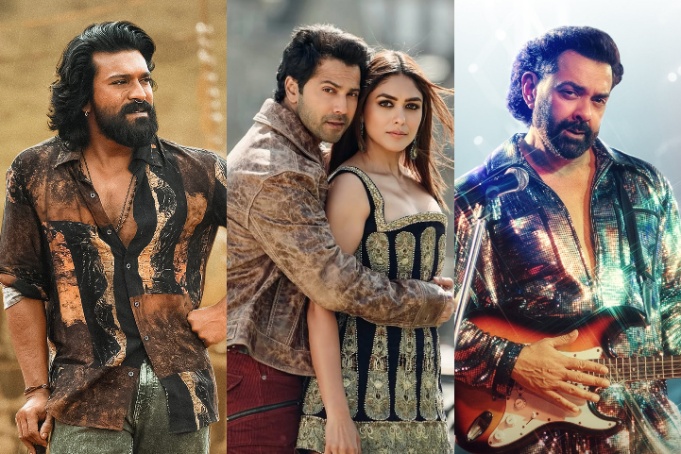
Buchi Babu Sana’s relative inexperience and inherent indulgence shows (this is his second film as a director). It is one thing to make a sports drama and totally another thing to bog it down with unnecessary subtext, political asides, songs, subplots and sidequests that add little to no impact or relevance to the main story. That and the fact that this film has actors of the stature of Upendra Limaye, Ravi Kishan (as Randheer Sisodiya) and Divyenndu (as Rambujji) serve as mere footnotes. We never know whatever happened to Achiyamma’s political ambitions.
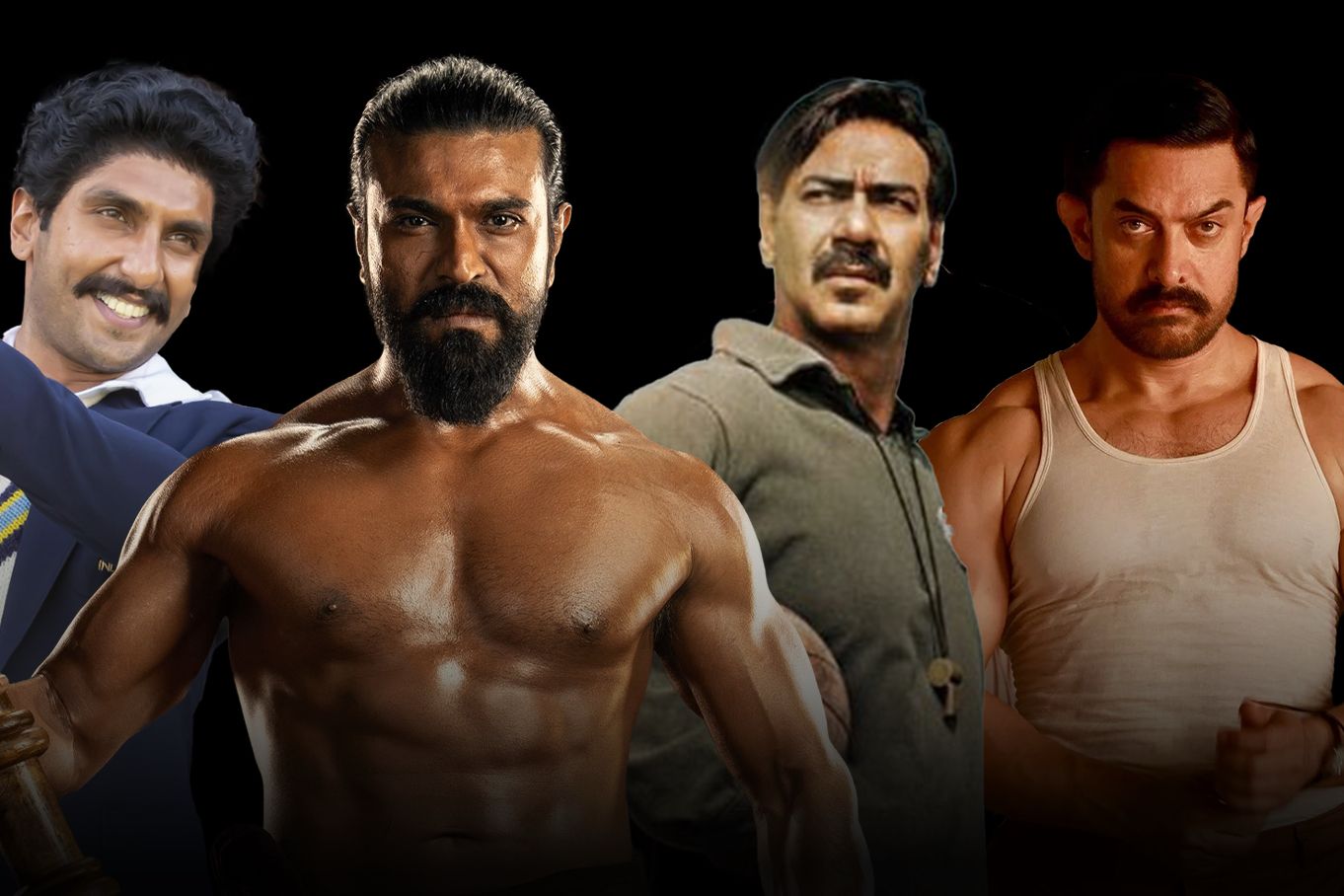
The film has flashes of “Sultan,” “Forrest Gump,” “Pushpa” and even “Karate Kid” and “Manjhi” in aspiration. But despite its ambition, reaches nowhere close to these films.
Naveen Nooli is one of the best editors in the Telugu film industry and yet you keep questioning if his skills were kept on a leash. It’s understood that this film was meant to be massy but like an unwelcome guest, it refuses to end even as the end credits roll.
Nooli’s transitions – both visual and verbal – impress and R Rathnavelu’s cinematography has to be experienced. And the DI colorist deserves an award as well, but all these efforts pale in the face of a bloated, indulgent script that had potential. There are some very well-choreographed wrestling scenes as well.
Also, this film has music by AR Rahman. Except for the rousing “Rai Re Raa Raa” and the bubbly “Chikiri Chikiri” (in the first half) and the anthemic “Maasa Maasa” which all seem to go on endlessly, there’s nothing that stays with you otherwise. Let’s not even get started about “Hellallallo”.
To be fair, though, the film does have a couple of whistle-worthy and lump-in-throat dialogues but they are overshadowed by the overenthusiastic extras who over-emote when it comes to trauma. The trauma, the tears and the pain writ large on everyone’s faces seems like an elevated trope only in Tollywood.
And as the film winds down to its conclusion, you realise money can buy you the best actors, a bankable superstar and even one of the best music directors in the business, but not greatness. As sports dramas go, very middling. And as you walk out of the theatre, you realise, ‘the road not taken’ could have been avoided entirely, if Boman’s character had simply run a Google search.









Comments are moderated. They may be edited for clarity and reprinting in whole or in part in Variety publications.