



Aug 30, 2026 6:00pm IST
Urvashi Dholakia, Kamya Panjabi, Adaa Khan: Iconic Indian TV Vamps On The Changing Face of Small Screen Baddies (EXCLUSIVE)
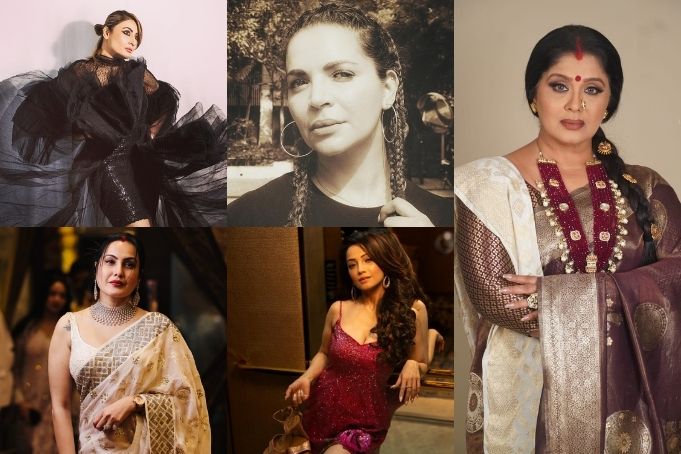
In the early aughts, TV vamps didn’t just fill the screen — they owned it. Their unapologetic swagger and sinister scheming were as trendsetting as they were a sharp counterpoint to the era’s saintly, submissive heroines.
From “Kasautii Zindagi Kay” diva Komolika — arguably television’s most iconic vamp — with her dramatically kohled eyes and daring blouses and Ramola Sikand of “Kaahin Kissii Roz,” an antagonist who served evil with designer saris and shape-shifting bindis, Sindoora of “Banoo Main Teri Dulhann,” who had a regal aesthetic of glitter and gold, these small-screen vamps were seductive, scheming sirens who wrecked homes, split families and wreaked havoc in otherwise sedate soap households. Wicked though they were, these vamps were never mere plot props. They commanded main-character energy — followed, idolized, reviled and relentlessly discussed — inspiring memes and often fueling the soaring TRPs of their shows.
But where are these TV vamps now? Have they vanished altogether, or morphed into more nuanced — perhaps watered-down — versions of themselves?
Variety India spoke to actresses who have played memorable roles as TV soap baddies, as well as writers who brought them to life, to figure out the place of vamps in our present-day television storytelling. Read on…
Related Stories
Vanished, reinvented or redundant?
If the early 2000s were about TV soaps that espoused ‘sanskari’(cultured) characters who were pious, peaceful and keepers of family traditions and truths, it was the presence of TV vamps that not only upended this picture of domestic bliss but also brought to these soaps an irresistible mix of spiciness, sexiness and sinfulness.
Where are they now?
Urvashi Dholakia, the OG TV vamp who lent negative characters such a glamorous edge that both the roles and the personas they projected became aspirational, says, “Nothing remains the same. One needs to move with the times. Audiences have changed. Times have changed. Change is inevitable. TV has followed a particular route… some people may call it regressive; I call it a pattern. I would never say TV has depreciated. Television has gotten me to where I am today. TV algorithm, like, say, Instagram, catches on to patterns: what is it that people are watching/ liking, and in their surveys and research, it identifies these patterns and in TV series that encroach every household, they start making more of it. So, can’t say it’s regressive when all TV series do is to cater to mindsets. Suddenly, among so many things, you find a new thing that works. And when that new thing, like the TV vamps of those years, runs its course, a new pattern emerges and then that too starts working. ‘Kasautii Zindagii Kay’ to ‘Balika Vadhu’ was a drastic change, but the pattern worked. What was a regular stitch became a cross-stitch. It worked in every possible way. It worked for television. So, television’s own algorithm was working in its favor.”
Veteran actress Sudha Chandran, who played the unforgettable Ramola Sikand in ‘Kaahin Kissii Roz,’ brought such chilling conviction to the negative role that the character quickly became one viewers loved to hate. Chandran believes TV vamps have not vanished and remain very much a part of the landscape.
“Television vamps haven’t disappeared from the screen. They may not be as loud or as strong as the ones we portrayed, but they are still there. At that time, negative characters often overpowered the positive ones — largely so that the latter’s goodness could shine through. It was always a case of good triumphing over evil, so the evil had to be made very strong for the goodness to emerge even more powerfully.
Today, television has transformed a lot over the last few years. Negative roles are still very strong — you can’t ignore them — but they are more mellowed now. They are more situational vamps today,” says Chandran.
Talking about the glory days of TV vamps, Dholakia, whose favorite vamp on TV is Alexis (Colby) from ‘Dynasty’, adds, “ There was a time, it was inconceivable to have a film without Helenji or Bindu or Manorama. There’d be an incompleteness to the film without them. TV vamps, too, were in that category. But that pattern has shifted now.”
Actress Shweta Kawaatra, who played Pallavi Agarwal in “Kahaani Ghar Kii,” says, “ I wouldn’t say that vamps have disappeared; they very much exist alongside the main protagonist even today. What I do feel has changed is the level of creativity and passion that once went into shaping these characters. Earlier, there was a real effort to craft layered, engaging scripts that made negative roles exciting and unpredictable. Today, television has become more of a business driven by pressure to churn out episodes, and somewhere along the way, its depth has thinned. So in a way, the skeleton of the vamp still exists, but the richness, the thrill, the dramatic spark aren’t as strong as they used to be.”
So, have TV vamps become a pale shadow of what they once were? Adaa Khan, whose show-stealing vamp role as Shesha in “Naagin” was one of the series’ highlights, too, believes that TV vamps have not disappeared. “ I don’t think they have disappeared. Actually, it’s portrayed differently now. Like today, the way the story is written is very realistic. So, all the characters, you know, they have certain shades of gray. It’s not just good and bad, not pure evil or angel,” argues Khan.
Kamya Punjabi, who played an unforgettable Sindoora in “Banoo Main Teri Dulhann,” retorts, “ Disappeared?” She says, “ Every show has a vamp... sasuma, sister, ex-lover...if the hero and heroine are new, then the vamp is a known person to balance it out. TV is now shifting back to professional actors with experience, a fantastic following and visibility. The vamps have had a makeover because times have changed, as have concerns and issues. Today’s vamp is a career woman. They bring a contemporary dimension to the story. Television vamps are no longer just about beautiful women and their makeup.”
The writers’ take
What do TV writers who created these characters and gave them their onscreen identities and personas have to say about vamps who once ruled the TV roost but have since, apparently, emptied that perch?
Writer Harneet Singh, who is the writer behind such shows as “Jab Mila Tu,” “Bade Achhe Lagte Hain,” “Pyaar Ko Ho Jaane Do,” among several others, says, “I don’t think that vamps are being written out of stories. I feel they’ve evolved, just like our stories and protagonists. There was, of course, an era of iconic super-vamps like Komolika who were unapologetically dramatic, larger-than-life. Today’s modern “vamp” doesn’t always announce herself with a background score or obvious malice. Her antagonism often comes from circumstance, ideology, or personal trauma rather than pure scheming. Like, if you look at a show like “Kyunki Saas Bhi Bahu Thi 2”; yes, there’s the return of Tulsi, but there’s also a new antagonist in the form of Noyena, who is a more modern version of a vamp. In the sense that she’s more real.
Even the quintessential negative mother-in-law in saas–bahu shows has evolved. Not all of them are evil today. There are many stories with positive, supportive mothers-in-law.”
Writer Bhavna Vyas, who has penned for TV series like, among others, “Anupamaa,” “Yeh Rishta Kya Kehlata Hai,” “Tera Mera Saath Rahe,” has a different take on this. She says, “No, it’s definitely not fatigue or lack of creativity. Times have changed and there’s a new wave where everyone seems to be demanding more realistic fare. There was a time when entertainment like television and cinema was meant to provide a break from reality. People craved fantasy and a storyline that did not exactly mirror their own lives. But now everyone wants everything real. So, the vamp character has also been toned down to reflect this reality. Not just vamps, but all the characters, in general. Even those who were there to provide comic relief are no longer standalone characters. It is sad that, in this clamor for realism, the other fantastical universe we inhabited, with its unique madness, has gone missing — on TV and in films, everywhere. The vamps’ bizarre bindis and OTT saris used to be so much fun. But now everything is being defined aesthetically. Aesthetic has become like a funny leitmotif. Hairstyle, makeup. Aesthetic everything.”
What made the vamps iconic?
Whether TV vamps have disappeared or have become these ambivalent characters shot through with shades of gray, there is no disputing that the early vamps created some of TV’s most iconic characters. While these antagonists drew flak from viewers invested in the intricate family dramas of their soaps for the discord they introduced into otherwise placid household settings, it was the vamp — not the heroine — who set fashion trends, inspired imitation and was mobbed in public spaces and at airports, sometimes by frenzied fans and at other times by furious viewers. In contrast to an earlier cinematic era — when big-screen vamps like Bindu, Manorama, Kamini Kaushal and others often diminished their likability in the audience’s eyes even as their villainy accentuated the heroine’s virtue — TV vamps, for all their onscreen viciousness and vindictiveness, rarely lost their popularity.
So, what worked? “Dal-chawal kha kha ke log paagal ho jaate hai (People get bored having the same fare of rice and lentils). They want the biryani too! TV vamps made up for the show’s spiciness. Also, let’s not forget that these vamps were very relatable. Viewers knew some chaachi or bua who was exactly like them. Even the negativity was credible and relatable. Women enjoyed these vamps’ swag and makeup and fashion sense too,” offers Dholakia.
Relatability, agrees Chandran, is what makes TV vamps so crucial to the storyline. “TV vamps are still there. There’s no story without a vamp. Whether it’s TV or true life, there are always negative people; they don’t want good people to come up and they will be a hindrance in their lives. So what you’re projecting on TV is not out of the blue; it’s absolutely what is happening in life. If there’s going to be a 360-degree turnabout, we’ll probably go back to where we started as vamps. Four years ago, I played a vamp in ‘Naagin,’ so it’s not that vamps have gone offscreen. When people see Naagin, they say, ‘we miss Yamini (Yamini Raheja) on the show.’”
“TV vamps were larger than life, with all that jewelry and bindi and the drama. Then the music in the background. They always used to have some conflict. I think some of them were iconic vamps. Komolika (Urvashi Dholakia), Sudha Chandranji as Ramola Sikand. Ramola Sikand’s Bindis and Komolika’s, you know, that music in the background. They used to light up the screen, I feel. Now, women’s characters are written differently. Women are shown as more independent and career-driven. Not the home-wreckers they invariably were in TV soaps of the past. Those feel outdated concepts now. And, yeah, so I feel they will probably return, but somewhat changed,” says Khan.
Chandran, whose “now, then, forever” favorite TV vamp is, in her words, “me, myself,” says that when a character is performed with conviction, it connects directly with viewers.
“Ramola Sikand was one character people loved to hate. They would look forward to Ramola the next day to see what her next plan of action would be. First, they start to hate you, then they start to love you, and then they love to hate you.
When you do roles that you don’t normally see in every second person in society, you have to convince yourself that you’re giving your best and playing the character with complete conviction. And when you do that, it reaches straight to people’s hearts,” says Chandran.
Sharing her heartwarming experience during a recent trip to Jodhpur, Punjabi recalls how the crowd went berserk, chanting ‘Prito, Prito’ in reference to her memorable negative role in “Shakti Astitva Ke Ehsaas Ki.” She shares, “ They were chanting my screen name, ‘Prito, Prito.’ Whether it is our salwar suits, chotti (plaits), bindi...the audience is so emotional about all of that. They connect with our characters. Vamps have not disappeared. A TV vamp these days is not someone who wears makeup and looks beautiful...she becomes the character. It’s about her performance.”
However, Dholakia adds, “There’s no point recreating what has already been created successfully. That chapter is done and dusted. I was offered roles similar to Komolika’s, but I declined them all. My timeline is flooded with requests from fans who want to see me back as her. Newer patterns beckon. I believe in moving forward. Twenty-five years ago, I wouldn’t have dreamed of doing the role I’m playing in ‘The 50’ today.”
Continuing this thread, Khan adds, “If there’s one reason that TV shows are slowly phasing out the vamp character, it’s because of the audience. The audience likes more relatability. I think they’ve also evolved in some way. And the things we used to exaggerate and tell are no longer wanted. They want each character to have their own story. So, nowadays, I feel there is more ensemble cast even in OTT because everybody likes different characters, different layers, just different.”
TV Vamps: The Role Rewrite
If the vamps worked for TV series and their ratings, if their characters earned them followers and fans, if they brought to the stories dare and devilry, was there a need to play them down or reinvent the mould?
“The concept of the vamp absolutely needs a rethink and reinvention. If you want strong, intelligent actors back on television, start with strong, intelligent writing. It’s that simple. Bring back sharp minds, creative courage, and genuine passion behind the scenes, and you’ll see talented performers gravitate toward the medium again. When the writing is bold and purposeful, the entire ecosystem shifts, characters deepen, storytelling strengthens, and audiences reconnect. Reinvent the writing, and the vamp will reinvent herself,” opines Kwatra.
Adds Harneet, “Yes, the audience fatigue is real. Today, they (audience) are exposed to all kinds of content. They want fresher stories, newer conflicts. Our audience has also evolved.
For instance, in the show I’m currently writing, ‘Itti Si Khushi’, which is an adaptation of ‘Shameless’, the conflict is far more grounded and contemporary. The story is about a young woman dealing with an alcoholic father and raising her five siblings. There isn’t a conventional female vamp in the story. Instead, the negativity emerges organically when the man she marries, who was once her best friend, turns into a controlling and toxic husband. So, we have a negative force, but it’s not a woman.
As long as you stay true to the story and the emotional truth of your characters, then your audience will come with you wherever you take them. Even if it’s on an unconventional journey, they will come along with you for the ride.”
Keeping Them Real
Khan says, “It shouldn’t be a plain negative role. It should be more layered. Not just black or white.” Television, says Punjabi, constantly gauges audience response, and all its strategies are based on what its research says viewers want. “Television is very big on audience research and they are constantly tracking the show’s performance in villages, cities, metros, and the strategies evolve from those findings. These days, vamps are portrayed as career women, and their concerns and causes differ. They bring the contemporary dimension to the stories.
I play a vamp in ‘Neerja…Ek Nayi Pehchaan,’ and producers bet on me to pull it off. The vamp is very much there; she’s just moving with the times.”
“They (TV) don’t disturb what’s working, like family dramas, but when it comes to supernatural stuff or science-based soaps, there can’t be too many episodes because of the subject’s limited scope. What happened to 'Apollena-Sapno Ki Unchi Udann?’ It had a limited run. People like to see lives broken, repaired and resurrected. It mirrors their own lives. TV shows are not for corporates; it’s for the nana-naani, dada-dadi, and housewives. In today’s shows, vamps don’t stick out; they are indeed one of the characters.”
Popular on Variety
Kawaatra shares, “To portray a compelling negative character, you need three things: strong acting ability, deep confidence in yourself and the courage to be disliked. Not every actor is comfortable stepping into that space, as it requires conviction and emotional honesty to elicit a strong reaction from the audience. However, as the creative depth in storytelling has reduced over time, many of these roles have lost their complexity. When characters are not written with nuance or purpose, playing them can become repetitive and discouraging, rather than exciting and challenging. Without strong writing and a clear dramatic drive, the role risks becoming ornamental instead of impactful. So in that sense, yes, vamps can feel passé today, not because the archetype has lost relevance, but because the richness and intensity that once defined these characters are often missing. Over the years, many deeply passionate storytellers have gravitated toward films and OTT.”
While the era of television’s unapologetically diabolical divas may be over, today’s vamp — layered in shades of gray and grounded in realism — mirrors a shifting cultural terrain and a more discerning audience.







Comments are moderated. They may be edited for clarity and reprinting in whole or in part in Variety publications.