



Oct 10, 2026 4:00pm IST
Sanjay Suri: ‘Cinema is ultimately about connection’ (EXCLUSIVE)
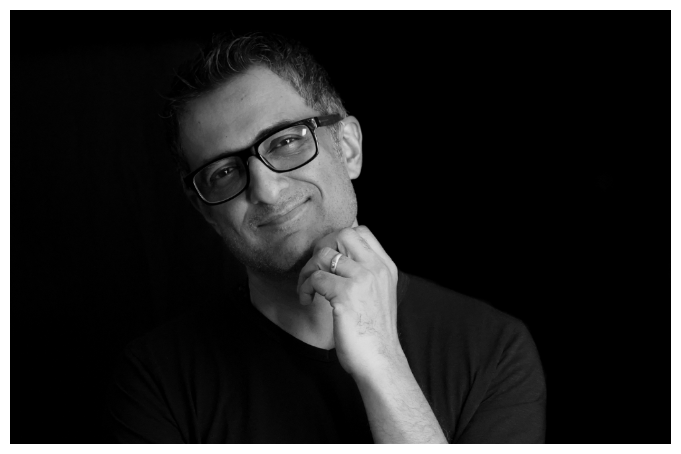
Long before conversations around “content-driven cinema” became commonplace, Sanjay Suri quietly built a filmography defined by empathy, restraint, and conviction. When Bollywood’s mainstream was largely driven by larger-than-life heroes and formulaic entertainers, Suri gravitated toward stories that explored the complexities of human relationships and social realities. While he made his Hindi film debut with the romantic film “Pyaar Mein Kabhi Kabhi,” he veered from tried-and-tested projects soon after. From the pathbreaking queer drama “My Brother... Nikhil” and the Partition tragedy of “Pinjar” to Onir’s anthology “I Am,” the actor consistently chose roles that prioritized substance over spectacle.
Suri has carved out a space as one of Hindi cinema’s dependable performers, earning respect for the sensitivity and dignity he brings to every character he portrays. His performance in Imtiaz Ali’s “Main Vaapas Aaunga” has once again shown his strength as a performer. Over the years, he has seamlessly navigated films, television, and streaming, adapting to an industry that has undergone seismic shifts while remaining steadfast in the stories he wants to tell.
In a conversation with Variety India, the actor opens up about choosing meaningful cinema over mainstream formulas, the evolution of queer representation on screen, the blurring lines between theatrical and streaming storytelling and his desire to see more mature love stories.
Your filmography includes more author-backed films like ‘Pinjar,’ ‘My Brother... Nikhil’ and ‘I Am’ than blockbusters. What led you to make these career choices?
Cinema is ultimately about connection. While blockbusters have their own place and appeal, I have always found myself gravitating toward stories that spark a lasting conversation, challenge perceptions, or make people feel seen. If that has become a defining thread in my filmography, I consider it a privilege rather than a strategy! Also, I think it has been a combination of choice and circumstances. As actors, we don’t always have complete control over the opportunities that come our way, especially in an industry that often works through timing and perception. Having said that, I’ve always been drawn to stories that have something meaningful to say about the human condition.
Related Stories
Do you have any regrets about your career trajectory? If you could get a do-over, would you do anything differently?
When you’re younger, it’s easy to measure yourself against what others are achieving or against an idea of where you think your career should be. With time, you realize that comparison is a losing game. Every actor has a different path and a different sense of fulfillment. Today, I look at my journey with gratitude rather than regret. I came to Mumbai with nothing and was accepted with love, and gradually received a lot of respect.
I’ve been part of films that mattered, worked with remarkable people, and had the opportunity to tell stories that continue to resonate years later. Could there have been more? Perhaps. But I would rather celebrate what was than be consumed by what wasn’t. My learning has been that, in the end, a meaningful life and career are built not from perfect choices, but from learning to embrace the choices you’ve made and continue to grow from them.
Even after all these years, we still don’t have enough queer stories told through film. Where do you think we stand, and where are we headed, when it comes to these films?
I feel we’ve certainly come a long way from where we were when ‘My Brother… Nikhil’ was made, but I also think we still have a long way to go. When that film was released in 2005, simply telling a queer story with empathy, dignity and humanity was considered unusual. Today, there is greater visibility, more conversations and a growing willingness to engage with LGBTQ+ narratives, which is so encouraging and wonderful. Cinema has the power to foster empathy, and the most powerful films are often the ones that allow us to see ourselves in people whose experiences may be different from our own.
As for where we are headed, I hope towards a place where queer stories are no longer seen as a separate category but simply as human stories. The day a film is judged not by the sexuality of its characters but by the quality of its storytelling, we will know we’ve made real progress. Until then, every honest and compassionate story helps move the conversation forward. I am positive change is happening.
You are now a part of TV, OTT and films. Earlier, there were demarcations between these mediums, especially films and TV. Do you think we have reached a point where we are platform-agnostic, or are we yet to achieve that?
There is a pre- and post-COVID era. I think we’re much closer to being platform-agnostic than we’ve ever been before, but I don’t think the distinctions have disappeared entirely. Also, it’s an individual focus and choice at various stages of life and career. But what has changed dramatically is that audiences today are far more interested in compelling stories than in the medium through which those stories are told. Consumption habits have changed since COVID-19.
For me, the real shift has been from being medium-driven to story-driven. Audiences don’t wake up wondering whether they want to watch a film, a television show or an OTT series; they want to be engaged, moved, entertained or challenged. If the story achieves that, the platform becomes secondary. Now we also have the emergence of verticals.
Is there one role or genre that you still desperately want to play or be a part of?
There is still a lot left to explore, and that’s what excites me. I don’t think I’ve reached a point where I can narrow it down to one specific role or genre. In fact, the moment I define it too precisely, I feel I might be limiting myself, but yeah, a comedy, be it a romantic comedy or a comic thriller, would be exciting for sure. Also, mature love stories... I don’t know why we don’t write mature love stories about people in their 40s, 50s and 60s. Where is the “Bridges of Madison County” of India that captures the bittersweet, mature, emotionally restrained romance, the kind built on longing, missed chances, duty and a love that cannot fully be lived? I think “The Lunch Box” was wonderful.
After all these years in the industry, what still excites you enough to say yes to a project?
I look for collaborators who bring passion, integrity and sensitivity to the process. The older I get, the more I value working with people who are genuinely invested in the story rather than just the outcome. I’m interested in stories that stay with me after I’ve finished reading them, characters that reveal something about life, relationships, loss, love, resilience or the complexities of being human.





Comments are moderated. They may be edited for clarity and reprinting in whole or in part in Variety publications.