



Aug 26, 2026 10:00pm IST
Rohansh and Abeer on ‘Alpha’, Jatin-Lalit’s Musical Footprint and Finding Their Own Sound: ‘The Legacy Can’t Become Our Identity’ (EXCLUSIVE)
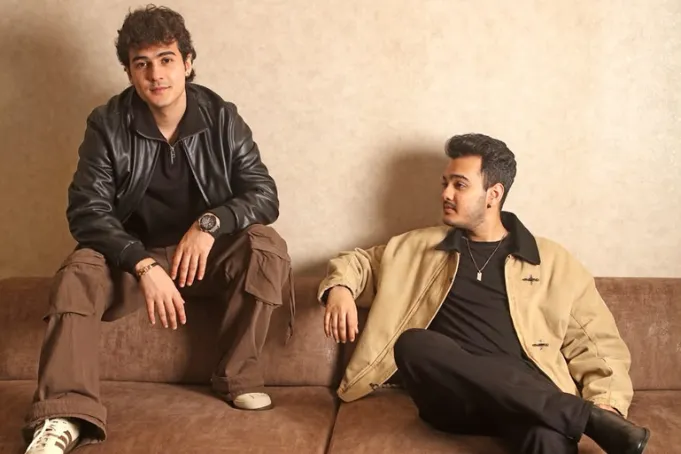
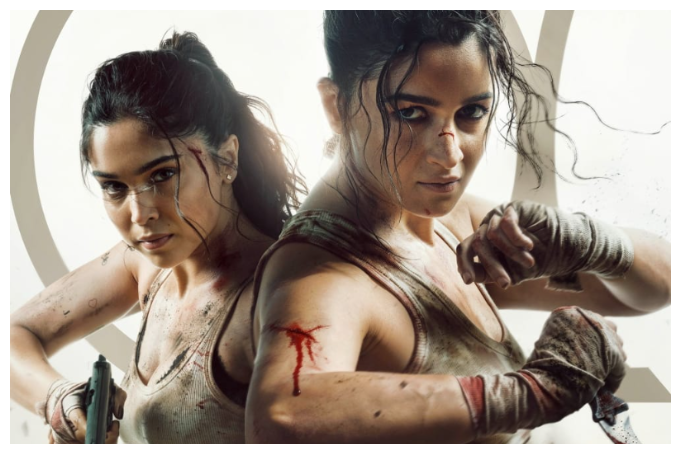
When your father is one half of one of Hindi cinema’s most loved composer duos, it brings immense pressure to perform from the get-go. That, and the fact that you get to debut with an entire soundtrack in the era of multi-composer soundtracks is a feat in itself. But Rohansh and Abeer proved more than equal to the feat, holding their own while working with names like Vishal Dadlani and Shilpa Rao and creating a contemporary sound for "Alpha," the first female-led film in the YRF Spy Universe.
What’s been the mood post the release of your debut film, ‘Alpha’?
Rohansh: We’re still wrapping our heads around the fact that we made our debut with a YRF Spy Universe film. So yes, I think there's so much to look forward to. This is the first step for Abeer and me. Emotions are running high, but we are taking each day as it comes and working on more music.
Very few newcomers get a chance to start under the aegis of a company like YRF. Did you feel the pressure to perform and to prove yourself?
Rohansh: The pressure was definitely there, but I think pressure can be useful if you know how to overcome fear. Rather than thinking about what people would think of it, we were thinking about what the film needed from us. We had to be honest to the film. The director, Shiv Rawail, was honest with us about what he needed and we just made sure that “Alpha” was a soundtrack with different genres in it, yet together, cohesively created a good sound.
What process do you follow while voice casting?
Rohansh: Every song has its own journey, from production to identifying the right singers for the songs. Some songs take a little more trial and error than others. But I think we've also met some incredible artists along the way, working with somebody as seasoned as Vishal Dadlani and Shilpa Rao, obviously, jamming with some of the other artists, like Jonita Gandhi and Akasa, more along the lines of our generation. All of them have come and done incredible work, and every song has been a great learning experience for Abeer and me.
Related Stories
You have pretty big shoes to fill when it comes to your father and your uncle. Does it bother you that going forward, you have high expectations of whatever you put out. Does that burden of high expectations ever bother you or Rohansh?
Abeer: There is definitely a responsibility that comes with that legacy. I don't really look at it as pressure, I look at it as more of a foundation you’re blessed to have. We've grown up understanding the importance of melody and emotion. Music we make today has to do with us and belongs to our generation. That's something we're conscious about. So, I think the legacy can be your foundation, but it can't become your identity.
Rohansh: To add to that, I don't think of it as pressure to recreate the legacy or something. I think it's a responsibility to rather add something to it.
Your uncle and father made an album ‘Rhythmic Love’ before they ventured into films. Rohansh put out a single called ‘Say No to War.’ Do you see that as a ‘history repeating itself’ moment? What was the atmosphere in the room like when you two decided, ‘Let's do this.’
Rohansh: I think a couple of songs from “Rhythmic Love” did go on to become one of the biggest hits for Jatin-Lalit. What would connect our journey and theirs is the fact that everybody has to start where they are. Abeer and I definitely have inspirations around us, but I think we're very excited for where the road takes us ahead. I think the fact that we found the method to madness together makes it more special. Honestly, there’s no better feeling than to have your brother as your partner in crime, and your professional partner in the work that we're going to do.
Abeer: I think it's more comfortable when you have someone. If he's your brother, then you're more comfortable throwing the ideas to him, just composing with him, because you know you have someone who'll be honest to you, who'll be honest to the work, and the energy itself is so natural that there's no pretense in the room.
Who takes the final calls? Or is it something that you do at the spur of the moment, on a case-by-case basis?
Rohansh: When you sit and you both feel, ‘Okay, this is going the right direction,’ then we know we've got something. We try everything out. At the end of the day, the music needs to win, so as long as we see that journey take place, we're happy for it to go that way. With films, there's a bigger picture, it's a more collaborative process, and you've got to realize that you're aiding somebody's vision, so you have to work according to the requirements of the script and the director.
If asked to remake Jatin-Lalit melodies, which is the one track/album you will absolutely say no to and one that you’d really want to revisit and reimagine in that sense?
Rohansh: The music that Jatin-Lalit have made over the years isn’t just part of movies, it's part of people's lives, including ours. I honestly would really want to give the songs the respect they deserve and not touch them. They're perfect the way that they are. All the songs that Jatin-Lalit have worked on, they've really put their soul into them. I'd like to honor their legacy by making sure Abeer and I do the best work we can, create originals and work along those lines.
Two songs from ‘Rhythmic Love’ appeared in two Hindi films. Would you be open to the idea of reimagining your own singles at some later point?
Rohansh: Absolutely. There's no harm in exploring with music, and especially when it's out there as well. If it's something that we've worked on and there's a possibility of reimagining it, we'll be more than happy to.
Abeer: It'll actually be really exciting. But you definitely want to approach it with a lot of respect, given the music that Jatin-Lalit created. It has such a strong emotional connection with people that the recreation has to be worthwhile. You just don't want to do it for the sake of it. But as Rohansh said, “The compositions are just that beautiful.”
What are your thoughts on AI? Does it have any role in the music you create?
Abeer: AI is an incredible tool, especially for artists. I don't think it can replace the human element of music. Music comes from experiences, it comes from stories, emotions and that's what makes an artist unique. But at the same time, I think it's important for musicians and artists to embrace technology, rather than be afraid of it. Every generation has a new technology that comes their way. This is just another evolution, I feel. As a tool to explore ideas and push your creativity, it's a great thing, but allowing it to replace creativity itself? I don't think so.
Anything you’d like to add?
Rohansh: I'm with Abeer on this. As long as we're using it as a tool to make sure we give our best and enhance our expression, I think that's where we can keep it. But to give it more room than that and try to make an entire song or to try to get into the creative process, will be a different thing.
What’s next for you?
Rohansh: Abeer and I are making so much more music. We have so much more music for the world and we're excited for it to reach everybody. It'll be worthwhile, I promise.








Comments are moderated. They may be edited for clarity and reprinting in whole or in part in Variety publications.