


Aug 26, 2026 11:33pm IST
news-old-title
France Faces Thorny Oscar Submission Choice With Andrey Zvyagintsev’s ‘Minotaur’ and Homegrown Contenders
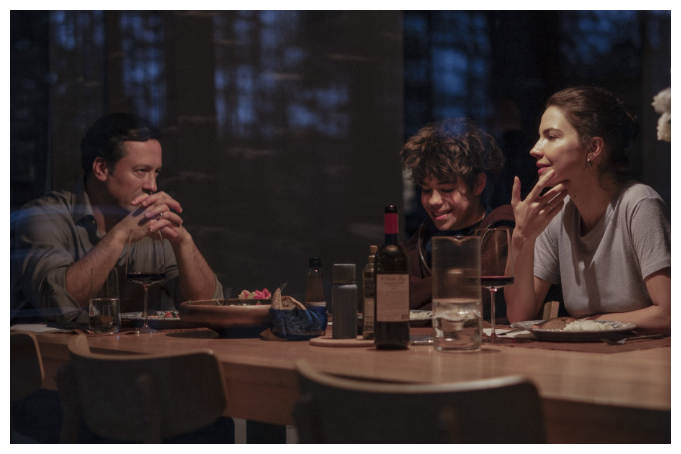
France’s Oscar submission race for 2027 is shaping up around one particularly thorny question: What happens to a major film by an exiled filmmaker when no other country is realistically positioned to claim it?
That is the dilemma surrounding Andrey Zvyagintsev’s “Minotaur,” a scathing portrait of corruption in Putin’s Russia that won the Grand Prize at Cannes and is emerging as one of the strongest contenders to represent France in the international feature Oscar race.
As in most years, many of the likely French Oscar candidates have emerged from the Croisette, but the 2027 field is striking for the number of prominent foreign filmmakers who made films in France or with substantial French financing, including Zvyagintsev, Ryusuke Hamaguchi, Cristian Mungiu and Asghar Farhadi.
A dissident Russian filmmaker, Zvyagintsev is living in France with asylum status, while the film was largely financed and produced out of France by Charles Gillibert’s CG Cinema and MK2 Films, which reps international sales. Russia is not expected to submit it — especially after Zvyagintsev bravely used his Cannes acceptance speech to urge Putin to end the war. Its other coproducing countries have already picked other films: Germany selected Sandra Wollner’s “Everytime,” while Latvia, a minority co-producer, chose “Ulya.”
If France passes, “Minotaur” — which Mubi has for U.S. distribution — could therefore fall through the cracks entirely despite its profile. There is precedent for a film being courted by more than one country before landing nowhere: Payal Kapadia’s “All We Imagine as Light” was shortlisted in both France and India but ultimately failed to secure either country’s submission slot.
The prospect is reopening a debate that erupted last year, when France chose another dissident filmmaker, Iran’s Jafar Panahi, and his Palme d’Or winner “It Was Just an Accident” over Richard Linklater’s French-language “Nouvelle Vague.” Panahi’s film went on to score an Oscar nomination, but the choice sparked pushback in parts of the French industry over whether a country should be represented by a foreign-born filmmaker working largely outside the French language.
The rules cut both ways for Zvyagintsev. A 2025 Oscar amendment allows filmmakers granted asylum or refugee status to be considered part of their adoptive country’s filmmaking community, clearing the way for France to submit the director, whose last two films “Loveless” and “Leviathan” earned nominations under the Russian banner. A separate change now auto-qualifies any film that wins the top prize at one of the six biggest festivals — Cannes, Berlin, Venice, Sundance, Busan and Toronto — even without a national committee’s backing. The Academy proposed that fix after France failed to select “Anatomy of a Fall,” which went on to land five nominations and win original screenplay. But “Minotaur” won the Grand Prize, not the Palme, so its fate rests squarely with a committee that has a track record of surprising choices. Sources tell Variety some members remain reluctant to select a foreign director whose film is not in French.
The French committee, presided over by former Critics’ Week head Charles Tesson for the last couple years, is expected to meet on Sept. 10 to shortlist as many as five films, before reconvening the following week, on Sept. 16, to audition filmmakers and/or distributors and choose France’s official entry.
Another major international filmmaker in the mix is Hamaguchi, whose French-language “All of a Sudden” made a splash in Cannes competition, where stars Virginie Efira and Tao Okamoto shared the best actress prize. It’s just been selected as Japan’s Oscar entry, beating Hirokazu Kore-eda who had a pair of potential contenders, “Sheep in the Box” and the Venice-bound “Look Back.”
Produced primarily out of France with Cinefrance Studios alongside Japan’s Office Shirous and Bitters End, and picked up for the U.S. by Neon, it was submitted to both the French and Japanese committees. But according to a source close to the campaign, Neon was always leaning toward positioning it as Japan’s entry rather than France’s, in part on timing: Japan chose its entry well before the French committee begins deliberations.
Cristian Mungiu’s “Fjord” presents a different case. Partly financed and produced out of France with Why Not Productions and Romania’s Mobra Films, it carries far less submission pressure because its Palme d’Or win brings automatic qualification under the new rules. That does not prevent a country from also claiming it as a matter of national pride, so “Fjord” could still theoretically make the French shortlist, while Romania’s committee is due to select on Sept. 13.
Asghar Farhadi’s “Parallel Tales” — which shot in Paris with a star-studded French cast including Isabelle Huppert and Vincent Cassel and competed at Cannes — was not submitted to the French committee, according to sources, and has yet to secure U.S. distribution. Farhadi revealed earlier this week that his next movie will mark his return to filmmaking in Farsi.
The crop of more traditional homegrown contenders is packed, even without an outstanding front-runner. Arthur Harari’s “The Unknown,” a body-swapping drama starring Léa Seydoux and Niels Schneider that drew mixed reviews at Cannes, has been submitted; Neon has it in the U.S. So has Marine Atlan’s Cannes Critics’ Week Grand Prize winner “La Gradiva,” a coming-of-age melodrama following a French class trip to Pompeii, repped like “Minotaur” by MK2 Films and opening in New York via 1-2 Special.
The Second World War looms unusually large over this year’s field. Pathé’s “de Gaulle: Resistance,” the first installment of Antonin Baudry’s sprawling saga about de Gaulle’s making as a resistance leader, premiered at Cannes to strong reviews and has garnered over five million admissions across the two films despite a slow start, though a U.S. deal remains unannounced. Emmanuel Marre’s “A Man of His Time,” starring Swann Arlaud as a man rising through the Vichy regime, won best screenplay at Cannes and was picked up by 1-2 Special. The strongest of the bunch may be László Nemes’ “Moulin,” starring Gilles Lellouche as Resistance hero Jean Moulin; the “Son of Saul” Oscar winner competed at Cannes and has just secured U.S. distribution. Xavier Giannoli’s “Rays and Shadows,” with Jean Dujardin as a journalist-turned-Nazi collaborator, could also factor in, though it proved divisive at home and has no U.S. deal.
France also has deep options in animation, thanks to a robust local industry and a recent Oscar run — “Flow” won in 2025 and Ugo Bienvenue’s “Arco” scored a nomination this year. Possible candidates include Louis Clichy’s buzzy hand-painted animated feature “Iron Boy,” which was acquired by Sony Pictures Classics after premiering at Cannes’ Un Certain Regard where it won the Special Jury Prize (and also nabbed three awards at Annecy); and “In Waves,” a love story based on AJ Dungo’s graphic memoir, which Netflix bought at Cannes Critics’ Week.
For all the breadth of France’s field, however, the most consequential decision may still concern “Minotaur.” The question hanging over France’s committee will be bigger than whether Zvyagintsev’s film is the strongest of the bunch. It’s whether France is prepared to claim a filmmaker it has given refuge to — and a film its industry largely made — when no one else will, at a time when filmmakers, financing and production increasingly cross borders.
Then there is the pragmatic calculation: Can France afford to let a potent Oscar candidate slip away?Zvyagintsev has the pedigree, “Minotaur” has the geopolitical resonance that can propel an international feature campaign — and France has not won the category in 33 years, since Régis Wargnier’s “Indochine” took the Oscar in 1993.
Naman Ramachandran and Leo Barraclough contributed to this report.











Comments are moderated. They may be edited for clarity and reprinting in whole or in part in Variety publications.