



Jan 22, 2026 9:00pm IST
Love’s Lost for the Heartland
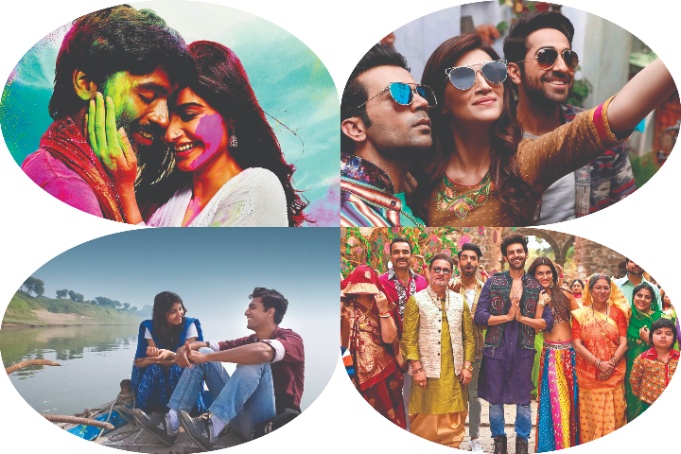
For decades now, Hindi cinema has peddled technicolor dreams set in the “heartland” of India, in small towns, with an almost tangible relatability. These locations have been a silent witness to love stories that have stayed with us. Be it Shalu and Deepak’s burning romance on the ghats of Varanasi in “Masaan” or the breezy young romantics of Humpty and Kavya in “Humpty Sharma Ki Dulhania” in the lanes of Ambala. These were stories that rooted us in a wealth of earthiness that continues to exist in these places.
Somehow, that love affair with the heartland has dimmed in intensity, not just in volume but also in audience reception. Urban affairs and coffee shops have replaced street-lit alleyway walks. New filmmakers have found their niche telling stories of urban living as they watch the lights go on and off in high-rises around them. These even began working better than stories rooted in small towns. That made us curious about what changed.
It’s no secret that audience taste in Bollywood changes every few years. Trends come and go, some last longer than others. From social dramas to family sagas, from light romances to political dramas and action films, from tales of non-resident Indians to biopics, from small-town romantic comedies to horror comedies.
Related Stories

Small-town surplus
A little over a decade ago, Bollywood witnessed a striking rise of small-town romances and heartland dramas. It began with films that felt rooted, textured and refreshingly unpolished. Kangana Ranaut and R Madhavan’s “Tanu Weds Manu” (2011) set the tone. What followed was a wave of stories anchored in local culture and small-town aspirations: Ayushmann Khurrana’s “Vicky Donor” (2012), “Ishaqzaade” (2012) starring Arjun Kapoor and Parineeti Chopra, “Queen” (2013) with Kangana Ranaut and Rajkummar Rao, “Raanjhanaa” (2013) featuring Sonam Kapoor and Dhanush, “Shuddh Desi Romance” (2013) with Sushant Singh Rajput and Parineeti Chopra, and the dark comedy “Dedh Ishqiya” (2014) starring Naseeruddin Shah and Madhuri Dixit Nene.
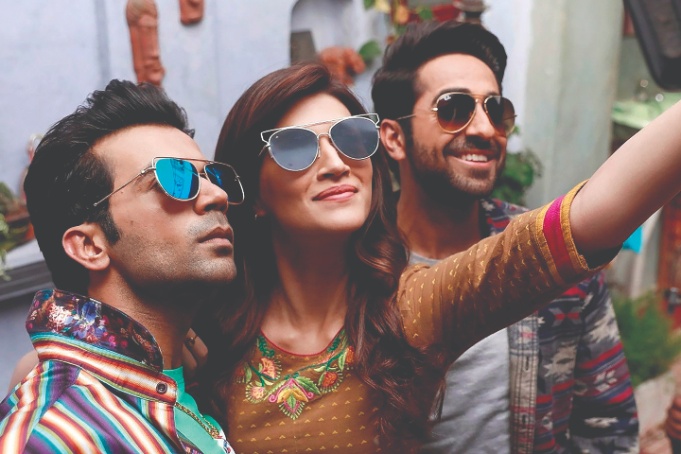
The genre kept expanding from the feel-good “Humpty Sharma Ki Dulhania” (2014) starring Varun Dhawan and Alia Bhatt, to the tender, nostalgic “Dum Laga Ke Haisha” (2015) headlined by Ayushmann Khurrana and Bhumi Satish Pednekkar. Then came the charming “Bareilly Ki Barfi” (2017) with Ayushmann Khurrana, Rajkummar Rao and Kriti Sanon, followed by films that balanced comedy with commentary such as “Shubh Mangal Saavdhan” (2017), “Badrinath Ki Dulhania” (2017) with Varun Dhawan and Alia Bhatt, “Toilet: Ek Prem Katha” (2017) with Akshay Kumar and Bhumi S Pednekkar, “Manmarziyaan” (2018) featuring Vicky Kaushal and Taapsee Pannu, “Luka Chuppi” (2019) with Kartik Aaryan and Ananya Panday, “Shubh Mangal Zyada Saavdhan” (2020) with Ayushmann Khurrana and Jitendra Kumar and “Mimi” (2021) starring Kriti Sanon. The list is vast and audiences embraced almost all of it. For nearly a decade, small town storytelling became Bollywood’s beating heart.

Where is the love?
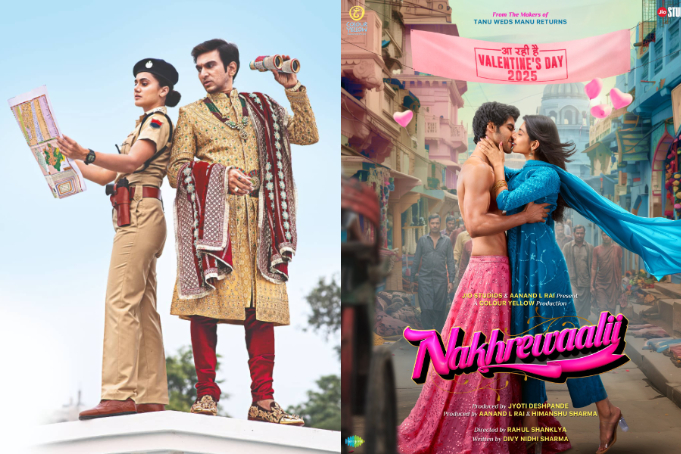
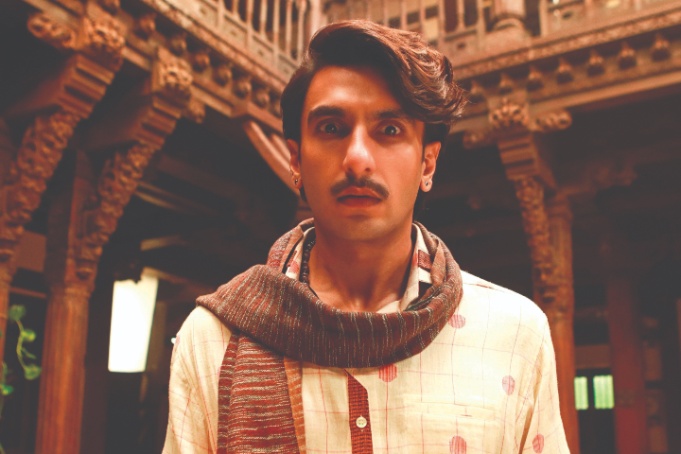
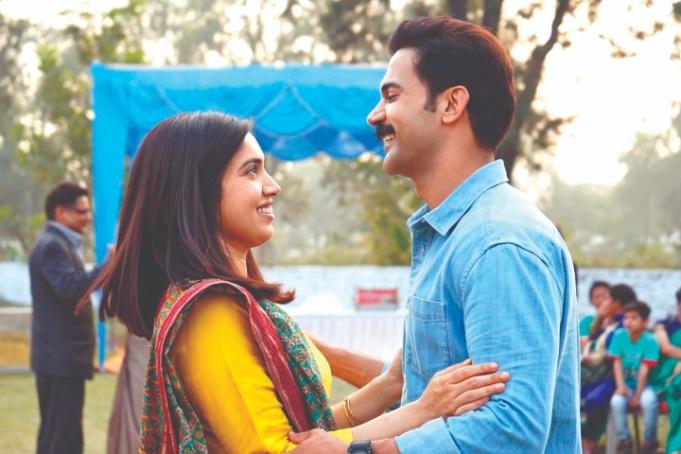
But today, these films are no longer finding the same love. A series of recent releases such as “Atrangi Re” (2021) starring Akshay Kumar, Dhanush and Sara Ali Khan, “Hum Do Hamare Do” (2021) featuring Kriti Sanon and Rajkummar Rao, “14 Phere” (2021) with Vikrant Massey and Kriti Kharbanda, “Chandigarh Kare Aashiqui” (2021), starring Ayushmann Khurrana and Vaani Kapoor, “Badhaai Do” (2022) with Rajkummar and Bhumi, “Jayeshbhai Jordaar” (2022) with Ranveer Singh and Shalini Pandey, “Satyaprem Ki Katha” (2023) starring Kartik Aaryan and Kiara Advani, Shehzada (2023) with Kartik Aaryan and Kriti Sanon, “Govinda Naam Mera” (2023) with Vicky Kaushal and Kiara Advani, “Bawaal” (2023) featuring Varun Dhawan and Janhvi Kapoor, “Mr and Mrs Mahi” (2024) starring Rajkummar and Janhvi Kapoor, “Vicky Vidya Ka Woh Wala Video” (2024), “Laapataa Ladies” (2024), “Dhadak 2” (2025), “Param Sundari” (2025) and “Bhool Chuk Maaf” (2025) starring Rajkummar and Wamiqa Gabbi have struggled to land with audiences despite familiar themes and in many cases earnest storytelling.
Even a gem like “Laapataa Ladies” (2024) could not escape the trend. This raises a clear question: Are audience’s tastes shifting toward more urban-centric stories? Because if you look at the recent urban romances and dramas that worked, the pattern is hard to ignore. Films like “Kabir Singh” (2019), “Jug Jugg Jeeyo” (2022), “Tu Jhoothi Main Makkaar” (2023), “Rocky Aur Rani Kii Prem Kahaani” (2023), “Animal” (2023), “Teri Baaton Mein Aisa Uljha Jiya” (2024) and “Saiyaara” (2025) drew large audiences, signalling that contemporary, glossy, city set love stories might now be what viewers gravitate toward. The pendulum, it seems, has swung.
Cyclical success of genres
Variety India spoke to a cross-section of industry experts to find out whether audiences are tired of small-town stories and if that explains why recent ones have not fared well at the box office. Agreeing that audience choices work in cycles, creative producer Maharsh Shah, says, “I believe genres in cinema work in cycles, very much tied to the mood and pulse of the country at a given time. What clicks with audiences keeps evolving and right now maybe urban-centric stories are resonating more strongly.” But he adds a caveat. “Rather than declaring a genre dead, at the end of the day, a good film will always work regardless of whether it is set in a metro, a small town, or even a fantastical world. The challenge with small-town and rural romance stories is that we reached a point of saturation. Once a particular genre or setting becomes overexposed the audience naturally begins to look elsewhere for novelty. Also one benefit that any urban genre film has is its wider reach and its aspirational potential. Today’s India resonates with ambition driven small-town protagonists as seen in the Pushpa franchise or ‘KGF 2’, or in glamorous big- city romantic sagas.” He further says, “In an ideal world, there should be space for every genre because cinema thrives on diversity. But practically speaking the attention keeps shifting and that is part of the ebb and flow of storytelling patterns and audience consumption.”
Producer Monisha Advani of Emmay Entertainment says, “I think the story, its emotional beats and its ability to resonate with audiences coupled with authentic sincere performances will always find acceptance. The setting is secondary. I would not agree that a rural romance is no longer viable.” She adds the aspiration angle again. “But having said that, urban settings tend to have a wider audience as they are aspirational and generally relatable given the exposure these worlds receive in daily life.”
So does aspiration become the key factor? Not majorly, feels Tanuj Garg of Ellipsis Entertainment. He says, “I do not think it is about small-town or big-town romances or comedies. It is about the script. What really matters is whether the material resonates with the audience and delivers entertainment. If a film is well made funny and most importantly, mounted at the right budget, it will work regardless of genre. We often rush to generalize and create trends when there are none. The truth is that films succeed when they are wholesome and well told regardless of cast.”
The pitfalls of progress
Director Neeraj Ghaywan, known for his widely loved “Masaan” and “Homebound,” says, “I would say stories from the heartland are withering away. We’re what, a 70 percent agrarian economy? Most of our country still lives in villages, yet nobody is talking about these stories anymore. And even when they do, it is through an urban gaze. It is either looking down at them, laughing at their English, calling them dumb or uncouth or gangster-like, or portraying them as overly idealistic do-gooders. They are never shown as real humans. They have become stereotypes. Earlier, it was the lives of the rich that fascinated audiences. Now that fascination has shifted to small-town India. But villages still remain unseen. And that, I feel, is a huge disservice. Because by not acknowledging them, we are erasing the presence of millions of Indians. We are telling the world that this tiny slice of reality represents the whole country.”
He continues, “For example, ‘Panchayat’ claims to portray the real India and village life. But where have you ever seen a village where caste does not exist? Every single character in that show comes from an upper caste. And people applaud it. Of course, it is a very engaging, funny, well-made show, no doubt about that. I am only saying that when highly educated creators make something like this, it becomes their moral responsibility to represent correctly rather than erase.”
Ghaywan further adds, “What ‘Panchayat’ does is erasure. It presents a village where caste and religion do not exist, and where only upper caste people, who make up just about 15 percent of the population, are shown to represent the whole of rural India. That is a complete erasure done purely in the interest of making money. You are wiping out an entire population.” Exhibitor Akkshay Rathie, who has had a ringside view of the industry for over 15 years, has the final word on aspirations. He says, “There are enough examples on both sides to prove that the setting does not matter. What counts is how you tell your tale. That is where many Hindi filmmakers falter because their understanding of Tier 2 and Tier 3 audiences is based on what they see in movies. But real India in those towns is different. It is aspirational. Our filmmakers do not understand that many people in these regions have phenomenal incomes, and producers make the mistake of laughing at them in films instead of with them. “Romeo and Juliet” has had many versions, not all of them successful. “Baahubali,” “The Lion King” and every third Bhojpuri film share similar themes. It is all about understanding the audience.”
Director Mohit Suri, who made “Saiyaara,” admits he does not understand trends or calculated filmmaking. “I make a story I want to make, and I do not think locations or genres matter at all,” he says. “Alongside ‘Saiyaara,’ a film like ‘Mahavatar Narsimha’ did very well. Can we find anything common between these films or between them and other hits this year? Saiyaara was an urban story but was rooted in tradition, which the audience appreciated. I do not see patterns in filmmaking. It is just a topic created for discussion.”
The love for conflict
Filmmaker Vikas Bahl (“Queen”) believes the struggle with heartland love stories lies in finding conflict. He also feels most urban romantic comedies and similar films suffer from a lack of layering and only touch the surface. “The struggle with love stories right now is finding conflict because they work only when there is conflict. Society has so much disparity that finding conflict gets tough across the board. If you look at recent ones like ‘Dhadak 2,’ it was fantastic with caste as the conflict. It was phenomenal,” he says, adding, “So when there is no conflict, the story becomes just an easy romance, and the urban romantic comedies we have now barely touch the surface. We cover them up with songs and jokes. There is hardly any layering anymore.”
The common sentiment across the board seems clear. The story and the script are sacrosanct and trends are secondary. The heartland must return to the screen, but with crackling scripts and better execution. The hunger certainly exists, but the perfect recipe that fits the palate needs to be rediscovered. One hopes the future holds more love stories born from the core and soil of the nation.One hopes the future holds more love stories born from the core and soil of the nation.
(With inputs from Shubham Kulkarni)








Comments are moderated. They may be edited for clarity and reprinting in whole or in part in Variety publications.