



Sep 13, 2026 4:30pm IST
Sudha Kongara: ‘When An Actress Brings In The Audiences, She Should Be Paid Accordingly’ (EXCLUSIVE)
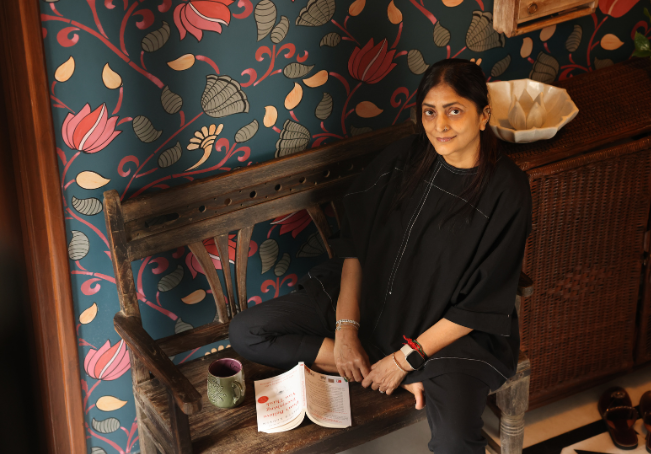
Sudha Kongara is a critically acclaimed filmmaker with box-office hits like “Soorarai Pottru,” “Paava Kadaigal” and “Putham Pudhu Kalai” in Tamil and “Guru” in Telugu. Sudha appears to have an appetite for films based on gritty real-life experiences. She chooses subjects that call for extensive research; which leads to animated living room discussions, post release.
Her National Award-winning Tamil film, “Soorarai Pottru” based on the life of the Air Deccan Founder, Captain Gopinath starring Suriya, was remade in Hindi as “Sarfira” with Akshay Kumar, however it underperformed at the box-office. “Akshay was really good in the movie. It was just the release timing that affected ‘Sarfira.’ At that point of time, Akshay had a release virtually every month and that overexposure on screen may have impacted the movie. Also, most people had already watched the original film with Suriya, so that was another possible reason,” she explains with a hint of mild disappointment.
Is the alternative to having a monthly release perhaps a longer wait? She disagrees. “I think today what matters is the content. You could be a superstar and the film will draw the crowds for a day but I don’t think we can fool around with the audience anymore.”
In recent years, Hindi film lovers have started appreciating South Indian movies, which has facilitated their release in theatres. The biggest hits, “Baahubali,” “Kantara A Legend Chapter 1,” “Lokah Chapter 1: Chandra” or “Sankranthiki Vasunthanam,” have all crossed the ₹300 crore mark worldwide. Hindi cinema now seems to be wooing South stars and their cinema, unlike the past. Sudha responds diplomatically. “It’s not like we always have better content in the South, but by and large, the movies offer good stories. And we are making a lot more successful films. I think it’s a cycle. So, the Hindi film industry has entered a phase that is not resonating with the public. The reference point, I think, for most filmmakers up north, is their friends, or TV shows. To connect with the heartland, they need to step out of their bubble. Which is why ‘Dhurandhar’ has worked because it’s hardcore and gritty. I think we need to get back to our roots for cinematic inspiration.”
The footfalls in theatres seem to have dwindled, and the audiences are stepping out now for only select films, choosing to see the rest on OTT, in the comfort of their home for a nominal monthly fee. Sudha elaborates on the changing business dynamics in the OTT space as a cautionary advice to filmmakers. “I think we’re coming back to an age where the filmmakers have to buck up because you’re not going to get the luxury of an OTT stream buying it outright to cover your costs and thereby making theatre sales a bonus, no! That won’t happen anymore. Today, there are stipulations in the OTT agreements. Now they’re not buying films that are not doing well at the box-office. And, even if they buy a top actor’s film at a certain price, it is linked to how it’s performing at the box office.”
Speaking of costs, the conversation gravitates to absurd star fees that often eat into the film’s entire budget. Does it work similarly even in the South? “That seems to be the case for some. But not all. And yes, it is important to keep these balances in check along with the actor’s prices. At one point, 25% of the film’s cost was the actor’s fee. Today, it’s 75% of the fee. It’s ridiculous, so, that correction absolutely has to happen, but it just doesn’t seem to be happening because we have very few stars. The stars know their value, and the producers are also not sticking together. Even if a rule is made, somebody will back track and pay a star the amount. It’s criminal,” she complains.
Related Stories


On eight-hour shifts and pay parity
While the ongoing debate on star entourages and remunerations continues, what cannot be overlooked is the pay disparity between top male and female stars. Recently, Deepika Padukone was in the news for apparently asking for what a south production house termed as ‘an astronomical sum.’ Sudha ponders briefly before saying, “If you’re going to have an actress as a glam doll, then she is just an addition to the film, right? You then can’t expect her to bring in the crowds. But if a female-oriented movie like Kangana Ranaut’s ‘Queen’ earned big money, then she should have been suitably compensated. There was a time when Nayanthara would bring in the audiences. She was huge. But she was only being paid her a fraction of what the so-called male superstars at that point were making. And she was delivering one hit after the other, and yet she was not paid. I think, then when an actress brings in the audiences, she should be paid accordingly.”
There was a furore in the industry when a Deepika demanded an eight-hour work shift. Sudha weighs in, “I really would like for this eight-hour shift to happen. I come from an era and a time when there was no luxury for such demands. We didn’t have any of these privileges. But, having said that, I appreciate Deepika for putting her foot down and saying this must be done, because that is progress. I cannot stick to an era when I was subjugated, oppressed, suppressed, and say, you know, I did it, so, now also women have to do that? No!”
The debate on the 8-hour shift cannot be had without talking about how it will double shootings costs. Sudha chooses her words carefully while alluding to the fact that it can increase production costs for a film, citing the example actor Akshay Kumar who follows the same pattern but with a key difference. “For these eight hours, he’s literally working like an assistant. He doesn’t even go into his van. He is very disciplined. But it can get tricky when the production house puts pressure on a director to keep costs under control. In a situation, where a star is doing eight-hour shifts, then the producers must also be malleable with their budgets.”
Running a tight ship
While on the topic of budgets, as an established director with more hits than misses to her credit, Sudha controls her ship tightly. “I keep my costs very low. This is what I imbibed after training in both production and direction under from my guru Mr. Mani Ratnam, for six years. I made ‘Soorarai Pottru’ in 60 days. I became everybody’s enemy on set. I think that’s my USP,” she speaks with reverence, every time she mentions his name. Besides, her mentor Mani Ratnam Sudha expresses her admiration for other filmmakers. “I admired J Mahendran sir, who was one of the greatest filmmakers ever. I loved his movies Mudhal Mullum Malarum and Pookal. The brevity of his dialogues and the realness of his characters made his work brilliant. I’ve always loved Sanjay Leela Bhansali. I find his eye for detail and the visual feast that he creates, magical. It’s done with so much passion. I really like Vetrimaaran’s films. Then there is Sandeep Reddy Vanga. These filmmakers are breaking barriers, and they are disrupting old systems,” she gushes.
Another system she would like to disrupt the unfairness of the system towards the female crew members. Even in the case of entourages, when a man has a large entourage, it is accepted but that generosity does not extend to the female actors. “A few months back, while I was still shooting, somebody had sent me a clipping where actress Nithya Menen mentioned that there is hierarchy at every level in cinema. Nithya said that even in the placement of caravans, first it is the hero, and then the director, and then there is another male actor, then then comes the heroine. I realised that she was so right. In my case, as a director, there were three vanity vans of male stars placed ahead of mine; ironically, the reverse happens when we are shooting amid crowds. My vanity van will be placed ahead of the male stars so that they get more security and privacy. That’s how we’re beaten into shape, down the ages.”
Path-breaking films call for solid scripts that are the windows to the film’s soul. While Hindi films only go to the sets with bound scripts, south film directors do not present their stars with bound scripts, most of the times, the films are in the makers minds, with little on paper. She interjects, “Now I think it’s changing, especially in the last five years. Unfortunately, South actors don’t read scripts. They like narrations. I don’t do narrations because it just makes me so anxious. I tell the stars, ‘I will give you the script in any language you want, but you please read it.’ It is better for them. Later, they can’t turn around and say, ‘She never told me all this.’ With a bound script, it’s all there in front of the actor. This is what I’m going to shoot because I write like how I shoot.”
While there is some measure of disillusionment with award functions especially amongst the top stars or movie makers, Sudha has no qualms about accepting awards. Sudha loves receiving awards. “It really, really motivates me. It feels good. Because, no matter what anybody says it is validation for me. For me, specifically, when ‘Sorrai Pothru’ got so many awards, it felt like a reward for pushing boundaries, and sticking it out for 25 years. So, I will take the award for that.” While her last film “Parasakthi” may have underperformed, Sudha’s fiery passion for making movies that shake the status quo continues. After all, cinema is her raison de’etre and it keeps her ever charged!














Comments are moderated. They may be edited for clarity and reprinting in whole or in part in Variety publications.