



Oct 25, 2026 1:04pm IST
Small Budgets, Big Comebacks: ‘Hanuman Ansh’ and ‘Awarapan 2’ Set The New Box Office Economics of Hindi Cinema (EXCLUSIVE)
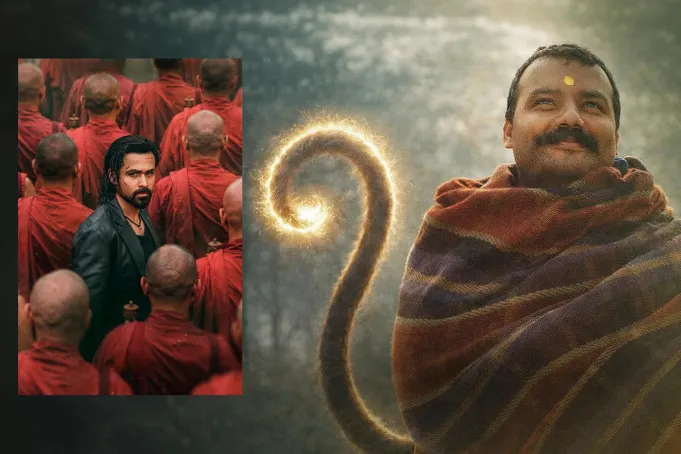
The Hindi film industry’s playbook in recent years—big stars, big budgets, and big scale—is facing a reality check. As production costs spiral into hundreds of crores, the return on investment for mega-budget films is shrinking. While “Toxic”’s box-office performance has already triggered industry-wide introspection, the real disruptor is the rise of low-budget, high-return cinema quietly rewriting the rules of theatrical success.
The first wake-up call was “Saiyaara” (2025), which proved that star power isn’t everything. Made on a budget of just ₹45 crore, the film grossed a phenomenal ₹318–332 crore net during its lifetime run. The recent success of Hanuman Ansh and Awarapan 2 suggests audiences may not always look for scale when they buy a cinema ticket. They may simply be looking for a compelling reason to watch a film — be it story, emotion, nostalgia, genre or word of mouth.
While representing vastly different cinematic propositions, both films highlight a pivotal industry question: is a combination of disciplined budgeting and high audience engagement the key to a sustainable future for Hindi theatrical releases?
Word of mouth
Imtiaz Ali’s “Main Wapas Aaguga” was made on a budget of ₹70 crore and had a first-day collection of ₹1.15 crore and then it went on to make ₹73 crore net. “Main Vaapas Aaunga” performed best in its second and third week, where it collected even better than its opening week. A similar growth was witnessed with Vidhu Vinod Chopra’s “12th Fail.” “Hanuman Ansh” is perhaps the most striking example of how dramatically a film’s fortunes can change after release. Reportedly made for less than ₹2 crores, the Neem Karoli Baba devotional drama opened to roughly ₹10 lakh. Yet, instead of disappearing after its opening, the film gained momentum through audience response and word of mouth, eventually crossing the ₹156-crore mark in India by its fourth week. It earned 78x on investment.
Related Stories

Triumph of content
Its turnaround is significant because it wasn’t driven by the conventional ingredients of a major Hindi release — a huge production budget, a superstar-led opening or a major franchise. Trade analyst Taran Adarsh describes the phenomenon as a shift towards content-driven cinema. “I think it is basically the triumph of the content.” The film’s journey also underlines the limits of relying solely on star power. “Stars work, I am not denying that. But along with stars, there has to be content. Audiences can be very unpredictable.”
For Adarsh, the scale of “Hanuman Ansh” ’s turnaround makes it particularly unusual. ““Hanuman Ansh was” rejected in the first two weeks... and suddenly there was a turnaround. And the kind of turnaround is very, very rare in today’s times.”
The nostalgia factor
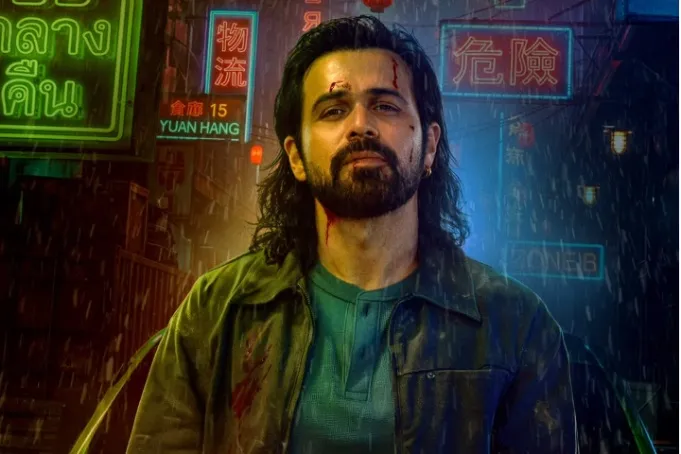
“Awarapan 2” represents another route to theatrical viability. Unlike a relatively new property, it arrives with an existing identity and a built-in emotional connection. The “Awarapan” brand has developed a cult following, while Emraan Hashmi’s association with the film adds another layer of familiarity. That gives the sequel an advantage that a completely new film may not have: audiences already know what the property represents.
It also highlights the potential economics of a controlled-budget film. A project that does not require the revenue of a mega-budget spectacle to recover its investment has more room to survive a modest opening and build through word of mouth. (Add budget and lifetime collection)
Modest budget films in jeopardy?
The emerging market is not necessarily one where small films replace blockbusters. At one end are mega-budget event films built around stars, franchises and spectacle. At the other are low- and mid-budget projects competing through content, emotion, nostalgia, genre and audience discovery. The pressure could be greatest on films caught between these two worlds — movies expensive enough to carry substantial financial risk but without the star power, franchise value or spectacle to guarantee a large opening. Adarsh cautions against treating the recent successes as proof that every mid-budget film will work. “Too early to say that every mid-budget film will work... I don’t think so. If the content is good, then definitely.”
Popular on Variety
That distinction is crucial. A smaller budget does not guarantee success. It simply reduces the level of box-office business required to make the economics work.
From digital popularity to theatrical pull
Audience familiarity is also no longer created only in cinemas. Streaming platforms, television and social media can build strong communities around characters and properties before they make their way to theatres. “Mirzapur” is an example of the theatrical power that an established digital audience can generate. Taran Adarsh points out, “Mirzapur opened bigger than most big-star-cast films... 27 crores is not a joke. And its first-weekend collection is 93.75 crore net.”
The lesson is significant: audience equity can now be created outside the traditional star system and eventually converted into theatrical interest.
A more sustainable equation?
Trade and distribution expert Akkshay Rathie believes the trend towards smaller and mid-budget films has been gathering momentum. “Mid-budget films made a pretty solid comeback last year as well, with films like ‘Tere Ishk Mein,’ ‘Mahavatar Narsimha,’ etc. doing very well. And even this year, I think it’s only strengthening with ‘Awarapan 2’ doing the kind of numbers that it did. ‘Hanuman Ansh’ can’t even be called a mid-budget film. It’s actually a movie made on a shoestring budget that has gone on to give unprecedented returns.”
Rathie believes audiences are increasingly rewarding films that deliver value rather than simply scale. “So finally, it is a scenario where novelty in storytelling, entertainment value, and respect for the audience’s time, money, and effort is being rewarded in the truest form without any excuses, without any bump-ups or anything else. And that’s truly a delightful time for the movies. Let’s really hope that this streak continues for many, many years to come.”
While recent successes don’t signal the death of the blockbuster, they prove that event cinema is no longer the only game in town. The future theatrical landscape will still feature massive spectacles, but a new, viable model has emerged: one where budgets are proportional to risk, and films win audiences through substance rather than scale. Moving forward, the industry’s winners won’t simply be the films that spend the most, but those that spend the smartest—and give audiences a genuine reason to care.
















Comments are moderated. They may be edited for clarity and reprinting in whole or in part in Variety publications.