



Jun 25, 2026 4:00pm IST
Shankar Mahadevan: ‘We Told Mr. Bachchan, ‘Trust Us, Kajra Re Will Be Bigger Than Nach Baliye’ (EXCLUSIVE)
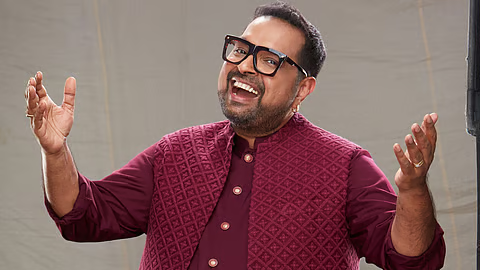
For more than 20 years, Shankar Mahadevan has been one of the chief architects behind the sound of modern Indian cinema. As one-third of the Shankar-Ehsaan-Loy trio, he brought a fresh, youthful pulse to Bollywood, completely changing how a generation connected with stories of love, heartbreak, and friendship. His career is a masterclass in musical curiosity — stretching from the breezy, game-changing tracks of “Dil Chahta Hai” to the unforgettable, high-energy of “Kajra Re” from “Bunty Aur Babli”.
Now, the National Award-winning maestro is turning his focus to a deeply personal passion project: Anandam – The Symphony of Devotion. Crafted alongside DreamSetGo and Jio Creative Labs, this unique, immersive Bhakti experience takes over Mumbai's Jio World Convention Centre on June 27. The monumental lineup features iconic voices like Sonu Nigam and Shaan, alongside Mahadevan’s own sons, Siddharth and Shivam.
In an interview with Variety India, Shankar Mahadevan opens up about the surprising rejections behind his biggest hits, the unique creative freedom of the 2000s, and why his latest devotional milestone feels like a true full-circle return to his musical roots.
Related Stories
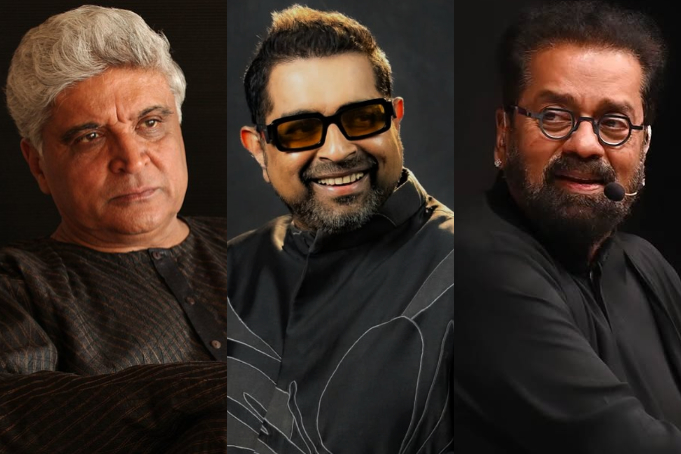
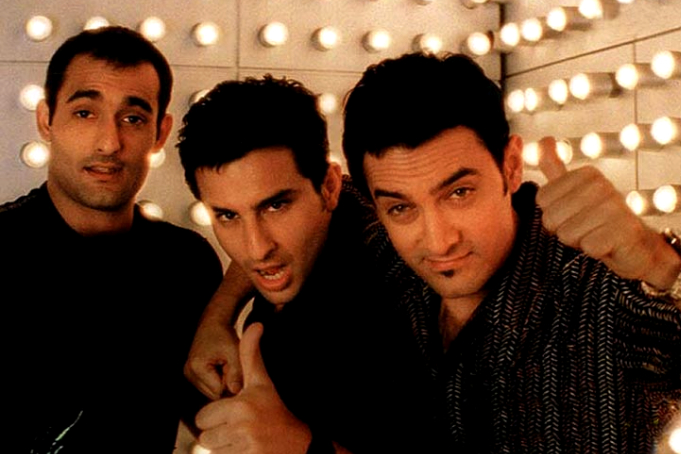
‘Dil Chahta Hai’ will soon complete 25 years. That soundtrack had something for every mood. What is it about this album that keeps it forever young?
It reminds me of Lego blocks. When you fit them, everything snaps together absolutely perfectly. This film was exactly like that; every aspect was fitted like Lego. The dialogues, the script, the acting, the music, the lyrics, the way it was shot, the whole ethos, the language, the tempo — everything was perfect. You know, they are just lounging and sitting there, not talking about anything for like 30 seconds, which was unheard of in other films at the time. People were wondering, “What is happening in Indian cinema?” The way they dressed, the way they spoke, the songs... it was all revolutionary.
But do you know that when the music companies initially heard the songs, they thought they were jingles? They actually rejected the music and went away! Anything path-breaking initially faces rejection and resistance. That was “Dil Chahta Hai”. But when it worked, it worked spectacularly. This is a film that is going to stay forever.
The 2000s era was incredibly distinctive for music. A track like ‘Kajra Re’ is still a mandatory anthem at every Indian wedding. What went into the making of that song?
I think those projects were made with a different kind of emotion — there was a sense of bharosa (trust). Filmmakers trusted the music composer and their ability to do their own work. I mean, think about it — Gulzar saab was writing. Who can teach Gulzar what to write? It was entirely a collaborative effort.
For “Kajra Re,” Mr. Amitabh Bachchan used to come to the studio and hang out with us. For the initial portion, he asked me, "Can I have some bolts (classical improvisations)?" He knew I was a classically trained singer. So, right in front of him, I composed those lines. He got so excited!
Interestingly, he initially thought “Nach Baliye” would become a bigger hit than “Kajra Re.” Mr. Bachchan questioned it, but we told him, “No sir, trust us, this is going to be the song. Believe us.” He put his trust in us, and look at what happened. When he heard the finished product, it was funny because my vocals were actually just a scratch track. When we compose, I usually sing all the rough parts, and we thought someone else would come and dub the final song! When he heard it, he warned me not to change a thing.
You’ve previously spoken about modernizing bhajans and making them appealing to Gen Z. Do you ever worry that the core, meditative aspect of devotional music gets diluted when it’s presented this way?
No, I wouldn't say so, because it depends entirely on how you present it. You may be sitting there with a traditional tanpura in a deeply meditative mood, but you can be very besura (out of tune), and the whole experience turns out terrible. On the flip side, you can be standing there with the most modern synthesizer, but if your intention and delivery are pristine, you will still give the audience that exact meditative experience.
So, I absolutely do not believe that there is only one rigid way to listen to a particular type of music. I have always imbibed this philosophy, even in my mainstream commercial film scores. Take a song like “Mitwa” (‘Kabhi Alvida Naa Kehna’), for example. My underlying responsibility as a classical singer and musician was to take Indian classical music and package it for the next generation, reaching an audience that is not regularly exposed to it. It’s about introducing classical elements to regular people who don't normally attend a classical concert, so that they can get interested in that world. It is the exact same vision with devotional music and Anandam.
Looking at your vast career, does headlining a grand, immersive spiritual experience like Anandam feel like you are finally returning to your musical roots?
One form of music I have always enjoyed the most is Naam Sankirtan. It is a beautifully simple form of music where you sing a line, and the listener — the audience — repeats it back to you. You sing a line like “Jai Jai Ram Krishna Hare,” and they echo it. It is the simplest, yet the most joyful experience you can have in music.
Anandam is the direct result of that feeling. I have done so many different things in music throughout my career, but I have always deeply wanted to do a dedicated devotional concert. In our country, there is an immense wealth of music, culture, heritage, literature, Sanskrit, Hindi and multiple regional languages. It is incredibly rich. I wanted to celebrate that, and that’s why Anandam was born.





Comments are moderated. They may be edited for clarity and reprinting in whole or in part in Variety publications.