



Jun 24, 2026 10:30am IST
Sanjay Suri on ‘Main Vaapas Aaunga’ and Kashmir: ‘The Theme of Displacement and Search For Home Are Part of My Family’s Lived History’ (EXCLUSIVE)
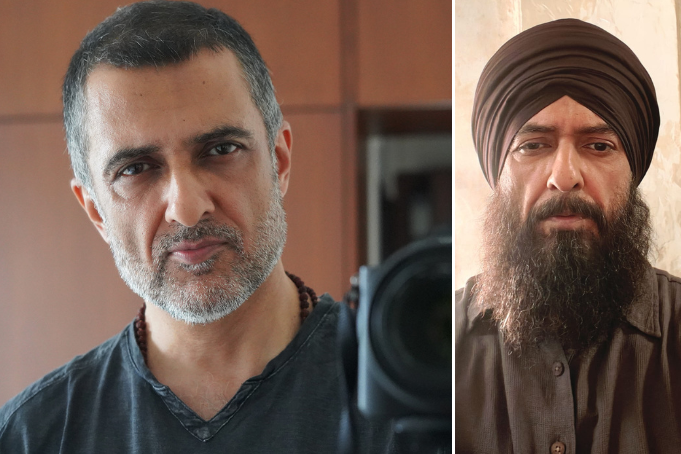
In Imtiaz Ali’s “Main Vaapas Aaunga,” Sanjay Suri plays Vedang Raina’s father, Jasmer, a brief but impactful role in a story about displacement, love and loss. Set against the backdrop of Partition, the film explores the longing for a home that can never be returned to. For Suri, the themes are deeply personal. Having lost his father during the militancy in Kashmir in 1990 and experienced the pain of leaving home, he found an immediate connection with the film’s exploration of grief, uprootedness and identity. In a conversation with Variety India, the actor opens up about finding echoes of his own history in the film,
What made you say yes to this part? The Imtiaz Ali factor or the theme of the film?
It was a combination of both. It always begins with the story. If you look at my filmography, there are so many first-time directors whose work no one knew. This story touched me deeply because of its emotional honesty and the way it explored a theme that is both personal and universal. Imtiaz Ali at the helm made a tremendous difference. He approaches his characters with empathy rather than judgment. When I got a call from the casting director’s office that Imtiaz would like to meet, within me there was this comfort and excitement, that something special is coming up. You feel safe as an actor in the hands of a director who understands the nuances of the human condition and allows vulnerability to exist on screen. I loved exploring Jasmer with him.
Was there a scene in the film that brought back memories or emotions from your own life?
To be honest, it’s not about one scene or only my scenes in particular... The railway station one (which shows him returning to the station at one particular time every day, hoping for his family’s arrival), be it the wait for the family or trying to go back, I generally connect to such stories on a human level. Yes, there were moments in the film that resonated very deeply with me on a personal level. The theme of displacement, loss and the search for home are not abstract ideas for me. They are part of my family’s lived history, including me as a 19-year-old.
Partition, the Kabali Raids in Baramullah (Kashmir) and then 1990… the experiences and stories of uncertainty and having one’s world suddenly altered were passed down through generations. My father was killed in 1990 at home in Kashmir and with that came not only the loss of a loved one but also the loss of home and identity.
So whenever a scene touched upon the pain of losing one’s home, being separated from one’s roots, or carrying grief across generations, it was impossible for me to approach it purely as an actor, those emotions exist somewhere within me already and I go through the emotions as they are connected to my personal memories and family history.
Related Stories

The film explores the idea that you can return to a place but not to the life you knew there. As someone who left Kashmir under difficult circumstances, what parallels did you notice?
The Partition was a defining historical event that affected millions of people at once. Lives were uprooted overnight, and for many, there was no possibility of ever returning. It was a chapter that, however painful, was closed in a physical sense because the world they had known ceased to exist. While Kashmir was different. You could still attempt and go back, however risky it was in the 1990s. Homes and streets were still there, even if burnt or vandalized. But what had changed was your relationship with that place. You returned not to what was, but to what remained. In some ways, that can be equally painful because the memories are constantly confronted by a different reality.
What was particularly difficult in the 1990s was the absence of acknowledgment. Beyond the personal losses, there was a feeling that the suffering and displacement of many families were not fully seen or understood. Closure becomes difficult when your experience is either ignored or reduced to a political debate. Human pain needs recognition before it can begin to heal.
So while I don’t equate the two experiences, I do understand the emotions that connect them, the loss of a sense of home, the longing for what once was, and the realization that sometimes you can return to a place, but you can never truly return to the life you left behind. That’s totally different!
Was there a moment on set that stayed with you after the shoot ended?
The railway station scene was the last scene I shot for the film, and I remember I remained silent for many days. I had to attend a wedding in Delhi soon after that and then a film market in Goa, but inside me, I was still at the border with Jasmer.
Main Vaapas Aaunga delves into the generational trauma of Partition. It's relevant to address it for the generations that haven't witnessed it first-hand, no?
Absolutely. Trauma does not end with those who experience it first-hand. It often travels across generations through stories, silences, fears, memories, and even the way families relate to identity, belonging and loss. We have heard stories from our grandparents and parents, and the younger generation will hear from us and cinema has the ability to bridge that gap. It can humanize history and help younger generations connect emotionally with events that might otherwise seem distant or confined to textbooks. I feel that if a young audience can cry watching a loss witnessed 78 years ago, or any other, it sensitizes them, and that’s where the “opening of the heart” happens. It’s very important to know that hatred and division help no one.
Looking back, do you feel the industry never fully utilized your potential?
I don't really look at my journey through the lens of what could have been. But I won’t lie, I have felt under-utilized. I feel every actor, if they're honest, will tell you there are roles they wish they had played and opportunities that perhaps didn't come their way. However, I've always believed that a career is not defined only by its highs, but by how you navigate the spaces in between, which is so crucial.
From ‘Pyaar Mein Kabhi Kabhi’ to ‘My Brother… Nikhil,’ you've consistently chosen meaningful stories. How do you look back at the choices you've made?
When I started with Pyaar Mein Kabhi Kabhi, there was a certain freshness to that era, and I was fortunate to be part of it. Looking back, of course, there were times when I felt I could offer more than what was being asked of me, but I don't carry any bitterness about that. The industry evolves in its own way, and so do actors. I ended up producing relevant films.
What has mattered most to me is longevity and the opportunity to keep growing. Some of the most meaningful work in my career has come at unexpected moments, often in roles that allowed me to explore deeper emotional territory rather than simply fit into a particular image of a leading man. Even after 20 years, I get invited to screenings of ‘My Brother Nikhil,’ ‘Jhankaar Beats,’ ‘Firaaq,’ ‘Dhoop,’ ‘Filhaal,’ ‘Pinjar,’ ‘I AM,’ ‘Chauranga’ and many more purely because these films stood the test of time.
I think as actors we spend too much time wondering whether we got our due and too little time focusing on the work itself. I've been fortunate to work with talented filmmakers, to be part of stories that have touched people, and to still be excited by the possibilities ahead. ‘Main Vaapas Aaunga’ was one for me. For me, that's a far more fulfilling way to look at the journey than through the prism of missed opportunities.







Comments are moderated. They may be edited for clarity and reprinting in whole or in part in Variety publications.