



Jun 26, 2026 10:18pm IST
Raj Nidimoru: ‘I Absolutely Think We’ll Eventually See A ₹1,000 Crore Female-Led Blockbuster’ (EXCLUSIVE)
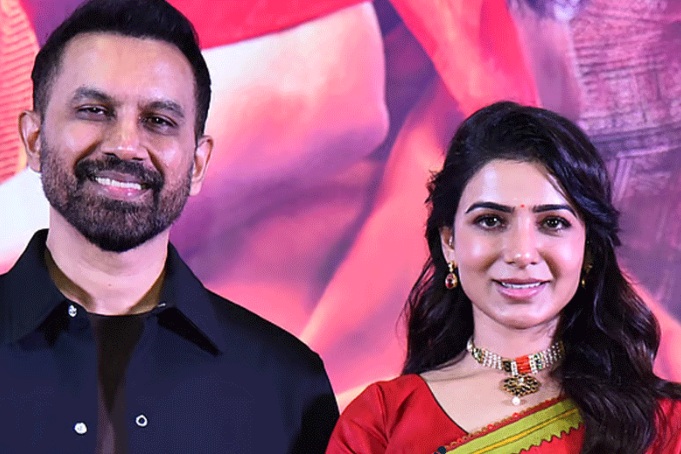
With “Maa Inti Bangaram” becoming a female-led commercial success story in the Telugu film industry, husband-wife duo and co-producers Raj Nidimoru and Samantha Ruth Prabhu have correctly read audience demand and delivered a hit that’s made it to record books. Speaking to Variety India, Raj Nidimoru shares how the film’s lead actor (who happens to be his wife as well) and he gave it their all and what it will take for the industry to believe in projects led by women and how the industry needs to trust the audiences better to continue having female-led blockbusters.
Do you think Indian cinema has underestimated the audience’s appetite for female-led commercial entertainers?
We always underestimate audiences. I believe that any good film, regardless of the subject, will find an audience. The same applies to female-led films. I knew there was a huge appetite, but I never designed the film specifically to attract female audiences. My focus was simply to make a kick-ass film. What has really moved me is seeing women turn up in huge numbers [for “Maa Inti Bangaaram”] across the state. Some of them hadn’t even been to a theatre in years. Watching those reactions reminded me why we make films in the first place.
Related Stories
How did you approach designing the action for a female protagonist? Was the process different from writing conventional male-led action?
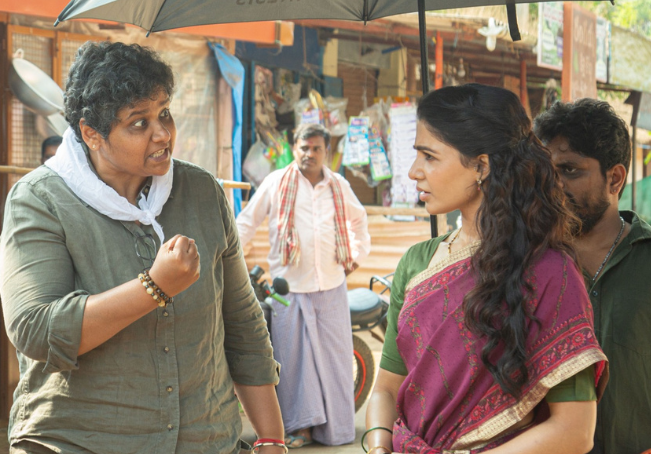
There’s an entire sub-genre where an outsider enters a family after marriage and slowly wins everyone’s affection. Usually, when it’s a man, he has a mysterious past and can fight. When it’s a woman, she wins everyone over with love and compassion. For me, this was about flipping that dynamic. She still comes into the family as a woman and earns everyone’s love, but she also happens to be someone who can fight. That thinking shaped the action. We never held back on the kicks, flips or the physicality. I also knew Samantha’s capabilities because we had worked together on “The Family Man.” I wanted to push her much further than what we had done before. I write action like a three-act narrative because I knew a lot of women would be watching the film, and I didn’t want the action to become endless gunfire. Every set piece needed emotional progression. Watching audiences erupt in theatres when she picked up the gun was thrilling. I wanted the action to feel grounded rather than relying on stylised slow motion. The movement had to feel real and effective.
How much did Samantha want to push herself physically and emotionally while filming these action sequences?
Our conversations were always about making the action feel natural. We didn’t want those exaggerated hero poses or moments where someone simply stares dramatically after a punch. We wanted everything to feel believable. Sam and I kept discussing how she could feel cornered and then hit back with intensity while still remaining emotionally grounded. We also deliberately cast physically bigger actors for the climax. That forced us to choreograph the fights differently and show how a petite woman could realistically overcome much larger opponents. That realism became an important part of the action.
Do you think the industry is still hesitant about backing female-led action films?
I hope this film encourages people to make more of them. I actually think filmmakers are always excited to write female characters because women are inherently more layered and complex than male characters, especially in India. The hesitation comes more from the market, distributors and producers. They’re the ones who need to take that extra step and back these stories. I genuinely believe filmmakers want to tell them.
Word-of-mouth has become one of the biggest driving forces behind the film. What do you make of that?
It’s lovely to see. I’ve always felt that Telugu audiences support good films, regardless of whether they have stars or large budgets. Even if a film doesn’t become a blockbuster, audiences give it credibility if they believe in it. Word-of-mouth has always mattered. What smaller films really need is breathing space. They shouldn’t disappear from theatres after just one day because audiences need time to discover them.
Many viewers have compared Samantha’s emotional range in this film to Sridevi. What do you make of those comparisons?
That’s a huge compliment. Sam is an extraordinary performer with tremendous range. Even while working on the comedy portions, I realised how naturally funny she is. Even during the action, what makes it believable isn’t just the choreography. It’s Samantha’s body language and facial expressions. You can actually see the effort she’s putting into every fight. She never comes across as someone who can effortlessly defeat 10 people. There’s always vulnerability.
The audience clearly wants more. Do you see this becoming an ongoing universe?
Lately, I’ve realised how exciting it is to bring beloved characters back. After “The Family Man” and now after “Bangaram,” audiences are asking for more. I intentionally kept this film very tightly edited because I didn’t want to overextend it. But now I’m seeing how much joy people get from spending more time with these characters. So yes, I don’t mind thinking about it.
If this film could change just one thing within the industry, what would you want that change to be?
That people believe you can make a solid commercial film with a female lead. More importantly, filmmakers start exploring many more genres with female protagonists instead of limiting them to just two or three familiar spaces. Anything you can make with a male star, you can make with a female star. That’s the shift I hope this film creates.
Do you think we’ll eventually see a ₹1,000 crore female-led blockbuster?
Absolutely. I think we’ll eventually reach a point where a movie is simply a movie. Today, many of the biggest blockbusters succeed because of the worlds they create. Whether it’s “RRR,” “Dhurandar” or any large cinematic universe, audiences are responding to the world as much as the protagonist. If the world is exciting, the writing is strong and the protagonist delivers, it shouldn’t matter whether that lead is a man or a woman. Men have simply had a much longer runway to reach this point. Women can absolutely get there, too. I’m not saying this to sound politically correct. I’m saying it purely as someone who designs films.
Finally, where are you creatively with ‘The Family Man’?
We had always planned Seasons 3 and 4 as one long story. Some viewers felt Season 3 ended midway; but in our minds, the central narrative had reached a logical point. Only Srikant Tiwari’s journey remained unfinished because it naturally continued into the next season. So yes, we’re writing furiously. We have to get to the second part of that story.




Comments are moderated. They may be edited for clarity and reprinting in whole or in part in Variety publications.