



Aug 08, 2026 4:00pm IST
Rajat Kapoor: ‘I am an accidental actor’ (EXCLUSIVE)
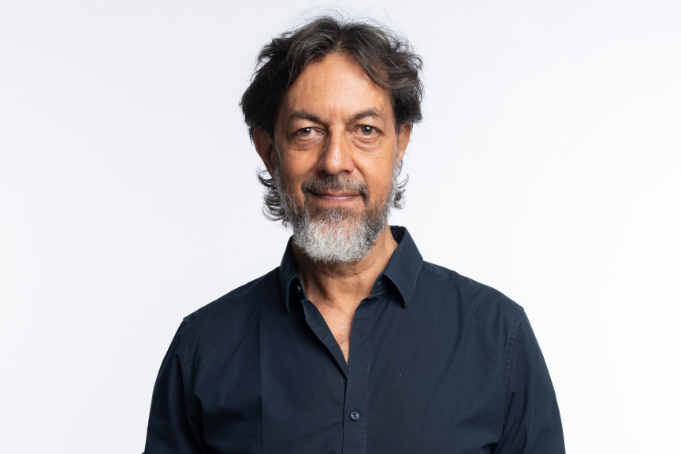
The year 2001 was a pivotal year for Rajat Kapoor as an actor. He played ‘uncles’ in both “Dil Chahta Hai” and “Monsoon Wedding”, but anyone who has seen them will know how different both those uncles were. But Rajat never set out to be an actor in the first place, he tells us. “I was an accidental actor. I studied to be a film director, and worked as an assistant director, made a feature film and two short films, all before chance had me act in films in the year 2000. And then I became known as an actor,” he recounts. The films that he was noticed in were “Kapoor & Sons”, “Bheja Fry”, “Corporate” and “Scam”, but the roles that are closest to his heart remain those in “Mantra” and “Ankhon Dekhi”. “I thought I wasn’t too bad in these films,” he says with a smile.
The actor and filmmaker is also a prolific theatermaker. Some of his notable works include “Nothing Like Lear”, “Hamlet The Crown Prince”, “C for Clowns” and “Karamjale Brothers”. In a conversation with Variety India, Rajat speaks about his latest play, “The Thing with Feathers” and reflects on his journey as an artiste.
Tell us about the premise of the play and its setting.
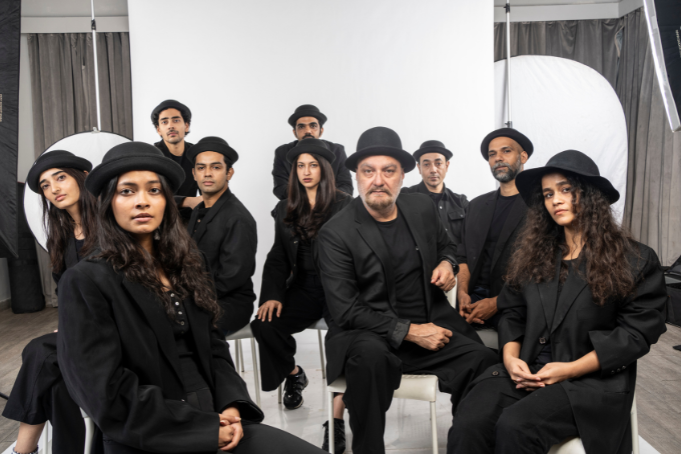
It started as a play about the first 50 years of the 19th century - a kind of looking back at history. That was the original impetus. Then, of course, the creative process has its own organic way of evolving. Slowly over the rehearsals, the narrative emerged, and it has taken a shape almost on its own. It is a story about people - about lives ordinary and extraordinary at the same time, which is all of us.
Related Stories
This is the second time you are collaborating with Aadyam Theatre – after a decade, in fact. What do you think their contribution has been to theater?
What Aadyam Theatre is doing is very commendable. They are committed to the idea, as you can see by the very fact that they have been at it for a little longer than a decade now. This is the passion and involvement one needs. This has to go on for many years for us to evaluate how it changed things, but it is impressive that somebody is doing it.
In the past, you have adapted Shakespeare’s plays, but with your own take on them. Do you think it is because Shakespeare’s texts allow for that kind of freedom to explore them in multiple ways? Which of these plays has been the most challenging?
Every play has been challenging. And it should be. The idea is not to find the easy way out; the idea is to challenge yourself. Every time you are going into an unknown territory, with no idea of what the final play would look like, whether it would be worth anything at all. In that sense, every artistic endeavor is a leap into the unknown. As for the other part of your question, all texts lend themselves to exploration. It depends on what you want to do with them. I kept going back to Shakespeare because the text is beautiful, but more than the plot, his themes are beautiful and relevant to us. Isn’t Hamlet’s existential quest known to us, and aren’t greed, ambition, and the madness of power visible today? Othello, Lear, Macbeth, Hamlet - they are all citizens of our world.
You were recently seen in ‘Main Vaapas Aaunga.’ How was it working with Naseeruddin Shah?
I have known Naseer saheb since the early 90s and have always admired him. It was lovely to spend time with him once again and to watch him perform this phenomenal part from up close.
Popular on Variety
The film touches upon generational trauma. As a filmmaker, how do you think Imtiaz Ali dealt with that aspect of the film?
I thought Imtiaz Ali did a fabulous job with the film. I had a wonderful time working with him. He has made a film that he believed in, and that doesn’t happen too often in our industry.
The scripts you have chosen as an actor or filmmaker have been a little unusual. How do you choose a script? What is your motivation?
Sure, they are ‘unusual’, because the usual is mostly boring. As an actor, I look for a good script, a good director and a good role - in that order. If any two of these three things work, I’d do it (smiles). As a director, it is another kind of motivation. There is an idea, or an image that kind of haunts you, and you want to go deeper into that idea. So, you spend a few years just being with it, and then try and write it down in the form of a script. You find characters, story, situations which will somehow get you closer to that initial idea. If the script works, then you spend a few more years trying to get money to make the film.
You wear multiple hats – you’re a filmmaker, a theater director and also an actor. How do all these aspects of your professional life impact each other? Do you think being one makes you better at the other two?
I think everything you do in life affects everything else. If I played tennis, for example, I am sure it would affect my work as a filmmaker. Or if I painted, or learned singing, sure, it would have an impact on the way I work as an actor, or a theater director, or a writer. It is all linked.
What’s next for you?
Some interesting acting jobs... and hopefully, I’ll start my next film as a director soon.



Comments are moderated. They may be edited for clarity and reprinting in whole or in part in Variety publications.