



Aug 25, 2026 6:00pm IST
Haryanvi duo and hitmakers Banjaare on ‘Spider-Man,’ ‘Barsaat’ And ‘Bairan’: ‘We Make Music For The Heart, Not The Charts’ (EXCLUSIVE)
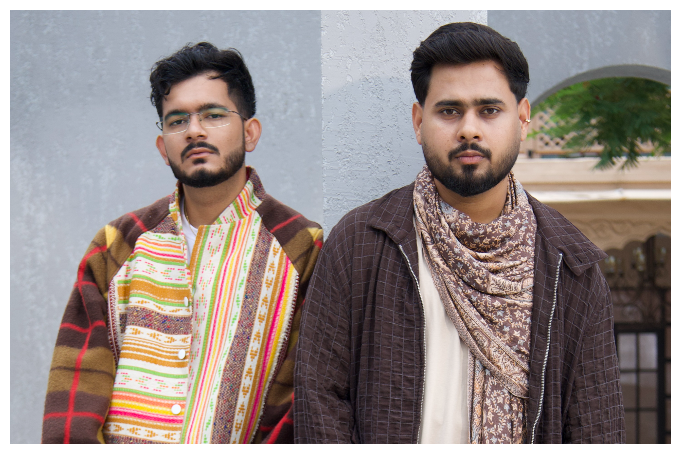
From being fined in school for speaking Haryanvi to topping the charts singing songs in that very language, it’s been quite a journey for brothers Sumit and Anuj. The two have created amazing music as the Haryanvi indie duo Banjaare. They have spent the past few months watching their music travel to places they never imagined. Their breakout track “Bairan” topped charts over many weeks, while its follow-up, “Barsaat,” not only matched its success, but took it to another, unlikely universe: Spider-Man’s.
The song was picked for the Indian promotional campaign of “Spider-Man: Brand New Day” to reflect Peter Parker’s emotional journey after his existence is wiped out from everyone’s memory, including his girlfriend (MJ) and best friend (Ned). The song seemed a response of sorts to “Bairan” - while “Bairan” explored heartbreak from a man’s perspective, “Barsaat” told the other side of the story through a woman’s point of view. It caught the attention of Sony Pictures Entertainment India and Sony Music India. Since the song was written from a woman’s perspective, they had to rework it to express Peter Parker’s loneliness and longing.
From Haryanvi Heartbreak To Spider-Man
The two brothers worked hard on the new version. “We wanted to ensure that its soul doesn't die and that the intended meaning isn't lost or distorted. So we worked hard on it again. This was such a good opportunity for us to represent our mother tongue on such a large scale,” says Sumit. Anuj adds, “ We rewrote it so that even if people hear it apart from the movie, they still find it whole. And we managed to do that.”
Ask them whether they were Spidey fans before the collab, and Sumit replies, “We were very young when we saw Tobey Maguire’s “The Amazing Spider-Man” on a DVD at home. After watching it, whenever I would spot a spider, I would keep my hand near it and hope that it would bite me so that I would turn into Spider-Man, but that never happened (laughs).”
Related Stories
Giving Haryanvi Its Mainstream Moment
While their success has been quick and massive, the benchmark for it at home has been different. The two have often said that for their family, success would mean that the song is played even by the local DJ. So has that happened yet? “‘Bairan’ toh bahut baj raha hai, ‘Barsaat’ jaake check karte hain. Lekin ‘Barsaat’ bajega toh galat ho jayega (laughs). (‘Bairan’ is being played a lot, we’ll have to check if ‘Barsaat’ is being played too. But if ‘Barsaat’ starts playing, that would be a problem.) From the industry and the audience, we have received a lot of appreciation.”
The sense of joy and a hint of satisfaction of bringing Haryanvi music into mainstream in such a major way can be heard in their voices. Sumit shares, “When we were younger, we would be fined for speaking Haryanvi in our school. So the main fight for us was that (to get it accepted in the mainstream). We want that no matter what language a child speaks, he should be proud of it; he shouldn’t hesitate to speak it or dream in his language,” Sumit shares. “Nobody should look at any language as a barrier. After all, it is a medium of communication. We felt that if we project it, other kids will find it cool. They will be happy to express themselves in their mother tongue,” Anuj says.
Choosing Art Over Validation
There have been some learnings from the success that go beyond what’s reflected in their work. “What we have learned is that what your gut feeling is, you shouldn't let other people’s opinions affect it. Stay true to it. Tell the stories you want to tell. Keep your head down and keep working,” Sumit says. Anuj echoes, “If you look for external validation, your art will die.” Sumit continues, “Don’t think that if you do something a certain way, these people will be pleased or those will be pleased. Keep such expectations to a minimum. Focus on your art. And that you have to put it out. Then, it's the destiny of that song or piece of work where it reaches or how far it travels.” Anuj quickly adds, “Umeed rakho, par zyaada nahi (Expect but not in excess).”
When Dreams Go Beyond Expectations
Talking about dreams, hopes and expectations, the two can often be heard saying, “Sapne dekho toh bade, bade sapne dekho” (If you’re going to dream, dream big). It’s almost become their tagline. Sharing the thought behind it, Sumit says, “It’s all a part of our upbringing. Honestly, never in our wildest dreams had we imagined that we would see all of this. We didn’t even know of these charts. But now that ‘Bairan’ has topped them and “Barsaat” is topping them, we know more. Whoever thought we would be a part of Spider-Man in this way… Things are moving steps ahead of our dreams now.” Anuj adds, “We are learning about the charts even now. We keep telling each other about how our songs are ranked.”
With songs topping the charts comes the pressure and fear of falling into the trap of creating music that will help an artiste get back on them repeatedly. Tongue firmly in cheek, Sumit says, “We recently shared a video where we said that when we got to know about the charts and the pressure started building up, to remember our roots, we made a motto: We make music for the heart, not for the chart. We wrote it as well… If you do that, then the chart follows (laughs).”
Beyond The Big-Screen
If an artiste is on the chart in an Indian language, it can’t be that there have been no film offers. So, have there been any? “Yes, they weren't good (both laugh).” They say, “We want the story to be good, the casting to be good. Somewhere we should feel that it's important to do this. It has to motivate us.”
Social Media Fuels The Regional Music Boom
The two give social media credit for bringing regional music into the spotlight. Anuj says, “Social media is very important at the moment. There used to be CDs of songs, but now all social media is running it all.”
Sumit adds, “The audience explores there (on social media) first and then they listen to songs on streaming sites or YouTube. Social media is very important. We tell every artist that if you aren’t using it enough, ensure you do. Use social media to show your art to the audience and promote it.”
Staying connected
It’s been a fabulous year so far for the duo. What’s coming up next? The two chime in together, “Hum yehi kahenge ki jude rahiye, nirasha nahi milegi. (All we’d say is, stay tuned — you won’t be disappointed).”




Comments are moderated. They may be edited for clarity and reprinting in whole or in part in Variety publications.