



Sep 12, 2026 6:00pm IST
From ‘Dushman’ To ‘Haiwaan’: Decoding The Cinematic Power Of The Hindi Film Industry’s Visually Impaired Heroes
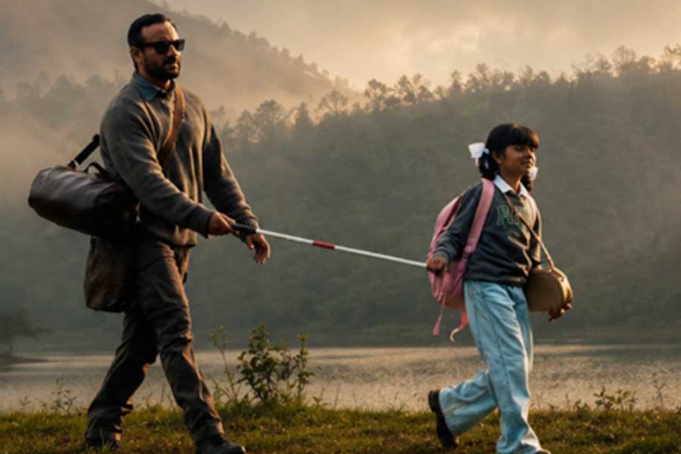
When Priyadarshan’s “Haiwaan” hit screens, it immediately reignited a long-standing fascination in the Hindi film industry: the visually impaired protagonist who refuses to be a victim. Saif Ali Khan’s portrayal of a sightless caretaker forced to protect a young girl relies on heightened spatial awareness and lethal combat discipline. Rather than pitching the character into helpless melodrama, the narrative treats his lack of sight as an alternate, sharper weapon. This setup is not an isolated experiment. Cinema in India has spent decades refining the trope of visually impaired heroes, evolving from sentimental victims into calculated strategists, ruthless fighters, and sharp investigators. Looking closely at these characterizations reveals how writers construct these roles and where the line between brilliant performance and sheer gimmick lies.
The Evolution from Helpless Victims to Combatants
For years, female characters with visual impairment were consigned to tragic, helpless roles designed purely to evoke pity. Rakhee’s portrayal in “Barsaat Ki Ek Raat” epitomized this era, where the blind heroine existed as a vulnerable victim reliant on a sighted male savior to protect her from danger. Over time, female actors pushed past these damsel-in-distress tropes. Rani Mukerji delivered a landmark performance in “Black”, portraying the fierce determination of a deaf-blind woman striving for education and dignity. Kajol in “Fanaa” played a confident Kashmiri girl who falls in love without letting her lack of sight diminish her spirit, while Deepika Padukone in “Lafangey Parindey” portrayed an ambitious roller-skater who refuses to abandon her passion after losing her vision.
Eventually, this evolution crossed fully into the action and thriller space. The modern visceral adaptation of this trope splits visually impaired characters between tactical mentors and active combatants. In “Dushman”, Sanjay Dutt’s Major Suraj Singh Rathod established the blueprint for the veteran guide. Blinded in the line of duty, his presence is defined by spatial mastery, forcing him to map his world through echoes, touch, and intuition. This foundation laid the groundwork for modern sensory combatants like Hrithik Roshan’s Rohan Bhatnagar in “Kaabil” and Saif Ali Khan in “Haiwaan”. In “Kaabil”, the performance stands out because Rohan meticulously manipulates environments, using darkness, sound cues, and voice modulation to level the playing field against sighted villains.
Related Stories

The Misdirection Artists and Manipulators
Visual impairment on screen often carries a societal assumption of weakness. Smart screenwriters frequently weaponize this bias, creating characters who use their condition as a cover for strategic deception. In “Gandhari”, Taapsee Pannu’s Bani navigates a dangerous child trafficking network while dealing with compromised vision, intentionally letting her enemies underestimate her tactical mind. Similarly, Ayushmann Khurrana in “Andhadhun” plays a musician who fakes blindness to improve his art, only to get trapped in a web of murder and deceit.
This sub-genre allows actors to play a dual game, convincing screen characters of their vulnerability while subtly signaling hidden dominance to the viewer. When executed well, as seen in “Andhadhun”, the performance becomes a masterclass in dark tension as the actor maintains the physical cues of a sightless individual while reacting internally to the horror unfolding before them. On the darker spectrum of this archetype yield the criminal manipulators. In “Mohra”, Naseeruddin Shah’s Mr. Jindal uses his visual status to hide his position as an underworld kingpin, relying on society's blind pity to mask his villainy. In “Aankhen”, a trio of blind men train to rob a bank, proving that sensory deprivation can be channelled into precise criminal execution.
The Methodical Investigators
When crime thrillers swap the sighted detective for a sightless witness, the narrative focus shifts from raw physical power to intense observation through sound, smell, and tactile evidence. This dynamic powers “Blind”, where Sonam Kapoor plays an ex-cop hunting a serial killer, and “Blurr”, where Taapsee Pannu plays a woman rapidly losing her sight while investigating her sister's suspicious death.
In these investigative thrillers, the performance relies on quiet restraint. The actor cannot rely on expressive eye contact to convey fear, realization, or deduction. Instead, micro-expressions, breathing patterns, and physical posture take over. In “Blind”, the protagonist's police background grounds her actions, making her acute hearing and analytical mind feel earned rather than miraculous. In “Blurr”, the terror stems from the progressive loss of vision, forcing the protagonist to adapt mid-investigation. Where these investigative stories sometimes falter is in their pacing, especially when the script relies too heavily on convenient sonic clues or absurd villain mistakes to keep the protagonist alive.
The Grounded Benchmark and Real-World Exception
While action films and thrillers use sightlessness as a dramatic catalyst for vengeance or crime, non-genre cinema has delivered the most authentic representations of visual impairment. Naseeruddin Shah’s masterful performance in “Sparsh” remains the absolute gold standard for portraying a blind character in Hindi cinema. Playing a proud, self-respecting principal of a school for the blind, Shah avoids every single theatrical cliché, capturing the subtle indignities, fierce independence, and complex emotional defense mechanisms of living without sight.
In a similar vein of realism, Rajkummar Rao’s performance in “Srikanth” stands as a rare, grounded portrayal in modern cinema. Playing real-life industrialist Srikanth Bolla, Rao bypasses the sensationalism of martial arts and vigilante justice. Instead, the performance focuses on the daily grit, social friction, and emotional resilience required to navigate a world built without accessibility in mind. Free from the demands of fight scenes and dramatic misdirection, Rao’s portrayal presents a complex individual fighting systemic barriers rather than cinematic villains.
Ultimately, the Hindi film industry's obsession with the visually impaired protagonist succeeds when it flips traditional power dynamics on their head. From the helpless tropes of the past to the tactical protectors of “Haiwaan” and “Dushman”, the best of these films prove that the ultimate strength of a hero lies in intellect, instinct, and unyielding will.














Comments are moderated. They may be edited for clarity and reprinting in whole or in part in Variety publications.