



Jun 25, 2026 7:30pm IST
Beyond the Box Office: What The First Half of 2026 Reveals About a Changing Kannada Cinema Audience
More than 100 Kannada films have released in theaters before the halfway-mark of 2026. Yet, only one film, "Love Mocktail 3," has emerged as a clear commercial success. The numbers have triggered concern and conversation about audience behaviour and the changing definition of success in Kannada cinema.
The contrast is particularly striking because it follows a strong 2025, when films such as "Kantara: The Legend - Chapter 1" and "Mahavatar Narasimha" reaffirmed Kannada cinema's ability to create culturally rooted stories that resonated with audiences at scale. Those successes generated optimism for another robust year. Instead, the first half of 2026 has raised questions about whether the challenge facing the industry is one of content, visibility or shifting consumption habits.
The Visibility Challenge
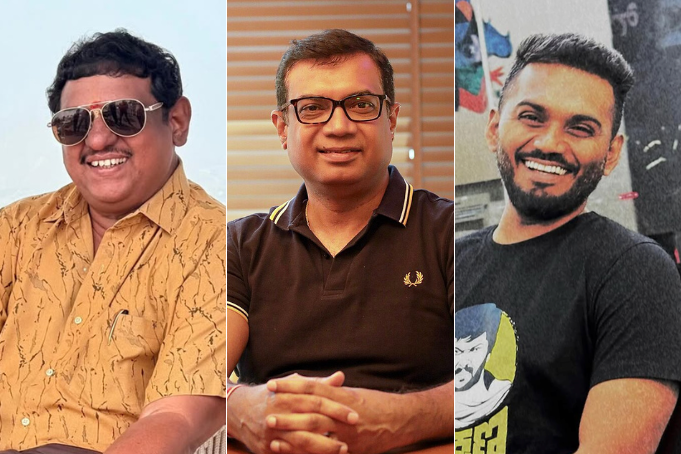
For publicity veteran Sudheendra Venkatesh, whose family has been associated with film publicity for more than 55 years, the problem often begins long before release day. "It is saddening to see the number of people who are losing money today," he says. "People enter the industry and go straight to shoot without proper scripts or rehearsals. By the time they reach release, they have exhausted their budgets and have no money left for marketing."
His concern reflects a broader issue in a year crowded with releases. Even well-made films struggle to create awareness in a marketplace where audiences are bombarded with content across platforms.
Related Stories
Pradeepa, Head of Originals at ZEE5, believes that the challenge has become acute because audiences today are living in an environment of constant distraction. "Marketing reach during a theatrical release is fundamentally about one thing: the ability to interrupt and capture audience attention amidst the noise and pressures of everyday life," he says.
Today's viewers are balancing work, family responsibilities, social media and an overwhelming number of entertainment choices.
"For a film to succeed theatrically, it must answer three critical questions for the audience: Why this film? Why now? Why should I leave my home and spend money on it?" says Venkatesh.
Venkatesh argues that many filmmakers underestimate the importance of answering those questions through sustained publicity, "Earlier, media engagement began from the inception of a film and continued systematically until release. Today, many filmmakers approach publicity only during release week. A proper publicity campaign for a medium-budget film can cost anywhere between ₹50 lakh and ₹2 crore." The consequences are visible. Films often struggle to create awareness before audiences in the short span before release.
The OTT Paradox
At the same time, the industry's challenges have produced one of the most fascinating trends of 2026: the rise of OTT rediscoveries. Films such as "Theertharoopa Thandeyavarige," "Valavaara," "Second Case of Seetharam" and "Rakkasapuradhol" generated more conversation after releasing on streaming platforms than they did during their theatrical runs. Social media discussions around these films had viewers expressing surprise at having missed them in cinemas. The trend suggests that many films are not necessarily failing to connect with viewers. Rather, audiences are not stepping out enough.
Pradeepa believes OTT platforms have fundamentally altered how audiences engage with content. "OTT has given audiences a window to value good content because it is consumed in their comfort zone, whenever and wherever they want it," he says.
Yet that delayed discovery creates a dilemma for the theatrical business. According to Venkatesh, a weak theatrical run has consequences that extend far beyond box-office numbers. "Today, only a good box-office collection can guarantee good returns beyond theaters," he says. "A good box office run automatically improves satellite, OTT, dubbing and other rights sales."
In other words, appreciation after release may help a film's reputation, but it does not repair the economics of a disappointing theatrical run.
Popular on Variety
When Content Becomes the Biggest Star
The rise of OTT rediscoveries has also coincided with another industry-wide debate: the diminishing certainty of star power. Says Venkatesh, "The state is such that even some of the biggest stars have not been able to draw audiences to the theaters."
Chaluve Gowda, co-founder and partner at Hombale Films, sees this as evidence of a larger shift. "It is a combination of content, discoverability and the theatrical experience," he says. "Today, audiences have endless choices, so even good films can get lost if they don't create enough awareness or urgency for a theatrical visit."
More significantly, he believes audiences are making decisions differently than they once did. "The bigger shift is that content has become the biggest star. Audiences are increasingly driven by strong storytelling and word-of-mouth rather than star power alone."
Star-Worship Needs to Stop
"Back in the ’60s, ’70s and ’80s, stories were the stars," says actor-filmmaker Darling Krishna. "Even the biggest names like Dr Rajkumar made content-forward films." Krishna believes Kannada cinema has drifted away from that philosophy. "The biggest flaw today is star worship. Excessive money is being spent because of that. We have lost that rootedness in narration."
His own "Love Mocktail" films, he argues, succeed because they focus on characters and storytelling rather than hero-centric filmmaking. "When I approach actors for my films, they say yes because they know every character matters, irrespective of screen time. We need to bring that focus back."
Understanding the Audience
For both filmmakers and streaming platforms, the bigger challenge may be understanding what audiences actually want. Pradeepa believes the industry is not investing enough in audience insights. "Any corporate company relies on data and frequent surveys, but many filmmakers are not exposed to audience choices in a structured way," he says.
His comments point to a reality confronting not just Kannada cinema but the broader entertainment business. Audiences today are more vocal, fragmented and selective than ever before. What worked in the past may no longer be enough. Also many films receive appreciation only after the film is out of the theatres. By the time positive word-of-mouth spreads, audiences have already shifted to waiting for a streaming release.
A New Definition of Success
The first half of 2026 has revealed a paradox. Audiences have not stopped watching Kannada films. In many cases, they are discovering and appreciating them later than ever before. The challenge is that this discovery is increasingly happening on OTT platforms rather than inside theaters.
The story of Kannada cinema in 2026 is therefore not one of decline, but of transition. The audience is still there. The challenge is finding new ways to reach it.
Read More About: Kannada Film Industry
More from Variety

Most Popular









Comments are moderated. They may be edited for clarity and reprinting in whole or in part in Variety publications.