



Jun 14, 2026 11:00am IST
American Television has ‘Off Campus’ And ‘Euphoria’, Where Are The Shows For Today’s Young Indians?
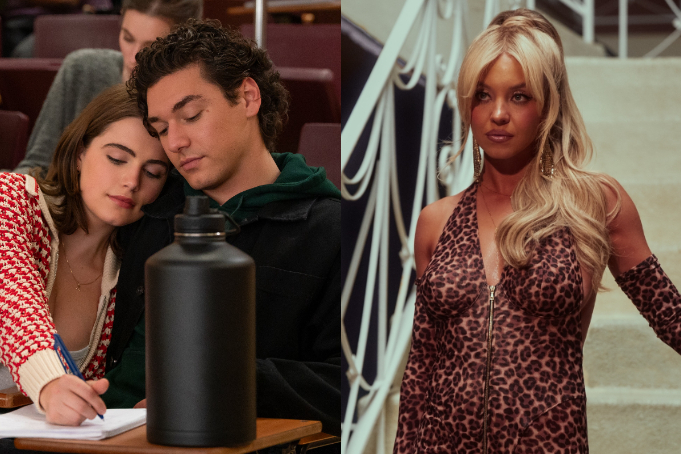
“Off Campus” is currently all the rage with young adult (YA) audiences globally and in India as well. But before that, there was “Heated Rivalry,” “Euphoria”, “XO, Kitty” and “Weak Hero Class,” all of which have huge fan bases in India.
The love for youth-centric content, however, has seemed to elude Indian television channels and studio heads aren’t keen to launch such shows. Main characters in most Indian daily soaps airing today are aged 25 and above, at an average. They are shown to be already running family businesses or are self-employed professionals. In fact, the last campus-centred show on a general entertainment channel (GEC) was 2020’s “Ek Duje Ke Vaaste 2.”
Interestingly enough, reruns of single-season shows like “Humse Hai Life” (originally aired: 2011), “Kaisi Yeh Yaariaan” (2014) and “Yeh Un Dinon Ki Baat Hai” (2017), still find takers on streaming platforms.
So, what’s stopping Indian creators and showrunners from making shows centred around India’s Gen-Z and young adults?
Cultural dissonance
“Television still reaches millions of people and there are youngsters who do not watch everything online. In Tier-II and Tier-III cities, they probably want to switch on the TV and watch something they like,” believes Harshita Gaur, who starred in “Sadda Haq” (originally aired between 2013-2016). At the same time, she asks that when no other genre has shut shop on Indian television, “why have the youth-centric shows [shut shop]?”
Her co-star Ankit Gupta blames the death of ‘appointment viewing’ as the main reason for this decline and change in watching patterns. “Earlier, youth-based shows were popular as teens regularly watched them on TV in Tier-I cities, Tier-II and Tier-III towns and in semi-urban areas as well. Today, even viewership numbers of some daily soaps are far better on streaming than on TV,” he notes.
Moreover, streaming platforms have made international content available even to rural audiences. This, Gaur believes, presents an opportunity to tell more diverse stories for and centred around India’s teens and pre-teens. “Most such shows have urban settings and are aspirational for those living in semi-urban and even rural areas. Bridging the gap will definitely bring out more stories. You can touch on topics like first love, friendship and campus dynamics,” she opines.
Writer-director Nupur Asthana, who made “Hip Hip Hurray” (1998), feels that GECs (general entertainment channels) and OTTs hardly greenlight youth stories from the heartland anymore. She wonders if subscription numbers driven by urban audiences influence this decision. She questions, “Are we so used to seeing the flashy campuses of the West or those in big Indian cities that we don’t care to watch what 60% of Indian teens live through in rural India? These are things to think about and figure out. Those stories are equally valid and need a platform,” shares Asthana.
Related Stories


Marketing missed
Ankit Gupta also highlights how shows from the West benefit from PR machinery and promotional strategies that grab eyeballs. He elaborates, “I watched some episodes of ‘Euphoria’ because I saw the hype on social media. Meanwhile, budgets of Indian TV producers are being slashed every year. There are no grand launches, billboards or press conferences to attract eyeballs. Fans find out about a show from the first teaser. That’s it. It would take an exceptional amount of buzz to get urban kids to tune into TV.”
He praises the innovative presentation of shows like “Off Campus.” He further says, “I have watched both ‘Off Campus’ and ‘Euphoria’ as well. The packaging of the shows is excellent. For example, the JLo dress worn by Allie’s (Mika Abdalla) character in ‘Off Campus.’ The dance sequence went viral on social media and people began to gush about the lead pair’s chemistry. PR for Indian television needs to cater to the youth.”
Asthana reiterates Gupta’s views, saying, “When something is being made for teens here, it never gets the kind of budget that a star-led project would get. However, elsewhere, they take the teen market very seriously, and all the summer films and teen shows are made with the same kind of care and budget that the material deserves.”
Gorky M, Producer at 4 Lions Films, known for its post-2000 youth dramas like “Humse Hai Liife” (2011), “Suvreen Guggal - Topper of The Year” (2012) and “O Gujariya: Badlein Chal Duniya (2014)” sheds light on budgetary constraints. He feels the current template of TV shows where the cast shoots seven episodes for the week on a single set would not appeal to young people who want better aesthetics and scale. He adds, "There were huge budget cuts during COVID. And they have not returned to what they were before the pandemic. It is also a big issue."
Paucity of proper platforms
Deeya Singh of DJ’s a Creative Unit, which produced “Banegi Apni Baat” (1993), and “Just Mohabbat” (1996), believes that apart from lack of intent, a suitable platform doesn’t exist. She elaborates, “The youth are under-serviced in India. Many makers start off hoping to make a show for them, but realise that TV is just not the medium. Indian TV currently services a certain kind of audience. I remember we got young viewers when we made ‘Banegi Apni Baat.’ Today, TV has stopped serving the sub-culture firmly believing that ratings and loyalty come from a certain audience. Channels are unsure on how to cater to Indian youth who love YouTube content, Instagram reels or vertical dramas, yet seem to be lapping up foreign shows like ‘Off Campus.’”
Talking about platforms, Gorky M notes, “Channel [V] was a great platform. Before that, we had Star One where we had shows like ‘Miley Jab Hum Tum.’ These platforms have vanished and with them, the youth shows.”
Gorky M feels that young audiences have been dismissed by broadcast channels for not having “spending power” and “as a result, advertisers do not target them. In the end, advertising brings revenue. He adds, "That is why top channels believe in programs with mass appeal to audiences with spending power. In my conversations with peers, this is the sense I get."
Herd Mentality to Blame?
This wasn’t always the case. Once upon a time, India’s youth genre flourished on television. Back in the early ’90s, Indian TV had “Campus,” a slice-of-life youth show that tackled student politics. Arif Zakaria, who was part of the show’s cast, believes “‘Campus’ was a well-written and executed show, which is why it clicked. Today, a lot of data-crunching and algorithm studies happen before a channel commissions a show.” He maintains, “The stories in this genre have not died. There is a classic herd mentality to follow trends of the time, which are currently shows around kitchen politics or tales of abusive relationships.”
He also points out that prime time now exists 24 hours a day with the emergence of OTT platforms. Additionally, the concept of campuses has changed. Zakaria adds, “There is a generational shift due to social media. Today, kids seek romance through dating apps and not on campus. In our times, winning awards at top college festivals was a huge flex. Today, such events also award influencers.”
Scope to succeed
Nupur Asthana asserts that creators need to take a balanced and realistic view of Indian youth and their lives. She shares, “In India, we tend to think of teens as kids who are either going crazy with drug and alcohol-fueled parties or as innocents experiencing first love. But there’s a lot to explore between these two ends of the spectrum, which ‘Hip Hip Hurray’ and ‘Mujhse Fraaandship Karoge’ did. This space isn’t getting greenlit that much anymore, somehow. Everything has to be bigger, louder and shock the senses more.”
Actor Sanjeev Seth, who also starred in “Campus” believes there is still scope to make shows around schools and colleges. “Writers just need to do their research and come up with a show that matches the current milieu. [Back then], we would also seek inspiration from incidents that appeared in newspapers, he says.
Further reminiscing about the show, he reflects on how episodes of the series were conceptualized and executed. “It was truly the Golden Age of Indian TV. I remember we filmed for ‘Campus’ only seven or eight days a month. Scripts would come in advance and we rehearsed for 10 days. The show required a lot of hard work in terms of cuts and close-ups. I feel the scope [to do something similar] is still there; we just need someone to take the risk,” he signs off.












Comments are moderated. They may be edited for clarity and reprinting in whole or in part in Variety publications.