



Aug 29, 2026 12:00pm IST
Aishwarya Rai Bachchan, Kareena Kapoor Khan, Katrina Kaif: Why Films Are No Longer The Top Priority For A-List Female Actors
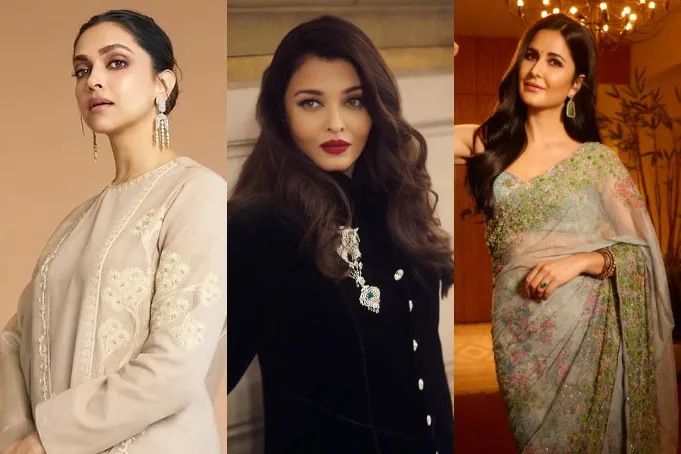
For decades, Indian cinema thrived on a formula of hyper-masculine heroes and glamorous heroines. Hindi cinema’s mass audience has enjoyed this combo and makers have relentlessly served it up. However, in recent years, a seismic shift has disrupted this traditional blueprint. While male superstars continue to work in multiple films every year, top-tier actresses are increasingly rationing their screen presence to a single annual project like Alia Bhatt and Deepika Padukone or stepping away from traditional commercial cinema altogether like Katrina Kaif and Anushka Sharma. Deepika Padukone was last seen in 2024 with “Singham Again,” Priyanka Chopra’s last Hindi film was “The Sky is Pink,” Anushka Sharma’s last release was “Zero,” (2018), Katrina Kaif’s last screen outing was “Merry Christmas (2024) and Kareena Kapoor Khan’s last film was “Singham Again,” (2024).
This absence of leave is entirely by design. Today’s screen icons are prioritizing personal milestones, expanding their business empires, and ruthlessly filtering scripts. Having already conquered the rat race, they are now curating quality over quantity. As a younger generation — led by Kriti Sanon, Triptii Dimri, Janhvi Kapoor, Rashmika Mandanna and Ananya Panday —continues the grind of three to five projects a year, the industry’s vanguard is operating from a position of absolute power. For them, stardom is no longer measured by constant visibility, but by the ability to dictate exactly when, and on what terms they grace the screen.
Choosing family and self
Alia Bhatt, Deepika Padukone and Kiara Advani all have one or two films in their kitty. Just a few years ago, Bhatt had three releases in a year. Padukone had a triple release as well. While Bhatt (“Alpha”) and Padukone (“King”) do the mandatory film a year, the same is not true of A-Listers like Kaif and Sharma. Aishwarya Rai Bachchan started the ‘trend’ of prioriting her personal life and had withdrawn from the limelight. Other actresses were taking notes. It’s not just family time but also me-time that now takes precedence. Shraddha Kapoor has only one film on hand, choosing to keep her date diary open for sudden exciting opportunities, over a film with a big director or a megastar male lead.
Following the money
For actresses, the pay cheques are nowhere close to their male counterparts and they have a shorter career span. They will be forced into retirement in their 40s, unlike male actors — who at 60 are still playing leading men. So they did the next best thing, and started a side hustle. Katrina has invested the greater part of the past five years building her beauty empire. Padukone announced on social media last year that she wanted to invest in startups, asking people to send in ideas and formed a team to evaluate those pitches. She is running her personal Shark Tank. Tamannaah Bhatia has launched her own jewelry business. Bhatt has baby apparel lines and has invested in several businesses that have got her great returns. Films are not the main source of income anymore. They are business owners who are using their celebrity to build their own brands, instead of building IPs for studios.
Related Stories


The lure of streaming
Let’s look at the actresses who have grabbed roles on OTT. Samantha Ruth Prabhu was excellent in “The Family Man Season 2,” Priyanka Chopra Jonas bagged projects like “Citadel,” “The Bluff,” Kapoor Khan was terrific in “Jaane Jaan,” to name a few. Bhatt was seen in “Heart Of Stone,” and “Darlings,” while Bhatia was seen in “Lust Stories 2”. Talking about scripts and meaty roles, Abbas Burmawalla of Abbas-Mustan says, “A lot of the actresses are drawn towards streaming because of the well-written characters. These actresses have seen box-office success, but many now crave the awards and national level recognition. Of course, these actresses added to the box-office value of movies, but now they want more.”
Filmmaker Rahul Dholakia echoes the sentiment, “These are top billing actresses who are extremely popular, the audiences would love to see more of them on screen. At the same time, their priorities might be elsewhere. Also, we need to write better roles that can inspire them.” With many streaming shows paying fees at par with Bollywood movies, heroines would prefer to take up roles that meet creative satisfaction. Suparn Verma adds, “Also, OTT in India never had much of a stigma barring the initial phase. Actresses are being paid as per status. It is not a step down in terms of money.”
Filmmaker Mudassar Aziz feels that films with a high theatrical success ratio in present times do not have female characters at the forefront. He said it is unbecoming of the legacy of Hindi film industry’s leading ladies to do such projects. He adds, “So, they automatically excuse themselves from such projects. And the volume of these kinds of films is growing. We have movies like “Toxic”, “Pushpa,” and everyone is gravitating towards an “Animal” or a “Dhurandhar.” The less said about the female characters in those movies, the better. There is a tectonic shift in terms of audience perspective.”
Avoiding high stakes
In an industry, where the status quo is determined by the fate of an actor’s last release, actresses understand that a theatrical failure does not just jeopardize a film’s budget; it actively erodes their brand equity. When an actor’s market value is intrinsically tied to their last release, stepping onto a set becomes an unnecessary gamble. By insulating themselves from the unpredictable whims of the box office, the screen divas are protecting their corporate partnerships from cinematic collateral damage. Why risk a bulletproof commercial empire for a high-stakes theatrical gamble?
A matter of choice
It is not unusual for male stars to step back. Shah Rukh Khan went on a long break after “Zero” (2018) only to resurface in 2023 with blockbusters like “Pathaan,” “Jawan” and “Dunki.” Aamir Khan is known to do a film every few years. Their star power was undiminished. Why can’t heroines do that as well? Akkshaye Rathie, exhibitor and distributor opines, “This is a matter of personal choice. Actresses like Kareena Kapoor Khan or Aishwarya Rai Bachchan built their careers over a couple of decades. Their stardom was not built overnight. Fans will always be keen to see them on the big screen. At the same time, their decision to take things slow has allowed younger actresses to shine. In Hindi cinema, fortunes are made every Friday. So, while people have stardom built over the years there is no denying the film industry is a cut-throat place.”
The Queen Bee syndrome
This leverage that actresses wield is a double-edged sword. While they undoubtedly enhance a film’s marketability, mounting a major theatrical project has become a financial minefield. The premium costs of signing on an elite actress — compounded by her entourage and other demands, bloats the budget to unsustainable levels. While the male lead gets all the perks, the female lead gets the boot. Budget-conscious producers increasingly opt for a younger, less expensive star. A day after Padukone exits “Spirit,” Triptii Dimri walks in. And Sai Pallavi took her place in “Kalki 2.”
“If a filmmaker wants to cast an A-Lister he will be ready to pay whatever might be the fee of the actress,” asserts Abbas and he is not wrong. Padukone found herself without the Prabhas films, she landed a film with Shah Rukh Khan. On her terms. Malhotra also debunks this budget theory. “A film’s landing cost assesses all aspects. It is not related to the fees of the actress. Also, films are not like the traditional ones where a heroine is roped in to just dance around the trees,” he explains.
The brand-wagon
A star’s commercial viability is measured by box office success and digital reach. Together, they form the foundation of alternative empires that out-earn traditional cinema. While the physical demands of film is limited to a few releases a year, the corporate world allows them to front 30 to 40 brands at a time. Then there are avenues like events, weddings, and stage performances that yield crores for ten minutes appearance. And the outcome of that is cinema has become the passion project; commerce is the true powerhouse, for all A-listers.












Comments are moderated. They may be edited for clarity and reprinting in whole or in part in Variety publications.