



Jul 02, 2026 10:37am IST
Shankar Mahadevan: ‘Duets Have Disappeared From Our Films, I Hope They Come Back’ (EXCLUSIVE)
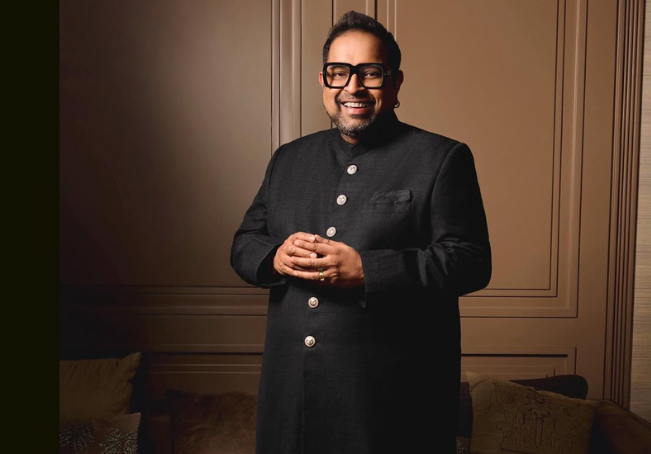
As streaming algorithms and shorter attention spans alter how movies are made, some musical traditions are being pushed to the periphery. For Shankar Mahadevan, the shifts aren’t necessarily about good vs. bad, but about preserving the unique, narrative soul of Indian musical storytelling.
The Lost Art of the Musical Dialogue
There was a time when duets in Hindi films were integral to the script, written for two voices. Think of the breezy, banter-filled romance of “Jane Kyu Log Pyaar Karte Hai” (“Dil Chahta Hai”) or the charming back-and-forth of “Agar Main Kahu” (“Lakshya”). They were duets in the truest sense, a proper lyrical conversation between a boy and a girl.
“We don’t see duets anymore. Well, we don’t see lip-sync songs anymore. Earlier, every film used to be a musical. So somewhere that has changed. Which is pretty sad. But I feel that it should come back.”
It isn’t just the lack of duets that disrupts the cinematic listening experience; it’s how the songs are treated on screen. Mahadevan elaborates, “These days, when a song is played in a film, right when the main hook line or lyrics are about to come, the dialogues can be heard. Everybody is talking on top of the song. So you don’t know whether to listen to the song, which you probably love, or to listen to the dialogues. They do it because they want to make the songs shorter so that the film is shorter.”
Related Stories

Five Composers, One Album: Efficiency vs. Consistency
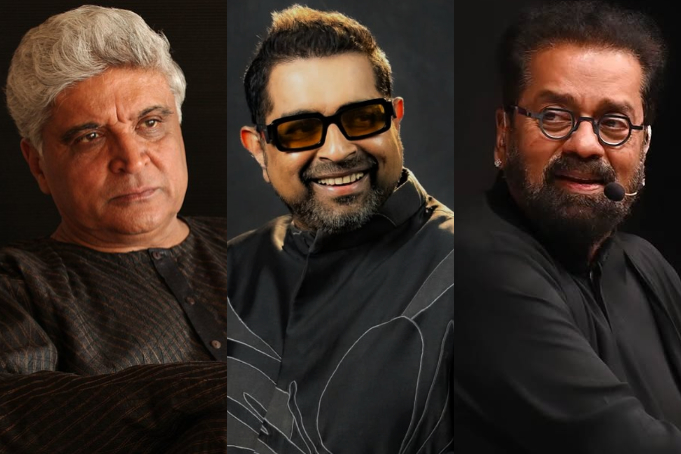
This rush for efficiency has also shifted how film soundtracks are built. Classic albums like "Bunty Aur Babli", “Dil Chahta Hai” and “Kal Ho Na Ho” carried a singular sonic identity. Today, it’s common to see five or six different music directors credited on a single album.
Mahadevan clarifies that he isn’t against collaboration, provided the creative intent is pure. “Everything is fine as long as you do it properly. If a director feels, ‘This guy can do only classical, this guy is an amazing person who can do rap, hip-hop, or rock, so I need four composers for my four different situations’—that is fair.”
The problem arises when multi-composer albums become a corporate shortcut. “If they say, ‘Yaar, in one week you will get five songs. What is your problem?’ then they are not thinking for the film. And this probably is the thought process of music companies. I am not a big fan of that. But if it works for the project, it’s great. It’s totally up to you.”
Blending Music and Devotion
While the landscape of Bollywood music shifts, Mahadevan recently channeled his focus into a personal milestone. He launched Anandam – The Symphony of Devotion. The immersive Bhakti spectacle brought together Sonu Nigam, Shaan, the Nandy Sisters, and Mahadevan’s own sons, Siddharth and Shivam.
For Mahadevan, Anandam is a return to form, deeply rooted in the tradition of Naam Sankirtan. He shares, “Naam Sankirtan is a very simple form of music where you sing a line and the listener repeats it. This is the simplest but the most joyful experience. I’ve done many things in music, but I always wanted to do a devotional concert because our country’s heritage, and languages like Sanskrit, Hindi are so rich.”
Mahadevan dismisses the idea that modernizing Bhakti music risks diluting its meditative depth. “It all depends on how you present it. You may be sitting there with a tanpura, but you can be very out of tune. Or you can have a modern synthesizer, but you are so pristine that you give that meditative experience. I don’t believe there is only one way to listen to music.”
It’s a philosophy he has carried from his classical roots into cinema. “In a commercial song like “Mitwa”, my responsibility was to take our Indian classical music and give it to the next generation—to the audience who doesn’t normally come to a classical concert. It’s the same with devotional music.”






Comments are moderated. They may be edited for clarity and reprinting in whole or in part in Variety publications.