



Aug 16, 2026 3:11pm IST
A Musical Tribute To The Rains In Goa!
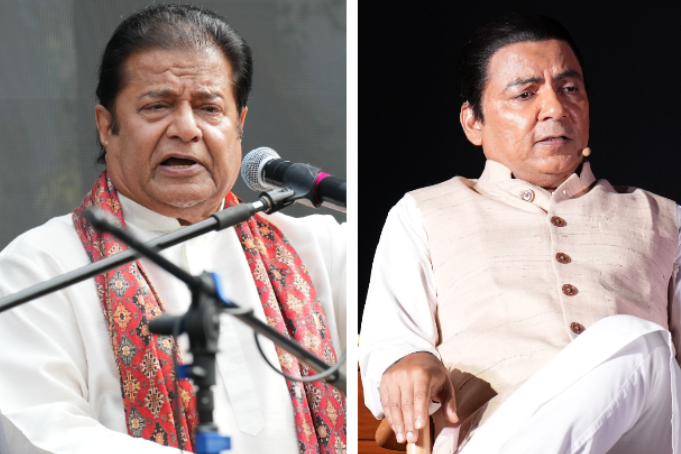
There is a Goa that thrives on beach parties, cocktail bars and late-night dancing. And then, there is another Goa that welcomes and celebrates the monsoon with poetry, classical ragas, strains of the santoor and melodious ghazals. ‘Malhar & The Sea,’ a festival of music and arts, is an intimate tribute to Goa’s seas and to the monsoon that arrives like a raga, quietly unfolding.
Organized by Showhouse at the Taj Exotica Resort & Spa, this three-day ultra-luxurious “musication” returned this year for its third edition. With its theme being “One India, Many Voices,” the residential gathering dissolved the barrier between stage and audience, bringing together multi-genre artists, culinary galas, and discerning listeners under one rain-swept roof.
The festival opened with a reverence for acoustic purity. Following the meditative depth of Dhrupad by Ustad Wasifuddin Dagar, the Raga sisters – Ranjani and Gayatri tuned seamlessly into the rainy mood. Opening with a Carnatic raga, translating to a ‘shower of nectar’, the duo offered their first piece as a musical prayer for rain. Moving gracefully to the spirit of Ashad Ekadashi, they sang an iconic Marathi Abhang on Vitthala of Pandharpur, famously rendered by Lata Mangeshkar.
Related Stories
From the romantic shringara rasa of Raag Khamaj to an explosive Tani avartanam (percussion performance), the sisters moved the audience to join in community chanting, before closing with the dramatic “Pandhariche Bhoot Mothe,” an Abhang reminding us that entering a divine space allows one to dissolve into pure spirit, leaving anger (kaam) and ego (krodha) behind.
Later in the evening, Danish Husain brought his evocative musical theater “Main Pal Do Pal Ka Shayar Hoon” to the ‘Malhar & The Sea’ stage – the first time that the festival was doing a play. Weaving together Sahir Ludhianvi’s songs into the performance, Husain brought the legendary poet’s brilliance to life while highlighting how traditional storytelling in India has always been intertwined with music.
Day one ended with Shivam Bhardwaj of Tasawwur Ensemble bringing in Delhi’s Ganga-Jamuni tehzeeb to the stage, moving from rare spiritual kalam (“Ya Allah Ho Ya Raheem”) to devotional love (“Kanhaiya Yaad Hai Kuch Bhi Hamari”), before launching into energetic Sufi anthems like “Dum Mast Kalandar”, “Chaap Tilak” and “O Laal Meri.”
Day two began on an energetic note with bhajan samrat Anup Jalota, who arrived fresh off a 5 am flight. Jalota kept the audience in splits with witty banter and zero downtime between hits like “Aisi Laagi Lagan,” “Achyutam Keshavam,” and “Yashomati Maiya Se.” Joined by singer Shweta Pandit, he moved through Krishna bhajan and a heartfelt tribute to Jagjit Singh with “Tum Itna Jo Muskura Ho” and “Hothon Se Choo Lo Tum.” “I have great regard for Jagjitji. Also, the audience was getting ready to listen to ghazals later in the day, so I just set the mood for that,” he said after the performance.
As afternoon turned to evening, Ronkini Gupta opened with her own poignant composition with “Saawan Mein Koyalia Gaaye”, capturing the delicate koel call amidst gathering storm clouds, followed by sitar maestro Ustad Shujaat Khan, who reflected on the Gayaki Ang, the pioneering technique introduced by his father, Ustad Vilayat Khan, where the sitar emulates the emotional nuances of the human voice. “When I got the invite for the festival, I asked myself, “How do I fit in?” I play the sitar, but we are celebrating the vocality of our culture,” he told the audience.
In a deeply moving segment, he paid homage to the masters who shaped his journey. Acknowledging that “Hindi films are often thought of as lesser, but are immensely difficult,” he paid musical tributes to legends such as Asha Bhosle, Kishore Kumar, Mohd. Rafi, R.D. Burman, and lyricist Rahat Indori, alongside timeless ghazals like “Kal Chaudhvin Ki Raat Thi.”
The evening pivoted gracefully to ghazals by Priyanka Barve and culminated in a nostalgic tribute to The Beatles by Wanted Yesterday. Between music sets, attendees engaged with visual storytelling, including photographer Rohit Chawla’s showcase of photographs from his book “Rain Dogs,” a visual diary capturing Goa’s monsoon moments.
The final morning belonged to the soul of Goa. Over an intimate breakfast session, Nadia Rebelo presented “Fado Unplugged”, introducing listeners to the 19th-century Portuguese musical tradition born of sea voyagers and the poignant longing (saudade) for loved ones left behind.
Festival curator Omer Haidar, Chairman and Managing Director of Showhouse, summarised the essence of the weekend when he said, “When we started planning the third edition of Malhar & the Sea, we thought we needed to just expand upon the idea and make it a little wider in terms of repertoire. I was very keen to do a vocal-heavy festival; hence, we called it ‘One India, Many Voices’.”
By giving diverse traditions, from classical Dhrupad and Portuguese Fado to theatrical storytelling, the space to breathe outside a standard concert hall, the festival delivered on that promise. The festival proved that the season is best experienced through shared art, good conversation, and music listened to at its own pace.




Comments are moderated. They may be edited for clarity and reprinting in whole or in part in Variety publications.