



May 20, 2026 11:30am IST
My Grandmother’s Unapologetic Strength Has Always Been the Blueprint For My Own Spine (Guest Column)
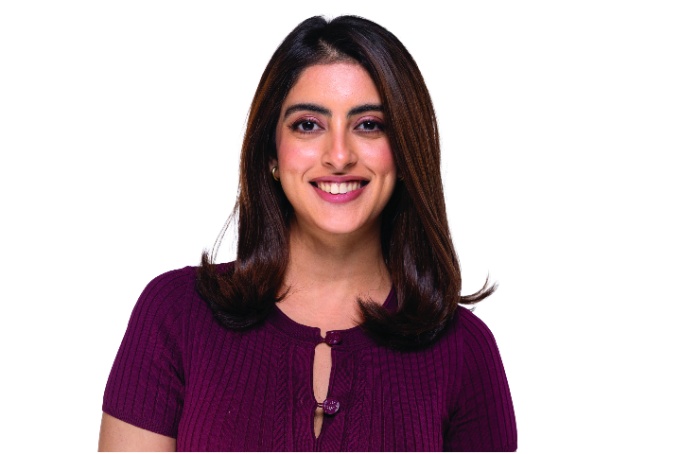
Up until now, the world has only seen me through the lens of a legacy. It is a strange, often overwhelming experience to have your identity pre-packaged and delivered to the world before you’ve even had a chance to decide who you are.
While the headlines were busy dissecting “where I came from,” my heart was purely focused on “where I was going.” I acknowledge the privilege of this headstart with pride, knowing that the doors open to me today were built by the hard work of those who came before me. However, I’ve learnt that the best way to value a legacy is to contribute to it, not just reside within it and that though I may have been born into a story that was already a bestseller, I was itching to write a sequel that stood out from the original.
My professional journey didn’t start with a quest for the spotlight; it started in the quiet corners of rural India and the high-pressure, often isolating world of grassroots entrepreneurship. It was there, away from the expectations of my surname, that I began the messy process of building a path that was entirely my own. Today, my “office” is often the factory floor of Escorts Kubota. It is grounding to step into a space filled with the smell of engine oil and the rhythmic clank of heavy machinery. Working alongside my father hasn’t just been a career move; it’s been a masterclass in grit. I’ve sat in meetings where I am the only woman in the room, trying to bridge the gap between a legacy that is decades old and a future that is digital-first. It’s a tightrope walk: respecting the steel that built our past while advocating for the software that will build our future.
Related Stories
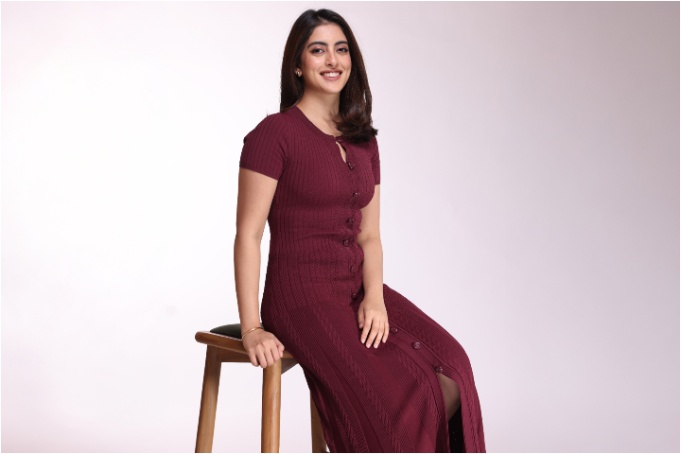
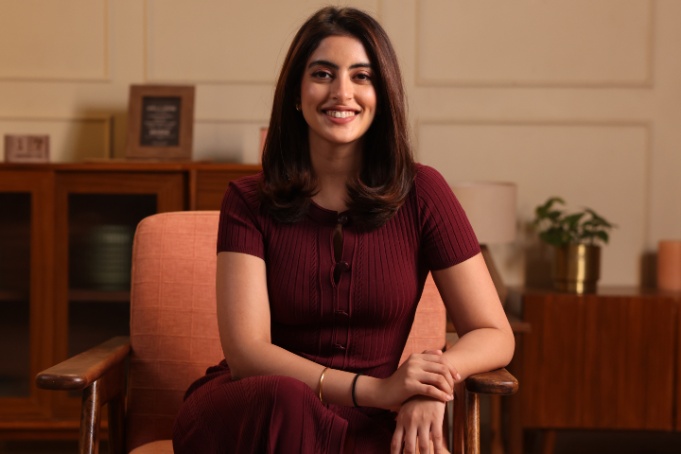
As much as I’ve grown to respect the machinery, I’ve realized that the most important “parts” of any business aren’t made of metal. My work through Nimaya Foundation and Entreprenaari is a testament to that belief. Nimaya was created to prepare young women for a world of work that is deeply entangled with AI. Entreprenaari aimed to create an ecosystem for female founders who are starting businesses in corners of India that don’t even have a pin code on Google Maps.
People often talk about legacy as if it’s a suitcase you’re handed at birth, something you just have to carry until you can pass it on. But I’ve come to realize that legacy isn’t something you inherit; it’s something you build with the tools you’ve been given.
In my house, the most powerful tool was never a camera or a title; it was the spoken word. I grew up watching the women in my life use their voices to carve out paths where none existed. My mother, who is an author herself, was my first introduction to the power of the pen. Watching her navigate her own creative journey with “Paradise Towers” taught me that a woman’s voice can create its own world, independent of the shadows cast by the giants around her. She taught me that writing isn’t just about sharing a story but claiming your identity.
Then there is my grandmother, whose unapologetic strength has always been the blueprint for my own spine. These women didn’t just give me a name; they gave me the permission to deviate from it. They influenced me to see that building my own legacy didn’t mean ignoring my roots, but rather using them as an anchor to build my own branch on our family tree.
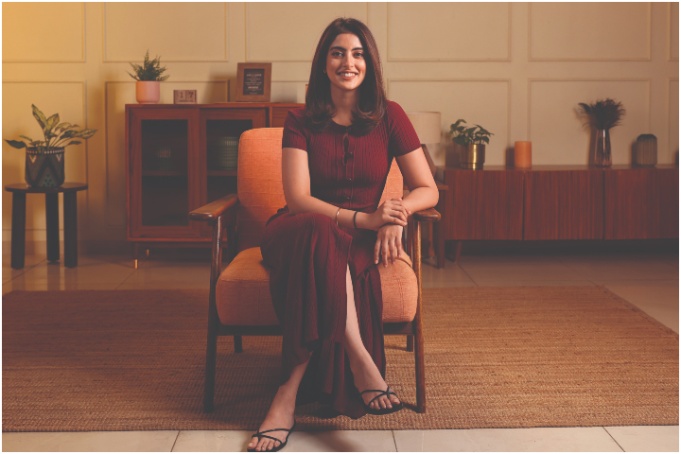 The lessons I gathered, somewhere between the heavy machinery and the raw ambition of the women around me, weren’t just personal observations; they felt like survival notes for a world that is changing faster than we can keep up with. This collection of real-time learning is why I wanted to write “The Map: A Playbook to Navigate the New World.” Partnering with my co-author Samyak Chakrabarty and Harper Collins India allowed me to merge my experiences by creating a guide that isn’t just about my voice, but about the collective potential of our generation. I know that young people today are being handed an old set of instructions for a completely new world. We don’t need a history lesson; we need a shared compass to find our own way.
Most of my generation are walking into their careers without a GPS. We are balancing traditional family expectations with a digital-first economy while trying to maintain our mental health and sense of purpose.
Popular on Variety
I chose to write this book because: My phone was a graveyard of 3 AM realisations like, “Why do we apologise before asking a question in a meeting?”. I needed to give these thoughts a home that didn’t require a charger.
I wanted to write the guide I wish I had when I first stepped onto that factory floor — a manifesto for the girl who wants to respect the path behind her while paving a completely new one ahead.
I’ve been fortunate to have a front-row seat to some of the greatest minds in business. It felt selfish to keep those lessons to myself. “The Map...” is my way of inviting everyone else into those rooms with me.
The process behind “The Map” has been less writing and more a deep-dive forensic investigation into the collective brain of our generation. Samyak and I realised early on that if we were to write a playbook, we needed to stop talking and start listening. We turned the project into a massive research operation, interviewing hundreds of peers across the country to find out where the ‘old world’ advice was failing them. We dived into the data of career roadblocks, the gaps in our education, and the sheer puzzle of trying to have a ‘purpose-driven’ career while also paying rent. It was part data-driven analysis and part overhearing the unfiltered truth of what it’s like to be under 30 today. This book isn’t just our voice; it’s a curated GPS of all the shortcuts and detours our peers have discovered the hard way.
Writing is the hardest “startup” I’ve ever launched. In business, you can hide behind spreadsheets. In writing, you are exposed. You have to find your own voice, separate from your surname. I’ve had to confront my own imposter syndrome - the voice that asks, “Who are you to tell this story?” The answer I eventually found is simple: I am someone who is doing the work. And that is enough.
As I balance the world of tractors with the world of social impact, I’ve realized that my legacy won’t be measured by the name on the building, but by the paths I help open for others. I’m moving from the shop floor to the writing desk to share the coordinates I’ve found, because I believe that the next generation of India shouldn’t just be given a destination – they should be the ones drawing the map that leads there.







Comments are moderated. They may be edited for clarity and reprinting in whole or in part in Variety publications.