



May 16, 2026 6:00pm IST
Adi Shankar on ‘Ramayana,’ ‘Dhurandhar’ and Why Indian Cinema Could Shape the Future of Global Blockbusters (EXCLUSIVE)
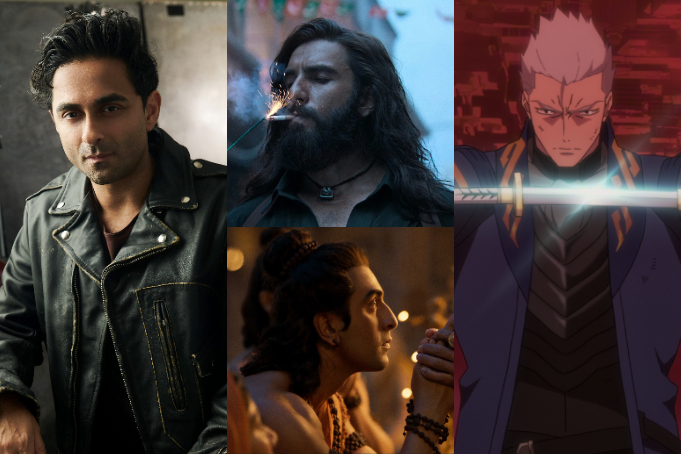
Indian-born producer, writer and showrunner Adi Shankar has spent the last decade building some of the most aggressive and unconventional franchise adaptations in modern pop culture. After first gaining attention in Hollywood through films like "Dredd" and cult projects such as "The Grey" and "Killing Them Softly," Shankar went on to reshape the animation space with "Castlevania" , "Captain Laserhawk: A Blood Dragon Remix" and now "Devil May Cry" .
Known for his blunt opinions on Hollywood, franchise culture and the future of theatrical storytelling, Shankar declares the global entertainment industry is entering a major reset and he believes Indian cinema may be better positioned for that future than many traditional studios realize.
In his conversation with Variety India, he has plenty to say about where blockbuster filmmaking is headed and why Indian cinema may be entering a major moment globally.
Related Stories

India's Global Edge
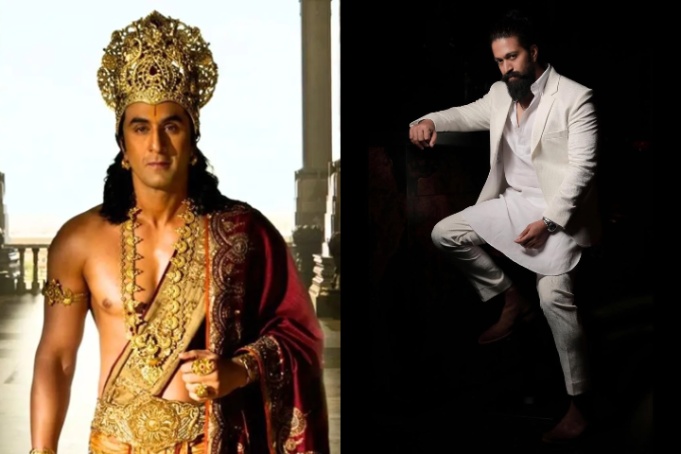
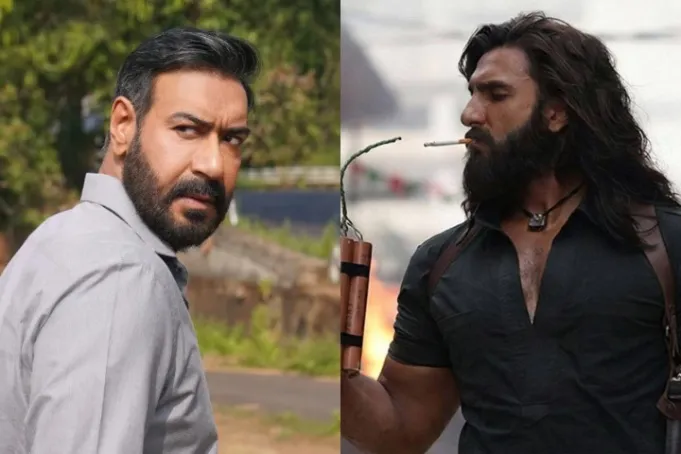
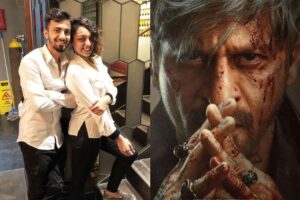
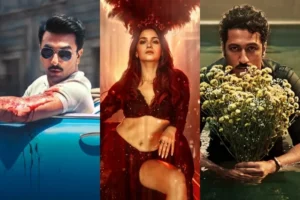
Referencing upcoming Indian event films like "Dhurandhar" and "Ramayana" , Shankar says India’s strength lies in the fact that it still embraces cinematic spectacle without losing emotional connection.
For him, the bigger issue is confidence and how Indian cinema positions itself globally. “Where I think India undersells itself globally is in confidence. There is still too much implied deference to Hollywood, as if global validation has to come from the West. It doesn’t. Japan didn’t win by chasing Hollywood’s approval. It won by being more Japanese. India will win by being more Indian, not less,” he says.
Shankar believes the current direction of Indian event cinema could eventually reshape the global theatrical landscape itself. “My honest view is that if India stays on this path, Indian blockbusters will outgross Hollywood blockbusters within ten years,” he says.
The Franchise Problem
That perspective connects directly to Shankar’s criticism of modern blockbuster filmmaking. The producer, who previously worked on projects tied to "Dredd" , "Captain Laserhawk: A Blood Dragon Remix" and “Castlevania,” says many franchises have become creatively repetitive despite their technical scale.
“A lot of franchise filmmaking got flatter and more generic because VFX got powerful enough to fake imagination. For the last decade, VFX spectacle could hide creative emptiness,” he says. According to the filmmaker, artificial intelligence is now accelerating that conversation because visual polish alone no longer feels unique.
“AI is about to finish that illusion off. It takes what was once magical about VFX and turns it into something fundamentally unremarkable. Once everyone can generate polished imagery, polish stops being a differentiator. And a lot of the system is going to realize, very brutally, that it has been overvaluing finish and undervaluing vision,” Shankar says.
He points toward upcoming tentpole films as examples of how difficult it may become for major studios to rely only on spectacle.
“I think the committee that’s directing ‘Avengers: Doomsday,’ for example, has a massive problem on their hands. ‘Avengers: Doomsday’ is facing the first true post-AI blockbuster crisis: when your big selling point is just ‘X IP fights Y IP with an Evil version of Z IP in his corner,’ Seedance and Higgsfield AI can generate your entire value proposition before your trailer even drops,” he says.
At the same time, he believes audiences are beginning to prioritize personality and creative perspective over scale alone. “So yes, I think audiences are far more hungry for point of view than polish now. In fact, because of it I think we’re heading toward a correction, maybe even a crash, but eventually a creative renaissance,” he says.
The “Devil May Cry” Win
At the center of Shankar’s current creative slate is “Devil May Cry,” based on the Capcom video game franchise. Shankar says the most important challenge was getting protagonist Dante emotionally right instead of reducing him to surface-level coolness.
“Dante had to look and act like Dante. I developed my version of Dante with Johnny Yong Bosch in mind. Johnny is an actor with extreme emotional intelligence. Emotionally, Johnny can play the contradiction inside the character. Johnny understands that Dante’s bravado is a defense mechanism,” he says.
He also credits Netflix for recognizing anime and international storytelling trends much earlier than many traditional Hollywood studios.
“Netflix embraces cultural fusion. I was on stage in Japan in 2017 with Greg Peters, and even then Netflix understood something the rest of the industry did not: anime was not a niche, and the future of entertainment was not going to be dictated by a handful of executives trying to win the approval of a few wealthy neighborhoods in Los Angeles,” Shankar says.
“That instinct only deepened under Bella Bajaria. People talk a lot about the streaming wars in terms of spend and scale. But a huge part of why Netflix won so decisively is that it understood the world as it actually is. The other studios were still programming like the center of gravity was Brentwood. Netflix understood the center of gravity had already shifted to the planet,” he adds.
According to him, that global mindset allowed “Devil May Cry” to exist without being heavily sanitized or reshaped for Western expectations. “Anyone would green light ‘Devil May Cry’ today but when Netflix green lit it they were so far ahead of the marketplace,” he says.
“The Safe Version”
The producer also speaks openly about what he sees as the growing culture of creative caution inside franchise filmmaking. “I’d say ‘unsafe’ is the through line of my work. The safe version usually isn’t just less interesting, it’s usually dishonest. A lot of material gets betrayed the moment people start sanding off the parts that made it dangerous in the first place,” Shankar says.
That mindset, according to him, has defined his career choices. He recalls legendary game creator Hideo Kojima once asking him how he convinces corporations to support unconventional ideas.
“The answer I gave him was: they come to me for the unsafe version. That’s the value I bring. I’m not there to deliver the committee-approved interpretation. I’m there to find the version that actually has blood in it,” he says.
Even while criticizing the excesses of franchise culture, Shankar believes the industry may now be entering a correction period where originality and distinct creative voices matter again. “A movie like ‘Sinners’ proves there is a massive audience for cinema with teeth. The industry is healing and reverting to a ‘best of the best era’ leaving the ‘participation trophy era’ behind,” he says.
For Shankar, the future of global entertainment may not belong to the safest or most familiar stories. It may belong to industries willing to take risks, embrace cultural identity and build new cinematic worlds altogether.





Comments are moderated. They may be edited for clarity and reprinting in whole or in part in Variety publications.