



May 11, 2026 6:47pm IST
The ‘Dhurandhar’ Phenomenon: 50 Days of Destroying Myths and Rewriting History Books

In 2017, S.S. Rajamouli's "Baahubali 2: The Conclusion" rewrote the history of Indian cinema, shattering box office records and dismantling long-standing stereotypes. The two-part saga also introduced the "pan-India film" concept, and broadened Indian cinema's horizon in the overseas market.
Yash's "KGF" franchise from the Kannada film industry and Allu Arjun's "Pushpa" series from Telugu cinema continued the trend. The south continued to rule with rooted storytelling, and mass appeal.
In 2023. Shah Rukh Khan’s "Pathaan" and "Jawan" crossed the 1000 crore mark worldwide. Sunny Deol's "Gadar 2" and Ranbir Kapoor's "Animal" added another 1000 crore to the Hindi box office. Later, "Stree 2" and "Chhaava" clocked big numbers, but the box office charts were still dominated by South movies. The towering collection of "Pushpa 2: The Rule," "Baahubali 2: The Conclusion," and "Kalki 2898 AD" still underscored the South’s supremacy.
Related Stories
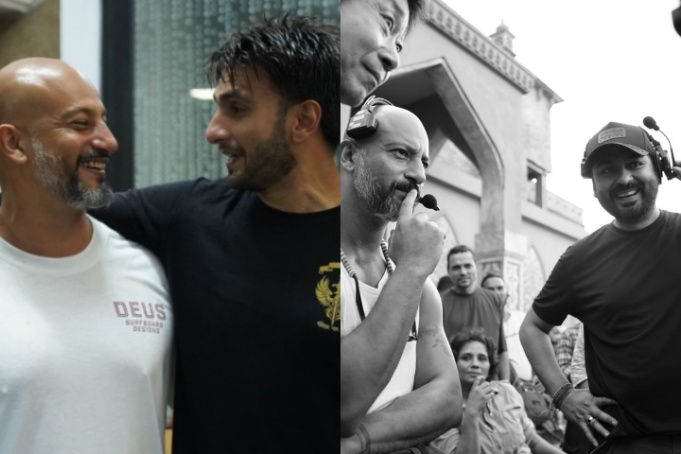

Until “Dhurandhar: The Revenge." Aditya Dhar's two-part action saga arrived. "Dhurandhar" has achieved what seemed unthinkable — demolished the old-age rules and set new benchmarks, taking Hindi cinema back to the forefront of both national conversation and box-office charts.
As "Dhurandhar 2" completes a remarkable 50-day run in theatres — the first Hindi franchise to have sustained a 50-day run in cinemas for both films, a rarity in an era dominated by opening weekends — Variety India examines five key lessons the film industry can take away.
1) Conviction Matters the most
Aditya Dhar didn't just make a spy film. He blended realism with high-concept fiction with “peak detailing." The director did not simplify his narrative for mass appeal; rather, he trusted viewers to engage with a larger, more ambitious cinematic vision.
The "Dhurandhar" franchise is a case study in conviction and craftsmanship. Dhar shot seven hours of footage for what was always supposed to be one movie. Despite reports that the project was spiraling over budget and that the director was "confused," Dhar was confident enough to not trim his film, and release it in two parts.
The film's success sends a clear message to filmmakers: trends are not created by imitation but by reinvention. Stop chasing formulas and start forging new paths because what you're following became a trend only after someone explored it differently.
 2) Risk Hai Toh Ishq Hai
Jyoti Deshpande, President of Media and Content Business at Reliance Industries Limited (RIL), backed Aditya Dhar's vision. She kept faith even when the film went over budget and production expanded. "Dhurandhar" was split into two parts for primarily two reasons. First, the narrative spanned nearly seven hours of footage, making it impossible to compress into a single three-hour film. Second, splitting the saga into two parts allowed the producers to sell both films separately, creating revenue streams and reducing financial pressure.
Dividing one story into two parts — was risky. Had the first film failed the decision would have been disastrous. But Dhar and the studio’s conviction paid off. Result: Jio Studios has earned enough from the franchise to greenlight at least ten ₹100-crore films.
It's an eye-opener for producers and studios. In the movie there's no guaranteed formula to succeed. You lose some, you win some — but it’s important to believe in your film, and take risks.
3) Do not underestimate the market
The "Dhurandhar" franchise has crossed ₹1980 crore net at the Indian box office, while the worldwide total stands at ₹3100 crore gross. "Dhurandhar 2" earned over ₹1100 crore net, becoming the first movie in history to cross the ₹1000 crore milestone in the Hindi language. It also collected ₹100 crore in a single day for two consecutive days — another record. Overseas, the film has emerged as the biggest-ever Indian grosser in the UK, Canada and North America, with the overseas total currently standing at ₹425 crore gross.
The unprecedented success of "Dhurandhar 2" has shown the industry the enormous untapped potential of Indian films in India and global markets. It proves that when a well-made commercial cinema offers a compelling theatrical experience, the sky is the limit for its box office, despite limitations like adult certification and unconventional structure.
 4) The Film Before the Star
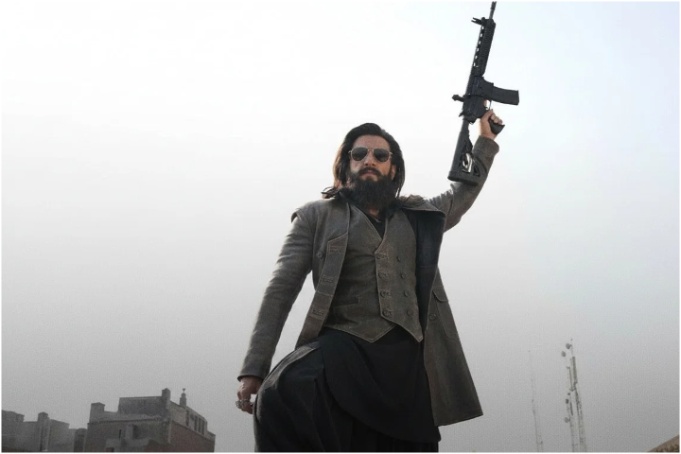
At a time when stars have bigger egos than their box office pull, Ranveer Singh deserves applause for subordinating his stardom to the story. In the first film, he allowed Akshaye Khanna to dominate the screens, before stepping into the spotlight in the sequel. In contrast to actors who demand script alterations to and larger screentime, Ranveer chose the broader story over heroism.
Storytelling suffers when stars overshadow a film. "Dhurandhar" demonstrates that content trumps star power. When the film is placed above individual prominence, magic happens. History is not made alone; it requires collective commitment from every stakeholder.
5) Too long? Audiences Don't Care
"Dhurandhar" was 3 hours 34 minutes long. "Dhurandhar 2" was even longer, with a 3-hour, 49-minute runtime — possibly the longest film in modern Bollywood history. Yet, audiences watched it multiple times, and left theatres wanting more.
Bollywood filmmakers have largely shied away from lengthy runtimes out of concern that fewer daily screenings would limit box office potential. Runtime decisions are driven more by commercial calculations than creative necessity. "Dhurandhar 1 & 2" challenged that assumption. Audiences do not reject length — they reject boredom.
The Indian audiences do not enter cinemas calculating minutes; they go seeking an experience powerful enough to transport them beyond their everyday realities.
The success of "RRR", "Pushpa 2" and "Animal" further reinforces this point. It's a myth that the audience today does not have the patience or the attention span to watch a lengthy film. They are willing to invest time in stories; it's just that the industry is failing to consistently deliver compelling cinema worthy of it.

















Comments are moderated. They may be edited for clarity and reprinting in whole or in part in Variety publications.