



May 15, 2026 10:50pm IST
‘Bayaan’ Director Bikas Ranjan Mishra: ‘Festival Films are Too Independent for the Mainstream System and Too Ambitious for the Ultra-Low-Budget Space’
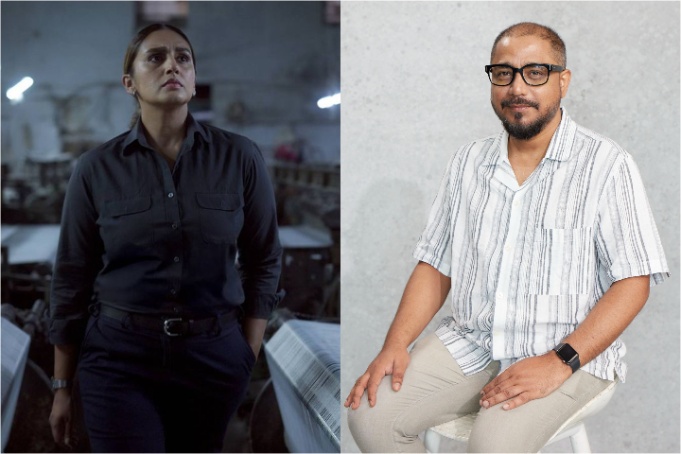
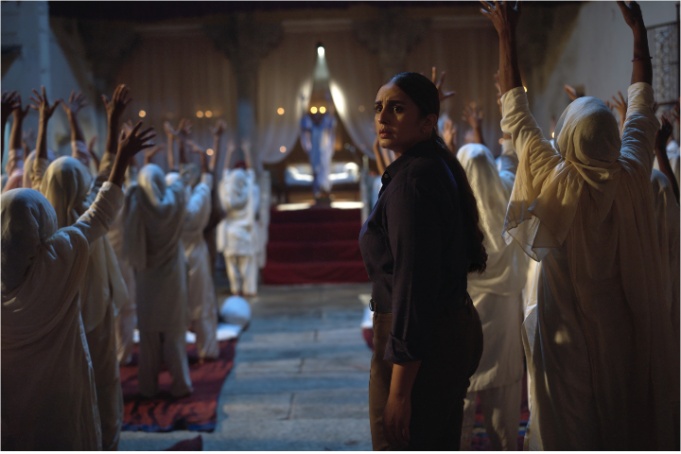
After getting noticed at the Toronto International Film Festival and Busan International Film Festival, Huma Qureshi's thriller drama “Bayaan” will now be screened at SXSW London on June 3, 2026. A gripping detective story set in the remote town of Rajasthan, the film is about a revered leader accused of sexual assault by an anonymous letter. In the Bikas Ranjan Mishra-directed thriller, Huma plays a rookie police officer, Roohi, who battles those in entrenched power in an uncompromising fight for justice.
“Bayaan” had its world premiere in the Discovery section of the 2025 Toronto International Film Festival and was subsequently screened at the Busan International Film Festival, the Cairo International Film Festival, and the Cinequest Film Festival. Most recently, the film won the Best Feature Film award at the Sundar Prize Film Festival in Canada.
As “Bayaan” heads for its SXSW London screening next month, the director speaks about his expectations from the festival, the challenges of making small-budget films in today’s industry climate, and the misconceptions and struggles surrounding festival cinema. Excerpts:
Why did you make ‘Bayaan’?
I made “Bayaan” because I was interested in the fragile relationship between truth and power. We live in a time where facts themselves are constantly negotiated, manipulated, or weaponized. I wanted to explore what happens to ordinary people trapped inside systems larger than themselves.
For me, a story usually begins with an emotional disturbance rather than a plot. Something unsettles me morally or psychologically and refuses to leave. I spend a long time interrogating that feeling before I think about screenplay structure. I also try to understand whether the story contains genuine contradictions. If a story feels too ideologically comfortable, I usually lose interest.
Cinema, for me, is not about delivering answers. It is about creating deeper attention toward questions we normally avoid.
Related Stories


‘Bayaan’ has received acclaim wherever it has been screened. What are your expectations from its SXSW London screening?
With SXSW London, my expectation is slightly different. SXSW attracts a younger and culturally curious audience, and the festival sits at the intersection of cinema, technology, music, and ideas. So I’m interested in seeing how “Bayaan” is received in that environment. More than awards or market outcomes, I’m looking forward to the conversations the film may provoke, especially because it deals with questions of truth, power, and personal morality that are globally relevant today.
Though films like ‘Bayaan’ receive international applause, they are not easy to make. The current financing system also doesn’t seem to be supportive of such cinema. In such circumstances, how challenging is it to make films like this one?
It is extremely difficult to make films like “Bayaan” because the current financing ecosystem favors recognizable stars, familiar intellectual property, or clearly marketable genres. Films that are politically nuanced, formally restrained, or emotionally complex often fall into an uncomfortable middle space: they are too independent for the mainstream system and too ambitious for the ultra-low-budget space. The biggest challenge is not merely raising money. It is protecting the film’s intent while raising money.
With “Bayaan,” we faced the usual challenges independent films face: financing uncertainty, scheduling limitations, resource constraints, and the long emotional endurance required to keep the project alive over several years.
But independent filmmaking also teaches you clarity. When resources are limited, every creative decision becomes more deliberate. In some ways, constraints force honesty.
International film festivals often create opportunities for films, but do they help financially?
The idea that festival success automatically translates into financial sustainability is often romanticized. Festivals help in terms of visibility, credibility, and long-term career opportunities. They can open doors to sales agents, distributors, co-production markets, and future financing relationships. For directors, especially, festivals often become a passport to the next film.
What festivals do create is cultural value. Sometimes that converts into financial value later through streaming, international sales, grants, or stronger leverage for future projects. But for most independent filmmakers, festival success is not an economic model by itself.
Why do festival films struggle to release in cinemas in India?
The reason festival films struggle theatrically in India is structural, not artistic. The exhibition ecosystem is designed around scale, velocity, and marketing spend. Smaller films often do not get enough screens, show timings or time to build word of mouth.
Another issue is that Indian film culture has historically separated “festival cinema” and “popular cinema” into rigid categories. The real issue is access and positioning.
We do not have a deeply developed culture of specialized distribution for independent cinema. In many countries, smaller films survive through university circuits, repertory theatres, cultural institutions, community screenings, and alternative exhibition models. India needs stronger parallel exhibition networks. I also think filmmakers need to engage audiences differently. Independent cinema cannot depend only on festival laurels anymore. It has to create a cultural conversation around itself.
When OTT platforms entered India, they were expected to support small and medium-budget films. However, streaming platforms now also seem to be chasing big-ticket projects. How do you view this shift?
Initially, OTT platforms genuinely changed the landscape because they reduced dependence on theatrical economics. Suddenly, there was space for stories that would never get multiplex screens. Writers and directors briefly became more central to the process. But over time, streaming platforms also became scale-driven corporations. In that sense, the industry has partly returned to old hierarchies through a new medium.
That said, I still think OTT created irreversible change. Audiences today are far more open to different languages, tones and storytelling styles than they were 10 years ago. The good news is that theatres are not dead, as many feared during the pandemic. I think theatrical distribution now has an opportunity to show OTT platforms that creative industries survive not through safety, but through risk.
You served on the Visionary Jury of Critics' Week at Cannes in 2012. How do you view India’s presence at this year’s Cannes Film Festival? What more can be done to present Indian storytelling globally?
One of the student films selected for La Cinef this year (Mehar Malhotra’s new short film “Shadows of the Moonless Nights”) is from the Film and Television Institute of India, which is a significant achievement. Selections like these can become major turning points in a young filmmaker’s career. We should celebrate Mehar Malhotra’s achievement and support her continued cinematic journey.
India’s visibility at the Cannes Film Festival has improved, but visibility and presence are not the same thing as sustained cinematic influence. We still tend to arrive at global festivals in fragmented ways rather than as part of a larger cultural strategy. We still rely too heavily on individual filmmakers fighting isolated battles. To present Indian storytelling more aggressively internationally, we need stronger institutional support, better global marketing, more professional sales representation, and greater confidence in stories that are culturally specific rather than internationally sanitized.
Read More About: Bayaan, Bikas Ranjan Mishra, Huma Qureshi, In Focus, SXSW London
More from Variety








Comments are moderated. They may be edited for clarity and reprinting in whole or in part in Variety publications.