



Aug 28, 2026 6:30pm IST
‘Maya Satya Bhram,’ ‘Keu Bole Biplobi Keu Bole Dakat’ Survive ‘Toxic’ Hold Over West Bengal Screens
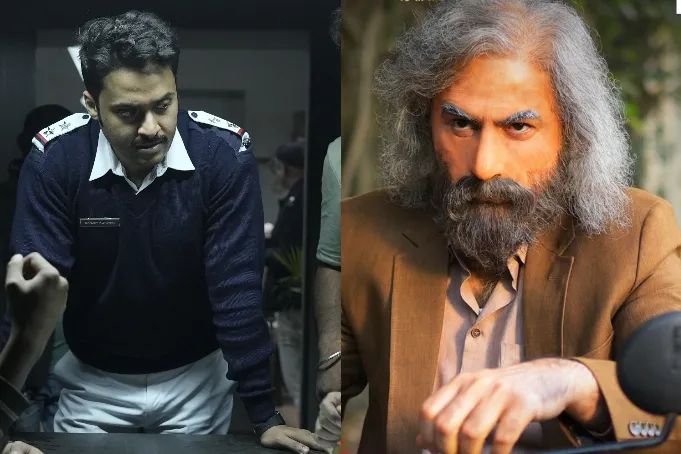
The shortage of screens for Bengali films in West Bengal has been a long-standing issue. The state has around 300 cinema halls, which is quite less given its geographical expanse. With movies like ‘Awarapan 2,’ ‘Batwara 1947,’ and now ‘Toxic,’ finding screens is a challenge that every regional filmmaker must navigate.
David Vs Goliath Situation
After doing a round of film festivals across the globe, Samik Roy Choudhury’s “Maya Satya Bhram” is releasing today in the state. The film initially managed to get only four screens, two of them in government halls. It was only after the makers did a Facebook Live on August 25 that they managed to secure 44 shows across 40 cinemas in the state.
In an exclusive chat with Variety India, Choudhury says, “We did not get halls at all for ‘Maya Satya Bhram,’ just two government halls that gave us screening time, two shows and some hall in rural Bengal. It was unfortunate since it was well known in advance that I was planning to release our film on August 28.”
He adds, “This is not a new practice. It has been going on for a while now. I struggled to find screens for my 2024 film, ‘Beline’, which ran for ten weeks in selected theaters.”
Choudhury reveals how every distributor and hall owner said that all screens would only be given to that “big” film. He opines, “I do not know how far it is true but every distributor, hall owner or programming head was saying that there was an instruction from that big film: either you give us all your shows, or we won't give you the film. I do not know how far it holds true and would not like to blame anyone.”
After his Facebook Live, many filmmakers rallied in support of Choudhury. He tells us, “And the very next day, I got a call from the programming head of the biggest multiplex in India. He told me that you shouldn't have gone live because we had a plan. So I told him we had no idea what your plan was.”
Choudhury believes that there is an immediate need for more clarity. He says, “It is confusing, like the entire system here in Kolkata, how the distribution works and how films get halls. Everything is so foggy. Being a first-time producer, I did not know who to blame. Thankfully, I have 44 shows now to screen my film.” The budget of the film is close to ₹2 crore.
Related Stories

Not limited to small films
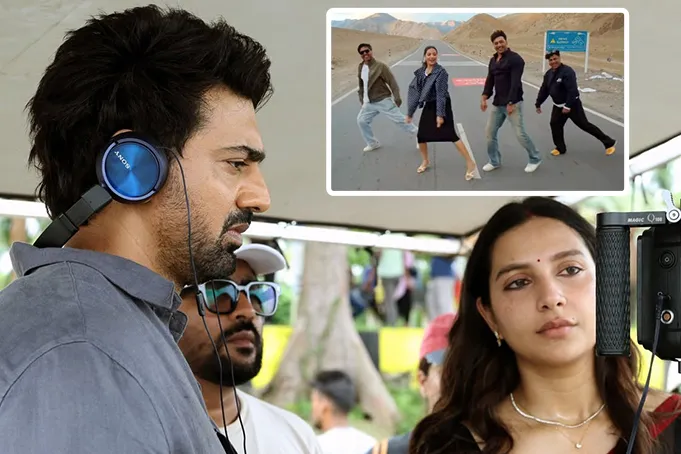
The struggle is also felt by big budget Bengali films. Jeet’s “Keu Bole Biplobi Keu Bole Dakat,” has made ₹2.49 crore (nett) as per Sacnilk. It released on August 14. Pradip Kumar Nandy, producer, Nandy Movies, says, “Even with a compact screen allocation in West Bengal, ‘Keu Bole Biplobi Keu Bole Dakat’ showed remarkable audience traction.” It was released in a little over 150 theaters and made above ₹1.5 crore after its first week.
The movie was also released in a few other Indian cities. Nandy adds, “Its national release further helped the film reach audiences beyond Bengal, while the response in West Bengal has been particularly encouraging.” Based on the life of revolutionary Ananta Lal Singh, who was a key player in the Chittagong Armoury Raid, “Keu Bole Biplobi Keu Bole Dakat” faced competition from the likes of “Spider-Man: Brand New Day,” “Awarapan2,” and “Batwara 1947.”
Gopal Madnani of Jeetz Filmworks Private Limited, the co-producer of “KBDKBB” opines, “Had we been given a larger number of shows from the very beginning, the numbers and collections could have been even bigger. However, the audience response has spoken for itself.”
Driven By Stars
Distributor Satadeep Saha, SSR Cinemas, which has 45 screens in West Bengal highlights that screen count depends completely on star power and film’s scale. He tells Variety India, “Every week, there are two to three releases but the number of screens allotted is very few. Unlike South India, where audiences watch films in their own language Bengalis prefer Hindi or English movies in city areas. It is difficult for mid-size or small banners to sustain.”
Fighting the Odds
One of the Bengali movies that made immense news in 2025 was “The Academy Of Fine Arts” directed by Jayabrata Das. He discloses that a compact release for even big films means 100-150 screens in West Bengal. Recollecting his challenges with distribution and exhibition, he says, “I remember when I showed my film to a major exhibitor, they said my film was not suitable for mass theatre audiences. Finally, my film got 34 screens, which rapidly increased to 75.” Das’s film impressed audiences with its unique plot loaded with dark comedy and action. However, not every young filmmaker gets chances like him. He further states, “I feel every filmmaker should get a fair chance. It is 2026 and stars always taking precedence over content is outdated. As of now, 40-60 is the extent of screens for a mid-budget Bengali film.”
A brighter future ahead?
Filmmaker Abhirup Ghosh who has made movies like “Mrigaya: The Hunt,” (2025), “Zombiesthaan” (2019) and more is gearing up for the release of “Beporoya” on September 17. He tells Variety India that they are looking at securing 100-150 screens for their film, a complete commercial entertainer.
Ghosh explains, “The number of single screens in West Bengal has decreased in the past decade. Also, we make very few complete mass entertainers. Of late, construction of cinema halls is on the rise in many districts in semi-urban and rural areas. I would say that screen scarcity and absence of mass movies are two major issues before us.”
















Comments are moderated. They may be edited for clarity and reprinting in whole or in part in Variety publications.