



May 31, 2026 9:10pm IST
Kiran Rao: ‘I’m Presently Working on Five Different Projects’ (EXCLUSIVE)
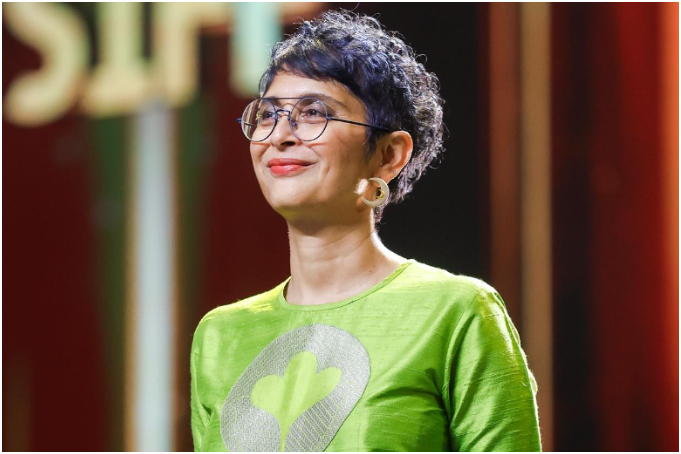
Kiran Rao returned to the director’s chair with “Laapataa Ladies”, 13 years after “Dhobi Ghat”, but she’s determined not to let the next one take that long. Candid about the gap between “Dhobi Ghat” and her 2024 release, she admits that while she’s constantly drawn to directing, caution often slows her down. Kiran, who has spent the past decade nurturing independent cinema, is now developing multiple projects at once — from a supernatural-horror tale to dark noir and a comedy-drama in the vein of “Laapataa Ladies.” Even as she celebrates the success of her movie and renewed audience interest in small, original stories, she is aware of the challenges facing indie filmmakers.
There was a long gap between ‘Dhobi Ghat’ and ‘Laapataa Ladies’. Weren’t you itching to make films?
Obviously, I want to just keep directing. Every director just wants to go from film to film. I wish I was Rohit Shetty. Like, literally, while he’s editing one film, he’s directing the next film and promoting the third. If I had the confidence to just do that and not be so worried about the outcome, I would make many more films. But I’m sort of almost too careful about the viability of a project, the story and what I want to say. This is something that everyone should think about because films take a lot of resources, they’re not just nothing. I try to be mindful of that. But yes, I’d love to make many more films.
So, what’s next?
I’m working on four or five different projects. The first is sort-of a genre film. I’m quite excited about that. It’s kind of supernatural-horror — my version. Then there’s a kind-of sort-of noir film, which is, sort of social commentary-ish. And then there’s one that’s a little more ‘‘Laapataa’’-esque, which is kind of a comedy drama. So, there are these three films that we’re simultaneously writing. There are a couple of shows, too, but I’m really not sure about this whole show thing. I’ve never gotten into it. It’s not a format I know well, especially working with other people... I’ve been very spoiled in that sense. Aamir Khan Productions gave me complete freedom to do what I want, and I don’t know whether I’d work so well with people giving me notes for everything.
You maintain artistic integrity while entertaining the audience. Which other filmmakers manage to do the same?
I think Nagraj Manjule does it brilliantly. He’s my favourite filmmaker. I absolutely love him.
Related Stories
It’s been 14 years since you made your debut. Do you remember the process of writing and directing?
When I was writing “Dhobi Ghat”, I was trying to see how one writes the story of a city that is so diverse and heterogeneous, which most cities are. But in Delhi there are sort of vertical divisions between things, in Mumbai, everything is sort of layered one on top of the other. In Mumbai, there are these overlaps and intersections that you can’t avoid, just because of the nature of the city. Being an island, you’re locked off and you’re on top of each other. And there are all these experiences that collide, merge and influence each other. When I first came to the city, I was a student, and I had no money. And the only entertainment was to take a bus to South Mumbai, walk along the streets with the book sellers on Sundays, eat a peru [guava] and return home. In the city, there’s a life of the mind and there’s the life of labour. There’s an air of hope and expectation, and dreams and aspirations. How do you capture that? So, I had to tell the story through four voices. And, I was coming out of film school, so I had to do it with four different visual elements and formats. When I was writing it, I wanted it to be non-linear, which on some level was an impediment when I was editing, because anything could go anywhere. It’s like a puzzle that has no real final answer. But that worked because that is the city for me. It could go any which way. Here, everything is an opportunity, and anything can bring your dreams crashing down. There are so many things that are the possibility and potential, and also the hard reality and sadness in that city.
The success of ‘Laapataa Ladies’ is bound to give independent filmmakers an impetus. From ‘Ship of Theseus’ to now, what’s changed for indie cinema?
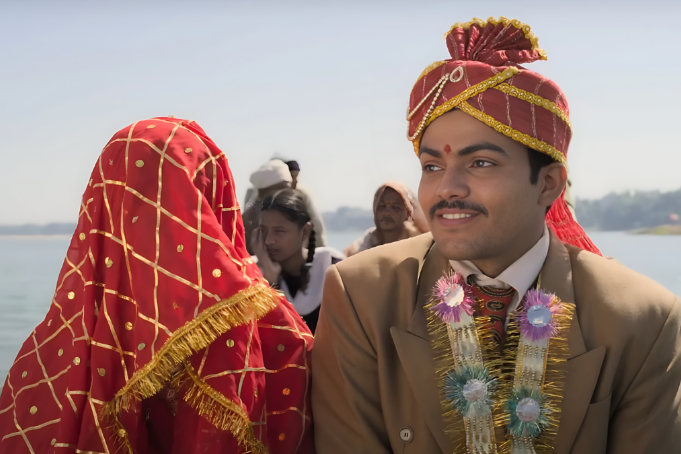
When we released “Ship Of Theseus” [directed by Anand Gandhi] there was no alternative to theatrical releases. In fact, multiplexes were our big hope back in the day. We were like, ‘Wow, there’ll be small theatres of 200 and 150 people. They’ll screen our films.’ But that bubble burst pretty soon. I think what has changed hugely is the fact that there’s this proliferation of different kinds of media, different kinds of ways of viewing, different formats of things that people watch. Films are not competing with serialised content which has blown up in a big way. OTT has, I think, in some way levelled the playing field and there are opportunities, I guess. You could do a pay-per-view somewhere. There are streaming platforms that will take interesting films. “Humans In The Loop” is on Netflix. But those come with the caveat of who’s starring in it, and who’s the EP [executive producer]. So, while I think a lot has changed about the ecosystem and landscape, but I don’t know if a lot has changed for the independent filmmaker, unfortunately.
Is there an appetite for these films?
We don’t ever have stats or data from streaming companies to know how well films are doing on streaming. We do know what goes to the number one and top 10 spots. Also I don’t know how much of that is true. One big thing we are very sure of is that lots of independent films are not getting to theatrical [release]. I think the palette of our audience has definitely broadened, but how big that shift is, I don’t know. Of course, now our films, thanks to OTT, are available across the world simultaneously, and we are able to access a much wider audience. Within India, just by virtue of the fact that we have so many more legions of educated young people in our cinema audience, as well as people who are now watching so much content, the audience must have grown. Is this audience willing to pay for our [independent] films? That is the big question. Will you reach into your pocket and pay the ₹150 to go and watch “Homebound” and “Sabar Bonda” in the theatres? That defines whether we have an audience or not.
So the challenges to ensure their film gets a decent release continues for independent filmmakers...
The question that drives me crazy is: Why are we making these films if we do not have an assured way of reaching our audience? That’s actually the real defining question for us as filmmakers. Is it worth putting the time, effort, and money into making Indie films? There are a number of opportunities available to filmmakers, thanks to streaming but at the same time, I feel like there’s a real gap in the distribution of independent films and has been for the longest time. It’s a blind spot in our film ecosystem that nobody really addresses, and we will never know the extent of the audience until we actually plug that gap.












Comments are moderated. They may be edited for clarity and reprinting in whole or in part in Variety publications.