



Jul 21, 2026 4:05pm IST
Hollywood’s Most Iconic Director-Composer Pairings: The Sonic Worlds Of Lucas, Nolan, Zimmer, And Ludwig
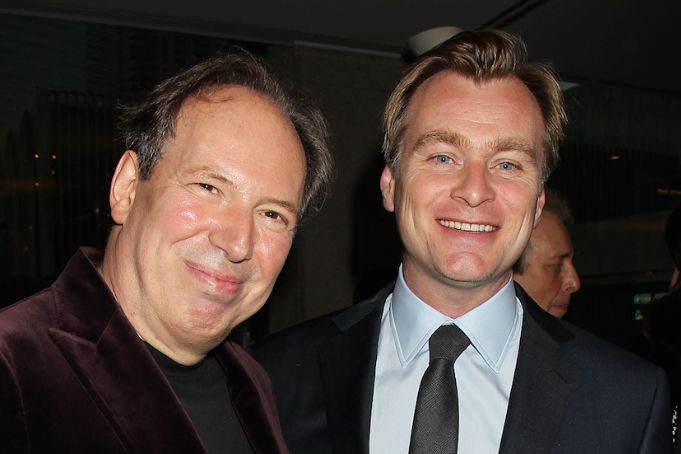
Great movies do not just happen because a director had a good camera. They endure because a composer gave those visuals a heartbeat. Think of the ticking tension Christopher Nolan builds with Hans Zimmer and Ludwig Göransson or the sweeping galaxies George Lucas created alongside John Williams. When legendary filmmakers find their perfect musical counterparts, they stop making movies and start writing history. Here are cinema’s most iconic director and music composer pairings.
The Definitive Blueprint: Steven Spielberg and John Williams
It is impossible to discuss the power of director-composer synergy without starting with the most prolific partnership in Hollywood history. Across an unparalleled span of 52 years and 30 feature films, Steven Spielberg and John Williams have shaped the collective imagination of global audiences.
Consider “Jaws” (1975), which marked their second outing together. Spielberg famously admitted that when Williams first played the now-iconic two-note theme on a piano, he thought the composer was playing a joke. Yet that simple, primal ostinato did more than track a creature; it became the creature, generating visceral terror from an empty patch of ocean. From the soaring, majestic brass of “Jurassic Park” (1993) to the weeping violin solos of “Schindler’s List” (1993), Williams provides the emotional validation that Spielberg’s sweeping visuals demand. They proved that a blockbuster’s true longevity is written in its sheet music across classic films such as “Close Encounters of the Third Kind” (1977), “Raiders of the Lost Ark” (1981), “E.T. the Extra-Terrestrial” (1982), “Catch Me If You Can” (2002), “Lincoln” (2012), and their milestone thirtieth collaboration, “Disclosure Day” (2026).
Related Stories
Building Galaxies: George Lucas and the Orchestral Renaissance
While Spielberg and Williams forged a diverse and expansive filmography, George Lucas utilized John Williams to accomplish a singular and monumental task. Over the course of the six foundational films of the “Star Wars” saga, Lucas relied on Williams to ground his grand space opera. This decade-spanning work covered the original trilogy starting with “Star Wars: A New Hope” (1977), “The Empire Strikes Back” (1980) and “Return of the Jedi” (1983) before resuming for the prequel trilogy with “The Phantom Menace” (1999), “Attack of the Clones” (2002) and “Revenge of the Sith” (2005).
When Lucas was assembling the original film in the mid-1970s, the visual effects were groundbreaking but inherently risky. To make the far-fetched world feel tangible, Lucas made a crucial creative gamble. He bypassed the electronic and avant-garde music popular in science fiction at the time, opting instead for a lush late-19th-century romantic orchestral score. Williams delivered a tapestry of leitmotifs, which are specific musical themes attached to characters and concepts. The triumphant brass of Luke Skywalker’s theme, the tragic sweeping romance of Leia’s theme and the terrifying weight of the Imperial March gave Lucas’s galaxy a sense of ancient history. Lucas gave us the visuals of a galaxy far, far away, but Williams gave that galaxy its soul.
The Soundscapes of Time: Christopher Nolan, Hans Zimmer, and Ludwig Göransson
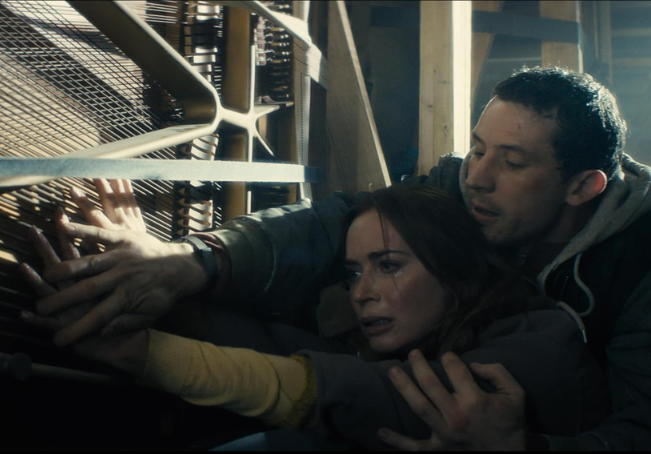
In the modern era, Christopher Nolan has pushed the boundaries of cinematic structure alongside two distinct musical masters. For six monumental films, Hans Zimmer acted as Nolan’s primary co-architect. Their work together includes “Batman Begins” (2005), “The Dark Knight” (2008), “Inception” (2010), “The Dark Knight Rises” (2012), “Interstellar” (2014) and “Dunkirk” (2017). Together they tossed aside traditional orchestral structures in favor of sonic concepts. For “Inception,” Zimmer slowed down Édith Piaf’s music to mirror the dilation of time in the dream world. For “Interstellar,” they abandoned action-movie percussion entirely. They used a massive church pipe organ to evoke the terrifying vastness of space and the spiritual weight of a father’s love.
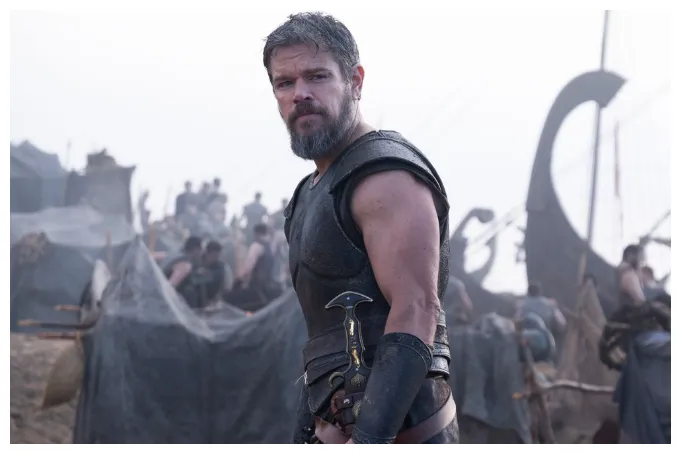
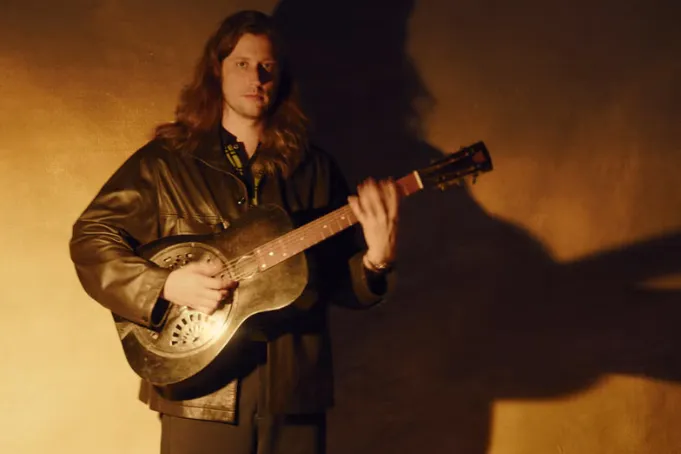
When scheduling conflicts forced a shift, Nolan found a new and equally daring collaborator in Ludwig Göransson. Their partnership has yielded three boundary-pushing features. They began with “Tenet” (2020), followed by the Oscar-winning “Oppenheimer” (2023). They reunited for a third time on Nolan’s mythic action epic “The Odyssey” in 2026. Göransson synthesized traditional orchestral instruments with heavily manipulated electronic effects. In “Oppenheimer,” the frantic and shifting violin melodies perfectly mirror the brilliant and fractured psyche of the father of the atomic bomb. In “The Odyssey,” Göransson’s instrumentation brings the ancient world to life. Nolan’s films are intellectual puzzles, and both Zimmer and Göransson provide the heavy and relentless rhythmic pulse that keeps the audience anchored through every temporal twist.
The Poetry of Scale: James Cameron and James Horner
James Cameron pushes technology to its absolute brink to create immersive worlds. But even the most expensive visual effects risk feeling hollow without an equivalent emotional gravity. Cameron found this across three pivotal collaborations with the late James Horner. Though their relationship was famously tempestuous during the pressure-cooker production of “Aliens” (1986), they reunited a decade later to make cinematic history with “Titanic” (1997).
Cameron’s vision for the ill-fated ship was mammoth, but Horner understood that the film’s success rested entirely on the intimacy of its tragic romance. By using synthetic soundscapes and traditional Celtic instrumentation, Horner gave the metallic giant a fragile, human heartbeat. They united one final time for the bioluminescent jungles of “Avatar” (2009). There, Horner created a completely distinct ethnomusicological profile for the alien world of Pandora. Whenever the director built something pressure-filled and massive, the composer ensured it remained deeply personal.
The Gothic and the Quirky: Tim Burton and Danny Elfman
This creative codependency extends far beyond the realm of massive sci-fi and action epics. Tim Burton and Danny Elfman have formed one of cinema’s most eccentric bonds, teaming up for sixteen feature films. Their extensive list of collaborations includes “Pee-wee’s Big Adventure” (1985) “Beetlejuice” (1988) “Batman” (1989) “Edward Scissorhands” (1990) “Batman Returns” (1992) “The Nightmare Before Christmas” (1993) “Mars Attacks!” (1996) “Sleepy Hollow” (1999) “Planet of the Apes” (2001) “Big Fish” (2003) “Charlie and the Chocolate Factory” (2005) “Corpse Bride” (2005) “Alice in Wonderland” (2010) “Dark Shadows” (2012) “Frankenweenie” (2012) and “Dumbo” (2019). The distorted and gothic fairy tales of Burton are instantly recognizable largely because they sound like Elfman.
The Quiet and the Unsettling: Joel and Ethan Coen and Carter Burwell
Similarly, Joel and Ethan Coen’s filmography is a masterclass in tone shifting. The structural anchor through sixteen of their films has been composer Carter Burwell. Their projects together span “Blood Simple” (1984) “Raising Arizona” (1987) “Miller’s Crossing” (1990) “Barton Fink” (1991) “The Hudsucker Proxy” (1994) “Fargo” (1996) “The Big Lebowski” (1998) “The Man Who Wasn’t There” (2001) “Intolerable Cruelty” (2003) “The Ladykillers” (2004) “No Country for Old Men” (2007) “Burn After Reading” (2008) “A Serious Man” (2009) “True Grit” (2010) “Hail Caesar!” (2016) and “The Ballad of Buster Scruggs” (2018). Whether crafting the lonely and frozen melancholy of “Fargo” (1996) or the sparse and understated tension of “No Country for Old Men” (2007), Burwell’s minimalist scores give the Coens’ eccentric worlds their moral and emotional grounding.












Comments are moderated. They may be edited for clarity and reprinting in whole or in part in Variety publications.