



Jul 08, 2026 11:30am IST
‘The Odyssey’: Inside Ludwig Göransson’s Experimental Score for the Christopher Nolan Epic
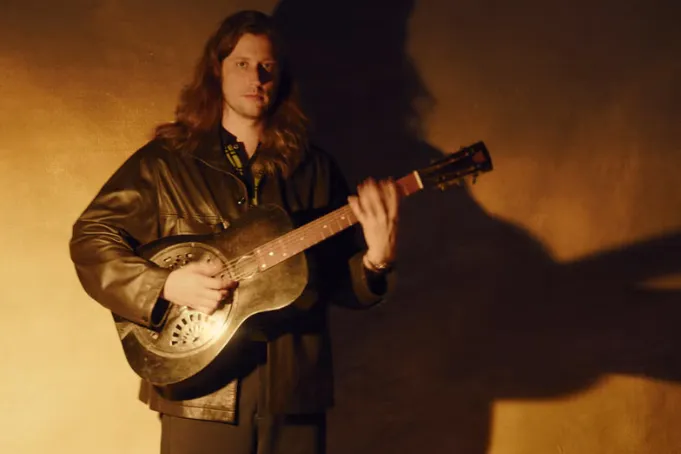
Christopher Nolan’s upcoming cinematic epic, “The Odyssey”, aims to transport audiences straight into ancient Greece not just visually, but sonically. To achieve this, Nolan issued a radical challenge to his long-time collaborator, Oscar-winning composer Ludwig Göransson: abandon the traditional orchestra entirely and build a world out of authentic and period-accurate textures.
The result is a highly experimental, deeply researched soundtrack that bridges ancient history with modern, stylized production.
Reconstructed Antiquity and Bronze Age Beats
Because “The Odyssey” follows Homer’s legendary Trojan War aftermath, Göransson leaned heavily into the material definition of the era. He procured 35 custom bronze gongs of varying sizes to serve as the score's percussive spine.
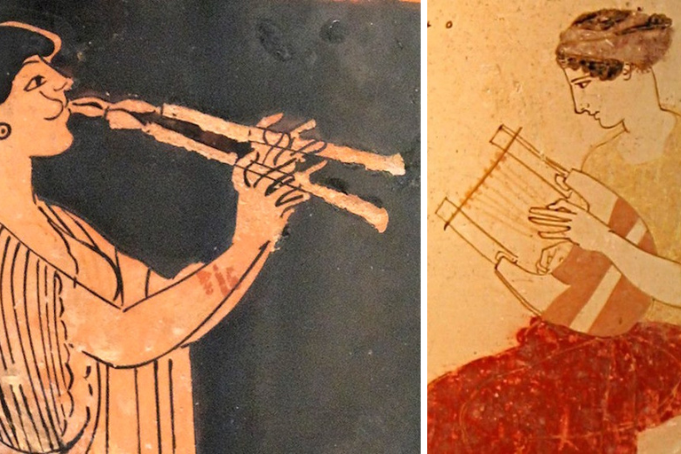
Beyond standard percussion, the composer pushed boundaries by hunting for unconventional, industrial found sounds. To bring this ancient world to life, Göransson constructed a multi-layered sonic palette that seamlessly blends history with modernity. At its core are ancient instruments like the double-pipe aulos and the harp-like lyre, which are grounded by distinct Bronze Age textures derived from 35 custom-sized bronze gongs. To create an industrial and avant-garde edge, the composer mixed in raw, found sounds recorded from scrap metal, railings and air-conditioning units. Finally, these historical and rustic elements are enveloped in contemporary layers of modern synthesizers and the expressive vocals of James Blake, resulting in a completely unique, timeless atmosphere.
Related Stories
Reviving Instruments
Producer Emma Thomas noted that Göransson went into deep historical research to unearth instruments familiar to ancient Greeks. Two specific instruments became the focal point of the score: the aulos (a double-pipe reed instrument) and the lyre (a harp-like string instrument). Nolan specifically envisioned the lyre's distinct pluck representing the tension of Odysseus’ legendary bow.
Recreating these sounds required musicologists to act as historians. Because no physical reeds survived the millennia, aulos player Callum Armstrong had to reverse-engineer the instrument.
"The original [instrument] dates from between the 6th and the 5th century BC," Armstrong explained. "We don’t have any surviving reeds, so I worked with two other people and we spent a while trying to work out and figure out how this bit worked at the top. We had to read lots of ancient source material and work out how they did it."
Similarly, performer Rosa Fragorapti had to carefully balance historical record with artistic intuition to play the lyre authentically.
"To be able to play it in a philological way, we have to do research between iconography, philological sources and personal experience as a musician," Fragorapti described.
Oral Traditions and Epic Casting
In keeping with the theme of authenticity, Nolan also looked at how “The Odyssey” survived through time: as oral poetry. To mirror this ancient tradition in a modern cinematic context, Nolan cast rapper Travis Scott in the role of a bard. Scott will deliver a monologue in the film, bridging the historical gap between ancient oral storytellers and contemporary rap culture.
A Proven Partnership
“The Odyssey” marks the third collaboration between Nolan and Göransson, who previously crafted the innovative soundtracks for “Tenet” and “Oppenheimer” (which earned Göransson an Academy Award).
“The Odyssey” is scheduled to hit theaters on July 17.





Comments are moderated. They may be edited for clarity and reprinting in whole or in part in Variety publications.