



Sep 20, 2026 12:30pm IST
Hero’s Friend: Forever the Wingman, Rarely the Winner
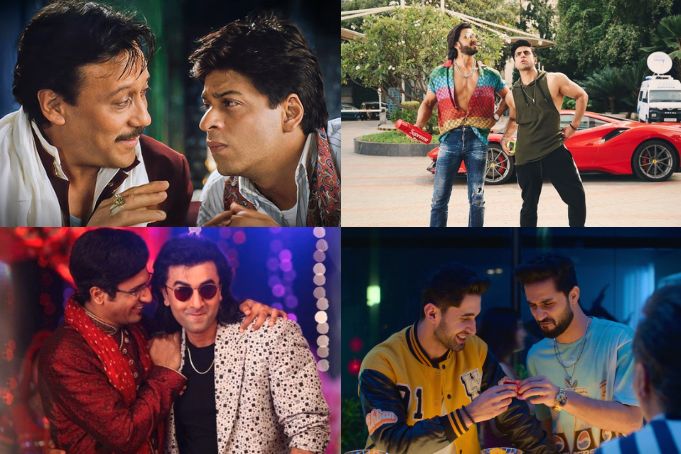
The Hindi film hero always has a friend. His whole existence depends on the hero. He doesn’t have a home, a family, job or even a love interest. He is always seen with the hero in his world and he has no life outside of it. This is true of the hero ka dost, for decades now.
From the beginning of Hindi cinema, the side hero has rarely been given the space to emerge as a fully realized character with his own arc or the potential for a spin-off: the writing simply doesn’t allow it. This reflects a longstanding trend in Hindi cinema: not all characters, no matter how beloved, receive adequate attention.
Call them ‘second lead,’ please!
Screenwriter Rajat Arora explains the value that the hero’s friend or the side-hero, brings to films. “It is more appropriate to describe such characters as the second lead… This character is usually witnessing and offering help or advice to the protagonist as he deals with situations. If it’s a revenge drama and the hero has a dark journey ahead, the friend tends to be funny to balance out the proceedings. In ‘Pyaasa’ (1957), Guru Dutt’s character is brooding and serious but Johnny Walker’s character is comical. In ‘Devdas’ (1955), there is Chunnilal.”
Related Stories
Juyal, who played the friend in Aryan Khan’s directorial debut, “The Ba****ds of Bollywood” (2025), also doesn’t see himself as a side character. While the protagonist Aasman Singh (played by Lakshya) is given roots, a family, and a clear journey to fame, his loyal BFF Parvaiz (Raghav Juyal) doesn’t even get a last name. Juyal, who has garnered praise for his performance, admits to having doubts when they began workshops for this series. “This series was a complete collaborative process with Aryan. It was challenging [to not have a backstory] as everyone else had one. I was skeptical, but Aryan said we will create magic together, to just trust the process; which I did.” Juyal is quick to point out that the series does not ride on a hero’s prowess. “The series does not really have a lead but is the story of an actor, his friends, and their struggle. The conflict and drama is centred on them.”
Arora specifies that the second lead (or the hero’s friend) is a smart tool — a malleable character to develop a film’s narrative. “In ‘Sanju’ (2018), Vicky Kaushal’s character is the audience. When his character loves Sanju, we love Sanju and when he is angry with the lead, so is the audience. When he decides to forgive him, we decide to forgive him. The second lead or friend may not have a back-story, but he/she is the glue that often binds the story together… Sometimes, it is the protagonist who helps the second lead in his journey. In ‘3 Idiots’ (2009), it is the character of Rancho (the hero) who helps his best friends discover their calling.” But to argue, they were all second heroes, not just the heroes’ friends. Their characters were written like that. They all have their own story arcs, and did not exist just to prop up Aamir Khan’s character. The same is also true for another Aamir starrer “Rang De Basanti;” while Aamir was the protagonist, the other actors were more than a friend. The actors were parallel leads, with as much screen time as the protagonist.
Small-screen redemption
In evergreen classics of Hindi cinema, stories were painted in broad strokes of black-and-white, with highly dramatic arcs assigned to the protagonist. But on smaller screens, the hero’s friend has found redemption. If you see homegrown web series, you will find that the hero is not flawless, is more relatable, and has nuanced traits. This transformation extends to his friend, too, creating room for better performances and supporting characters worth remembering. The standout OTT series “Paatal Lok” (2020) brought to life an unusual friendship between its protagonist, the rugged, honest policeman played by Jaideep Ahlawat, and the aspiring IPS officer, a refined, gentle but dedicated police officer played by Ishwak Singh. Ahlawat’s character shows his vulnerable side only to this character — an unlikely friendship that became a high-point of the series.
Unexplored backstories
Raj and DK, the director duo behind the successful spy drama “The Family Man” (2019), have built imperfect yet likeable heroes who rely heavily on their buddies. While Manoj Bajpayee headlines the series, his character Srikant Tiwari cannot balance national security threats without his colleague and confidant JK (Sharib Hashmi). JK is his sounding board, his partner in solving crimes and bending rules. Raj Nidimoru explains, “In JK’s story, Srikant would be his friend, just like in Srikant’s story JK would be his friend. We develop the characters with that approach. In ‘The Family Man’’s first season, Srikant doesn’t even appear in the climax action; that was deliberate. From our first film ‘99’ (2009), we’ve been self-aware that the hero’s friend exists only for the hero, and we wanted to change that. Even in ‘Go, Goa, Gone’ (2013), Kunal Kemmu wasn’t the protagonist but drove key events. I’ve always had a problem with the stereotypical hero who solves everything alone.”
Following ‘The Family Man’, Raj and DK created “Farzi” (2025), a dual-hero OTT project starring Vijay Sethupathi and Shahid Kapoor. It was no small feat that Bhuvan Arora, a younger and lesser-known actor, walked away with high praise as Firoz, the friend who masterminds the counterfeit art scheme. Unlike JK, Firoz seemed to exist solely to serve Sunny’s ambitions, with little of his own background explored. Nidimoru clarifies that balancing protagonist and antagonist arcs often drives these choices: “We don’t always use backstories. Even three seasons in, you don’t know Srikant’s childhood… Our one-line approach remains the same: in Firoz’s story, Sunny is his friend, and in Sunny’s story, Firoz is his friend.”
Director and author Suman Kumar has co-written both these series with Raj and DK. Having grown up on a diet of Tamil and Telugu pulp-fiction, Kumar has imbibed the role of the hero’s buddy in his creative imagination and narrative voice. “My favorite is the ‘Shadow’ series by the legendary Madhu Babu. I was inspired by how Shadow’s best friend Gangaram acted as the perfect emotional foil and moral counterweight… We (Raj & DK, Sita Menon, and I) crafted Firoz as Sunny’s childhood friend and ‘moral compass’ — positioned not merely as a companion but also to challenge Sunny. We did hint at his backstory, but we deliberately left it less explored to allow more narrative space for his actions and choices.”
Kumar’s point-of-view is rooted in literary traditions, where the second lead or the friend has greater scope in a story. “Usually, friends in cinema are partners in crime. All the buddy characters that we celebrate act as a foil. They have traits that contrast with the protagonist’s and thereby are excellent vehicles to highlight the protagonist’s specific attributes. Friend characters drive conflict in a narrative and are not mere accessories to the protagonist’s journey. Why? Because that’s what friends are for!”
One aspect of the evolution of the side hero that most writers, directors, producers and actors agree on is the role OTT plays in opening up opportunities for talent. Comparing it to the explosion of cricketing merit that emerged with the IPL across India, Raj Nidimoru states, “There are more than 50 to 60 new actors that can carry a series on his/her own today, thanks to OTT. Bhuvan Arora has just invited me to the screening of a new series where he plays the lead. Only if you are a good actor can you hold an episodic story together. OTT has put the spotlight on talent.” As a writer who has bridged commercial cinema and the new-age fiction content scenario, Arora looks forward to developing spin-offs from a talented second lead. “‘Breaking Bad’ (2008) was a great show from which we got a series like ‘Better Call Saul’ (2015). There are such instances in TV, but we can’t expect that to happen with each new show that features a solid second lead.” While the second lead, or the hero’s friend, has grown in stature for audiences who watch content for entertainment, their voice is still emerging. They are not the star attractions of carefully curated publicity or marketing campaigns for series or films. They are also not viewed as potential leads easily, but their fate is changing as good acting grows in demand today.
From Sidekick to Scene Stealer
The hero’s friend has existed in Hindi cinema almost as long as the hero himself. Long before the term “wingman” entered popular culture, filmmakers understood that every larger-than-life protagonist needed someone to balance his personality, challenge his decisions or simply make his journey more human. Yet while the archetype has endured across generations, the industry’s willingness to fully develop these characters has remained inconsistent.
Some of Hindi cinema’s earliest classics demonstrate just how powerful the protagonist’s closest companion could be. In Guru Dutt’s “Pyaasa” (1957), Johnny Walker’s Abdul Sattar is much more than comic relief. While Vijay spirals into disillusionment, Abdul Sattar becomes the rare source of optimism, loyalty and warmth in a world that repeatedly rejects the poet. Similarly, in Bimal Roy’s “Devdas” (1955), Motilal’s Chunnilal is not merely Devdas’ drinking companion. He functions as both confidant and temptation, nudging the tragic hero further toward self destruction while remaining deeply invested in his fate. These friendships were never ornamental. They shaped the emotional trajectory of the protagonist.
As Hindi cinema entered its blockbuster era, the hero’s friend gradually became more flamboyant, but not always more substantial. Ramesh Sippy’s “Sholay” (1975) remains one of the few films to reject the hierarchy altogether. Jai (Amitabh Bachchan) and Veeru (Dharmendra) are equals, their friendship forming the emotional spine of the film. Neither exists simply to serve the other. Their camaraderie and sacrifice elevated them into one of Indian cinema’s most enduring duos. Through the 1980s and 1990s, however, supporting actors increasingly found themselves confined to comic interludes. Performers such as Johnny Lever became indispensable entertainers, but were rarely afforded emotional arcs that extended beyond serving the hero’s journey.
The multiplex era slowly began to challenge that formula. Rajkumar Hirani’s “Munna Bhai M.B.B.S.” (2003) and “Lage Raho Munna Bhai” (2006) arguably gave Hindi cinema its definitive wingman in Circuit, played by Arshad Warsi. Fiercely loyal yet emotionally perceptive, Circuit was not only Munna’s right hand man but also his moral compass, comic foil and emotional anchor. It is difficult to imagine the franchise without him. Priyadarshan’s “Hera Pheri” (2000) produced another unforgettable supporting character in Paresh Rawal’s Baburao Ganpatrao Apte, whose eccentricities often overshadowed the film’s protagonists in popular culture. Deepak Dobriyal’s Vicky in “Tanu Weds Manu” (2011) transformed unwavering friendship into one of the franchise’s emotional pillars, while Shreyas Talpade’s Pappu Master in “Om Shanti Om” (2007) proved that loyalty could be as memorable as romance.
At the same time, some filmmakers abandoned the very notion of a “hero’s friend.” Instead, they embraced ensemble storytelling. Farhan Akhtar’s “Dil Chahta Hai” (2001) treated Akash, Sameer and Sid as equal protagonists, each carrying his own emotional journey. Rajkumar Hirani’s “3 Idiots” (2009) similarly ensured Rancho, Farhan and Raju all possessed independent aspirations and conflicts. Zoya Akhtar’s “Zindagi Na Milegi Dobara” (2011) and Rakeysh Omprakash Mehra’s “Rang De Basanti” (2006) followed the same philosophy, allowing friendships to become the narrative rather than merely supporting it. These films succeeded because they understood that audiences invest in relationships, not hierarchies.
Streaming has accelerated that evolution even further. Free from the limitations of a two hour runtime, creators have begun treating the protagonist’s closest companion as a fully realised individual rather than a narrative accessory. Sharib Hashmi’s JK Talpade in Raj and DK’s “The Family Man” is no longer simply Srikant Tiwari’s trusted colleague. He is his confidant, conscience and emotional equal. In “Farzi,” Bhuvan Arora’s Firoz is more than Sunny’s accomplice. His humour, loyalty and moral dilemmas shape the emotional rhythm of the series. “Paatal Lok” builds one of its richest relationships through the evolving partnership between Hathiram Chaudhary and Imran Ansari, allowing both men to influence and challenge one another instead of reducing one to the other’s shadow.
Today’s generation of performers has quietly built careers around these indispensable companions. Aparshakti Khurana has become one of Hindi cinema’s most recognisable modern wingmen through films such as “Stree,” “Luka Chuppi,” “Bala” and “Pati Patni Aur Woh.” But the actor has never viewed these parts as secondary. “Even if a particular film doesn’t land, I try that at least my character should have enough truth that people are able to resonate with it,” Khurana says. “Sometimes even an unsuccessful, not-so-successful project can also get you work. It’s really about what you make out of it.” That philosophy has helped him build a career where memorable characters often outlive the films themselves. As Khurana puts it, “I love doing all sorts of things. I love that I’ve been able to show the serious, darker side of myself as an artist, while at the same time being part of some of the most successful comedy films of the last decade.”
Abhishek Banerjee has experienced a similar phenomenon. Whether as Jana in the “Stree” franchise, Hathoda Tyagi in “Paatal Lok,” Compounder in “Mirzapur” or Jaffa in “Vedaa,” his performances frequently linger long after the protagonist has left the screen. “I’m still known as Jana and Hathoda Tyagi more than my own name,” Banerjee observes. “I’m always happy about that. I want people to know me for my acting and not for what I am outside of acting.” For Banerjee, lasting impact has little to do with billing. “Do you want to be famous or do you want to be an actor?” he says. “People really want to watch a good character. Any actor who has become a star is because they have done a good character. That’s why the superstars are remembered by character names. Shah Rukh Khan is Raj, Mr. Bachchan is Vijay, Salman Khan is Prem.”
His observation captures a quiet truth about Hindi cinema. Audiences have long promoted these companions in ways the industry has not. Posters still privilege the protagonist. Marketing campaigns revolve around marquee names. Awards continue to separate supporting from leading performances, even when the emotional weight is shared. Yet viewers continue to quote Circuit, Baburao, Choocha, JK, Jana and countless others long after they leave the theatre or finish a series.
Hindi cinema has never lacked unforgettable friends. If anything, its history is filled with characters who have quietly stolen scenes, shaped stories and, on occasion, even overshadowed the heroes themselves. The difference today is that writers are finally beginning to acknowledge what audiences have known all along: sometimes, the most memorable person in the frame isn’t the one standing at the centre of it.
Popular on Variety
‘The audience is smart’
Manjot Singh who plays Ayushamnn Khurrana’s friend in “Dream Girl 2” feels the audience is smart enough to register a face regardless the screen time. He notes, “In today’s time, the audience has become very smart. They’ve become very observant about filmmaking and the craft behind it. I genuinely feel that it doesn’t matter anymore how big your role is in a film, whether you’re the lead, the second lead, or someone playing a supporting character. What really matters, I feel, is how well your character is written, how honestly you portray it, how your character is treated within the film, how well the film itself is made, and, most importantly, the strength of the story.
When all of these things come together, that’s when a character truly gets its wings.”
(With inputs from Shubham Kulkarni)






Comments are moderated. They may be edited for clarity and reprinting in whole or in part in Variety publications.