



Jul 14, 2026 2:59pm IST
Going Sideways: How Tom Cruise And Alejandro G. Iñárritu Resurrected VistaVision For Digger

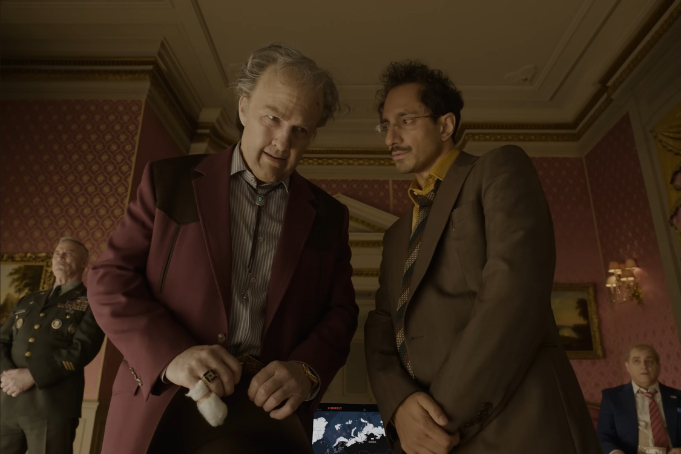
The internet is currently buzzing over the wild, transformative trailer for director Alejandro G. Iñárritu’s dark comedy “Digger”. In it, we see a nearly unrecognizable Tom Cruise as Digger Rockwell, a chaotic, combative billionaire trying to salvage an ecological catastrophe of his own making. While everyone is talking about Cruise’s stunning, prosthetic-laden performance, cinephiles and tech lovers are losing their minds over something else entirely. In a world dominated by ultra-sharp digital sensors, Iñárritu and his legendary cinematographer, Emmanuel "Chivo" Lubezki, decided to shoot “Digger” entirely on VistaVision, a mechanical camera format designed by Paramount Pictures all the way back in 1954.
Why would a modern masterpiece rely on a bulky, seventy-year-old camera? To understand the sheer brilliance of this creative choice, we have to look past the digital hype and explore how a simple, sideways mechanical trick from Hollywood's Golden Age is changing the way we look at the big screen.
Related Stories
To understand VistaVision, you first have to understand how traditional movies are filmed. Normally, standard movie cameras feed a strip of 35mm film vertically, from top to bottom, past the camera lens. It is a vertical film strip, pulling down frame by frame. Because the film is only 35mm wide and travels vertically, each standard individual frame spans four perforations, which are the little sprocket holes on the side of the film strip. This yields a relatively small area for the light to paint an image.
VistaVision flips this concept entirely on its side. As the name suggests, VistaVision runs the same standard 35mm film horizontally through the camera rather than vertically. By feeding the film sideways, VistaVision allows each image frame to stretch across eight perforations instead of the standard four.
By running the film sideways, the light hitting the film has more than double the physical surface area to capture the scene. It is a simple geometric upgrade, but it grants the director a massive, incredibly detailed negative. This design yields spectacular image depth and razor-sharp clarity without losing the organic, tactile texture of real film.
One might wonder if the average moviegoer sitting in a theater with a tub of popcorn will even notice the difference. The answer is a resounding yes, though perhaps not in the way you would expect. When you scale up a negative to more than twice the size of a standard 35mm frame, you do not just gain a massive leap in resolution. More importantly, you capture an organic depth of field and texture that digital cameras struggle to replicate.
Modern digital cameras can sometimes feel too clean, resulting in an image that looks sterile, sharp, and flat. Traditional vertical film can occasionally look a bit too grainy when blown up onto massive theater screens. VistaVision hits the absolute sweet spot. The image has a rich, velvety texture and a natural, three-dimensional depth. It makes the background melt away into a gorgeous, smooth blur while keeping the actors standing out in sharp, lifelike detail. For a satirical character study like “Digger”, every wrinkle of Tom Cruise's prosthetics and the massive scale of the outdoor environments will feel incredibly tactile, alive, and physically present.
While VistaVision eventually went out of style in the 1960s as cheaper, vertical widescreen formats took over, the format never truly died. Instead, it became Hollywood's secret weapon for special effects. Because of its massive frame and high resolution, special effects artists realized they could use horizontal VistaVision cameras to shoot complex green screen and miniature models without losing image quality when layering shots.
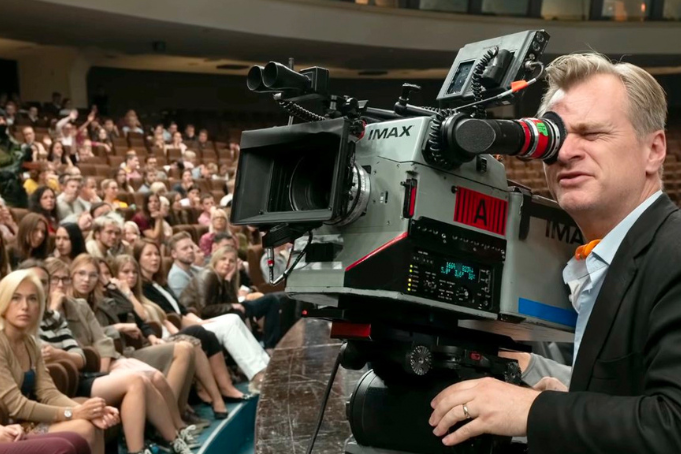
Alfred Hitchcock was a massive fan in the fifties, shooting masterpieces like “Vertigo” and “North by Northwest” in VistaVision to capture stunning, crisp backdrops that still look breathtaking today. Decades later, George Lucas's team at Industrial Light and Magic used modified VistaVision cameras to shoot the legendary space battles of the original “Star Wars” trilogy so the special effects wouldn't look grainy. Even more recently, Christopher Nolan used VistaVision cameras for visual effects sequences in “Inception” and “Interstellar” when he needed high-resolution shots but couldn't physically fit a massive IMAX camera into tight spaces.
This brings up the ultimate comparison: how does “Digger’s” vintage VistaVision hold up against the giant IMAX cameras that dominate theaters today? IMAX is the undisputed king of scale, running a massive 70mm film strip horizontally past a lens to create a frame that is roughly ten times larger than standard 35mm. It is designed to tower over the audience on screens several stories tall. However, that scale comes with massive drawbacks. IMAX cameras are notoriously heavy, difficult to move, and incredibly loud. The camera motor sounds like a lawnmower, which makes shooting quiet, emotional dialogue scenes almost impossible without dubbing the audio later.
VistaVision gives filmmakers like Iñárritu the best of both worlds. It utilizes standard, lightweight 35mm film but runs it horizontally to capture a wide-canvas, high-resolution look with beautiful depth. The cameras are quiet enough to capture crisp, on-set dialogue and agile enough to handle fast, dynamic movements. It is essentially a practical, portable alternative that offers stunning detail with a gorgeous, nostalgic vintage soul. When “Digger” lands in theaters, you won’t just be watching a story unfold, you will be looking through a portal directly into film history.
















Comments are moderated. They may be edited for clarity and reprinting in whole or in part in Variety publications.