



Jun 30, 2026 4:14pm IST
Director Pierre Coffin: ‘The Way I Do The Minion Voices Is Simple And Complicated At The Same Time’ (EXCLUSIVE)
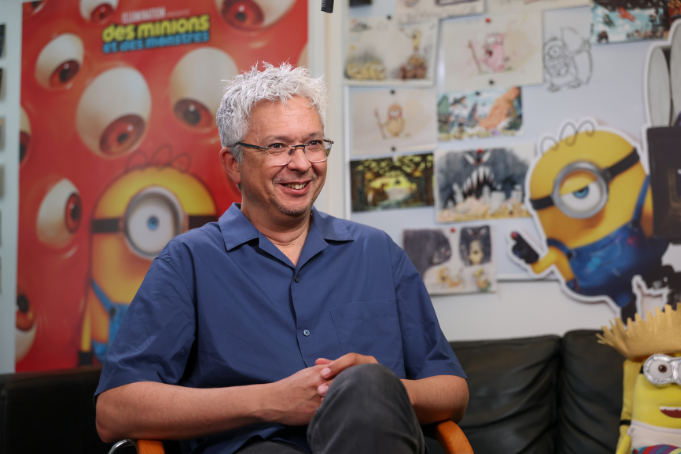
When “Despicable Me” first hit theaters in 2010, the world was introduced to Gru, a supervillain with a plot to steal the moon. But while audiences came for the high-stakes villainy, they completely fell in love with a tiny, yellow, denim-clad army: the Minions.
Fast forward to today, and the franchise is shifting gears with the highly anticipated “Minions & Monsters”, releasing this week. While the mainline “Despicable Me” films are grounded in Gru’s human family dynamics and tech-savvy heists, “Minions & Monsters” dives headfirst into pure, chaotic fantasy, pitting the beloved sidekicks against a wild new realm of mythical creatures.
At the helm of this new adventure is Pierre Coffin, the franchise veteran who has directed multiple “Despicable Me” and “Minions” films and has voiced the iconic yellow creatures since their debut. Once again, the movie relies entirely on the Minions' uncanny ability to carry a film without speaking a single word of a real language. Instead, they speak "Minionese."fr
Related Stories
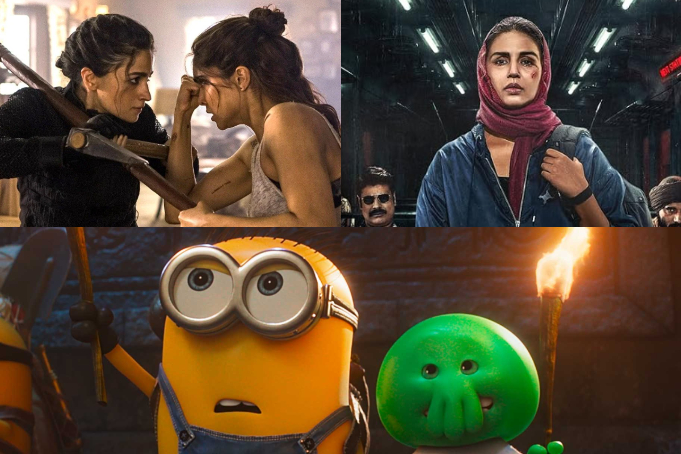
So, how exactly do you invent a dialect that is total nonsense yet universally understood? The secret recipe is a mix of happy accidents, vocal pitching, and a deep understanding of human emotion.
You might assume a massive studio like Illumination Entertainment hired a team of high-priced linguists to craft the Minions' unique dialogue. In reality, it all started with Coffin messing around in a recording booth over a decade ago.
“The way I do the Minion voices is simple and complicated at the same time,” Coffin says. “When we began working on the first ‘Despicable Me’, I was not approaching it like a sound engineer or a technician. I started doing the voices myself because we did not yet know exactly what the words should be or how the language should work."
Rather than overthinking the mechanics of a fictional language, Coffin relied heavily on the visual cues provided by the animators to find the soul of the characters.
"I would look at the Minions’ expressions, imagine what they were trying to say, pitch my own voice up and test it against the animation. Over time, that became the Minion voice.”
While “Despicable Me” relies on clever dialogue and a star-studded voice cast to push its narrative forward, the Minions operate on a completely different frequency—a fact that takes center stage in ‘Minions & Monsters’. For Coffin, creating Minionese wasn't about building a strict dictionary; it was about mastering the art of delivery.
“The most important thing is that the audience understands the intention without needing the words to make literal sense,” Coffin says. “The melody of the voice, the rhythm, the body language and the situation all have to work together."
By pulling random words from various global languages—blending snippets of French, English, Spanish, Italian, and, of course, plenty of food words like "baba-nana"—Coffin crafted a dialect that belongs to everyone and no one at the same time.
"I wanted Minionese to feel recognizable without belonging to one country or one language. The words can sound familiar, but they do not need to translate directly. If a Minion is asking a question, telling a joke or saying something with complete confidence, the audience should understand that.”
It turns out you don't need a translator to understand a Minion; you just need to listen to the music of their madness.










Comments are moderated. They may be edited for clarity and reprinting in whole or in part in Variety publications.