



Jun 10, 2026 3:30pm IST
‘Backrooms’ Review: Lost In The Infinite Yellow
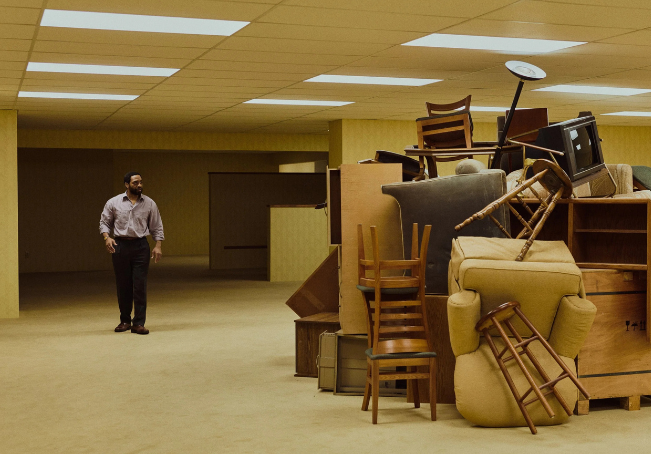
Movies are supposed to make you feel like you are part of what's happening on screen, deeply embedded in the action. “Backrooms” is no different. But in this case, that immersive magic means you will feel exactly like the characters: totally lost, going absolutely nowhere, and desperately looking for an exit sign.
The story anchors itself on two deeply flawed individuals swallowed by an endless, liminal void. Clark (David Howard Thornton) is a man fleeing a life of alcoholism and a shattered marriage, while Mary (Lily Sullivan) is a therapist burdened by the childhood guilt of being unable to save her mentally ill mother. Together, they are trapped in a sprawling, yellow-walled labyrinth that acts less like a physical place and more like a cosmic vacuum powered by human trauma.
Related Stories
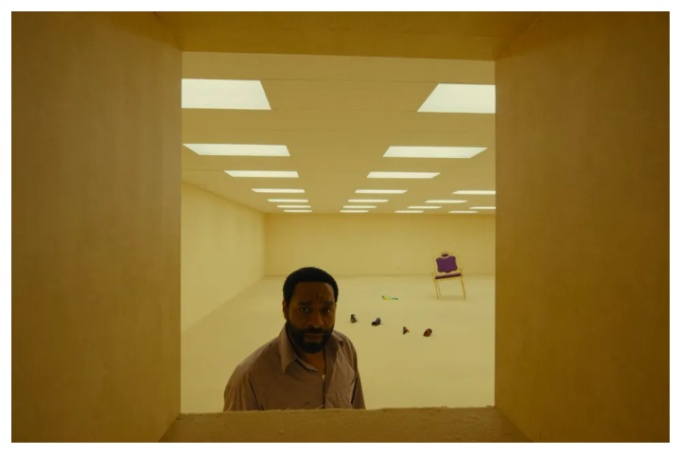

Through this endless maze, the director attempts to tap into a very modern anxiety. The film acts as a metaphor for the digital age we live in today — an infinite, repetitive loop of content, algorithms and isolation where we are constantly moving but never actually getting anywhere. It is an ambitious psychological concept, but it raises a glaring question: Do we really need to dive this deep for something that could have been explained in a much better, more cohesive way?
As an audience, there is no middle ground here. You will either take the film entirely at face value and leave frustrated by the lack of answers, or you will be utterly fascinated by its abstract depth.
What the director wants to say and how it actually translates on screen feel like two completely different things. Modern audiences are already exhausted; they don't always have the mental headspace or the patience to deconstruct a film that refuses to explain itself. While it is refreshing that the movie avoids cheap Hollywood horror tropes and origin stories, its complete lack of a narrative anchor might leave you wishing for a simple map rather than a philosophical lecture.
This narrative disconnect becomes most apparent in the climax. The ending offers no triumphant escape, opting instead for a bleak psychological descent. We learn that the dimension actively remembers and recreates its victims, turning their regrets into hollow, distorted copies.
Ultimately, the film leaves both characters trapped in cycles reflecting their pasts — Clark consumed by the monstrous manifestation of his own failures, and Mary confined by a shadowy corporation, mirroring the claustrophobic isolation of her childhood home. It is a conceptually terrifying finish, but one that ensures the movie ends exactly how it began: leaving the audience trapped in the dark, still waiting for a clear way out.
















Comments are moderated. They may be edited for clarity and reprinting in whole or in part in Variety publications.