



Jun 11, 2026 10:00pm IST
With ‘Confessions II,’ Madonna Reminds Pop Music Who Wrote the Playbook
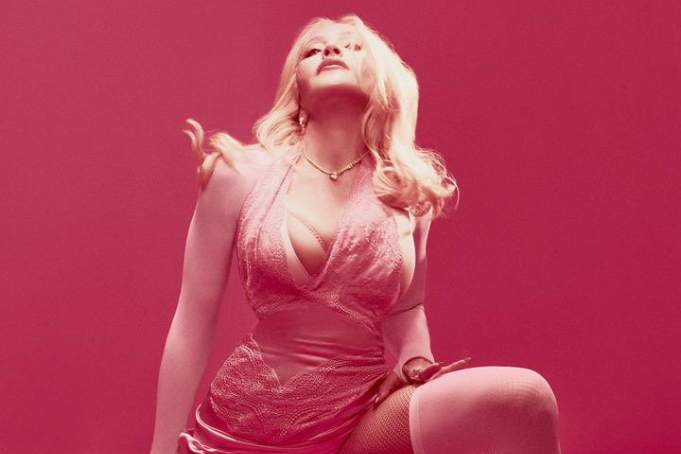
It is June, it is Pride, and this one is for Madonna fans. With lasers erupting from every conceivable angle and an environment where everyone is making out with everyone else, there is zero room for ambiguity. Madonna has never been subtle, nor has she ever asked for permission.
Decades into a career that fundamentally engineered the mechanics of modern pop stardom, she returned to the Tribeca Festival to premiere “Confessions II – The Film”. The 14-minute immersive short film—a teaser for her highly anticipated studio album dropping July 3—is a sweaty, avant-garde fever dream directed by the visual collective TORSO. It is an unapologetic manifesto declaring that the dance floor is a lifelong sanctuary and that you never, under any circumstances, have to retire from moving.
What makes “Confessions II” a true Madonna moment is its gravity. The visual album doesn’t just feature contemporary pop darlings; it pulls the entirety of cool culture into her orbit. The cast is a dizzying cross-section of global relevancy: Sabrina Carpenter (who duets on "Bring Your Love"), Odessa A’Zion, Gwendoline Christie, Richard E. Grant, Kate Moss, Benedict Cumberbatch, Debi Mazar, and Honey Dijon. It even drafts elite sports culture into her club world, featuring cameos from Premier League footballers Cole Palmer and João Pedro, before her own daughter, Lourdes Leon, coolly closes out the film.
To truly understand Madonna's impact, you have to look at the landscape she conquered. Today's pop stars are born into a digital ecosystem of instant feedback, viral algorithms, and curated social media grids. Madonna built her empire when none of that existed. She didn't go viral; she went monumental.
She commanded traditional media through sheer willpower, turning MTV into her personal gallery and standard radio into a battleground for social discourse. Long before a hashtag could track a trend, Madonna was the trend. Her sonic reinventions – from the dance-punk of post-Warhol New York to the electronic divinity of “Ray of Light” and the disco-house of “Confessions on a Dance Floor” – weren't responses to what was popular. They were mandates for what would become popular next.
Her fashion operated on the same high-stakes frequency. The stylized crucifixes, the Jean Paul Gaultier cone bras, and the archival Dolce & Gabbana corsetry revived for “Confessions II” were never just costumes. They were visual statements on autonomy, gender, and religious iconography that forced a conservative society to look at her.
Related Stories
Architect to the Queens: Gaga, Beyoncé, Taylor
Without Madonna’s blueprint, the modern pop landscape doesn't just look different – it collapses. She laid the tracks for the multi-hyphenate, visually driven female superstar. Every era-shifting tour, high-concept music video, and deliberate aesthetic reinvention practiced by today's titans can be traced back to her DNA.
Take Lady Gaga, whose entire theatricality, religious juxtaposition, and LGBTQ+ advocacy mirror the house that Madonna built. Gaga has been vocal about this lineage, noting: "Madonna is the Queen of Pop... She is the most authentic, boundary-pushing artist I’ve ever witnessed. Her strength inspired me to never take 'no' for an answer."
Then look at Beyoncé, who explicitly channeled Madonna’s house-music legacy on “Renaissance” and teamed up with her for "The Queens Remix" of "Break My Soul." Beyoncé has openly worshipped at her altar, writing in a public note to her: "Thank you for opening so many doors for so many women. You are a masterpiece genius."
Even Taylor Swift, the current titan of the stadium era, relies on the concept of the "Era" itself – a concept Madonna invented. Swift recognized the immense pressure on women in music to constantly shed their skin, a path Madonna cleared with a machete. Swift remarked: "Nobody has reinvented themselves like Madonna. I look at her career and think, 'That is the ultimate goal – to never let them think they have you figured out.'"
A World Without the Material Girl
Imagine a world where Madonna never stepped foot into Danceteria in the early '80s. Without her, the pop video remains a promotional tool rather than a legitimate art form. The integration of high fashion and underground club culture into mainstream music would be delayed by decades. More importantly, the explicit ownership of female sexuality and agency in pop music would still be treated as a taboo rather than a birthright.
Artists would still be expected to age out of their art, fading quietly into legacy acts rather than commanding avant-garde short films at Tribeca.
There will never be another Madonna because the specific crucible that created her no longer exists. You cannot replicate a star who fought the monoculture and won, rewriting the rules of censorship, religion, and feminism using nothing but pop hooks and a video camera. Others may inherit the charts, but Madonna owns the architecture. As “Confessions II” proves, she isn't just surviving the modern cultural landscape—she is still running it.








Comments are moderated. They may be edited for clarity and reprinting in whole or in part in Variety publications.